
Last updated September 22, 2026
Level 1 sweep and inspection to the NFPA 211 annual standard - flue, crown, cap, and flashing checked and photographed
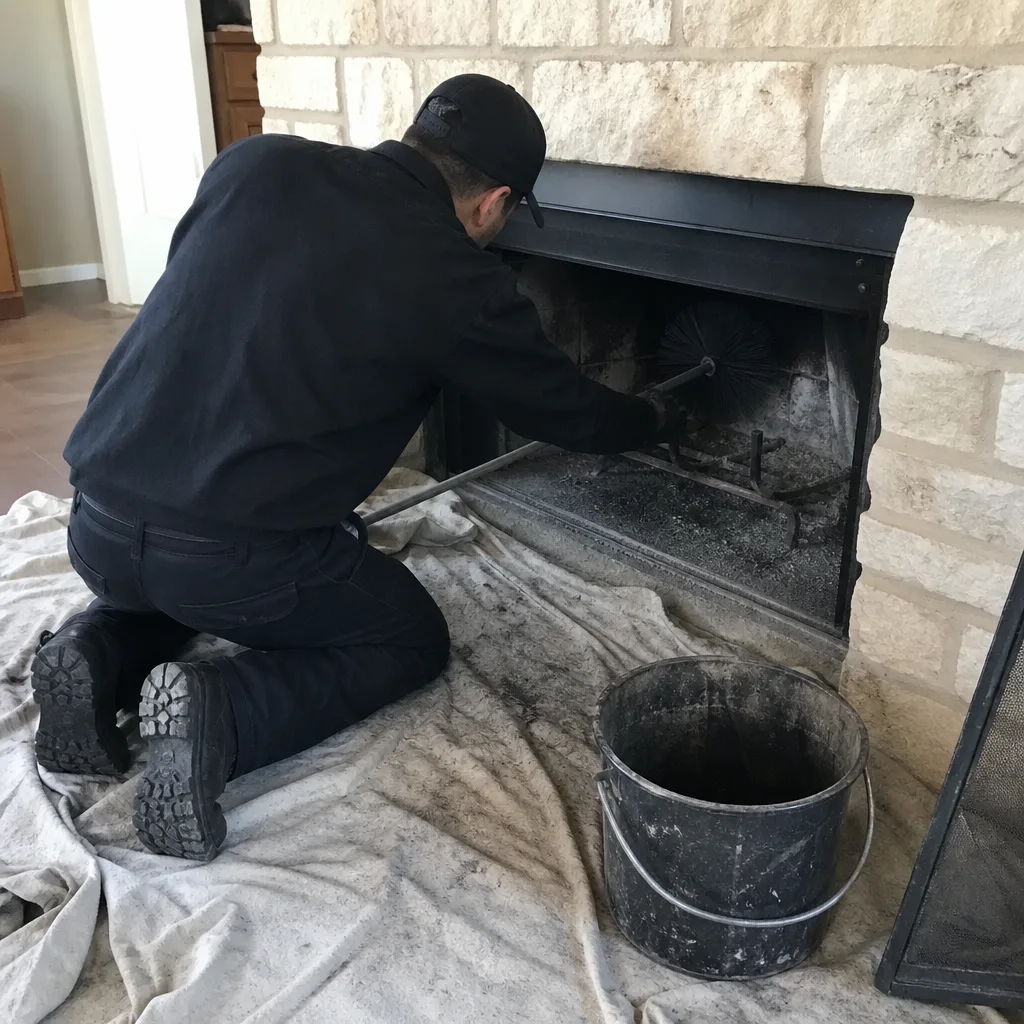
Chimney sweep logs do not sweep chimneys. They loosen some creosote - which then falls where a brush and vacuum still have to collect it.
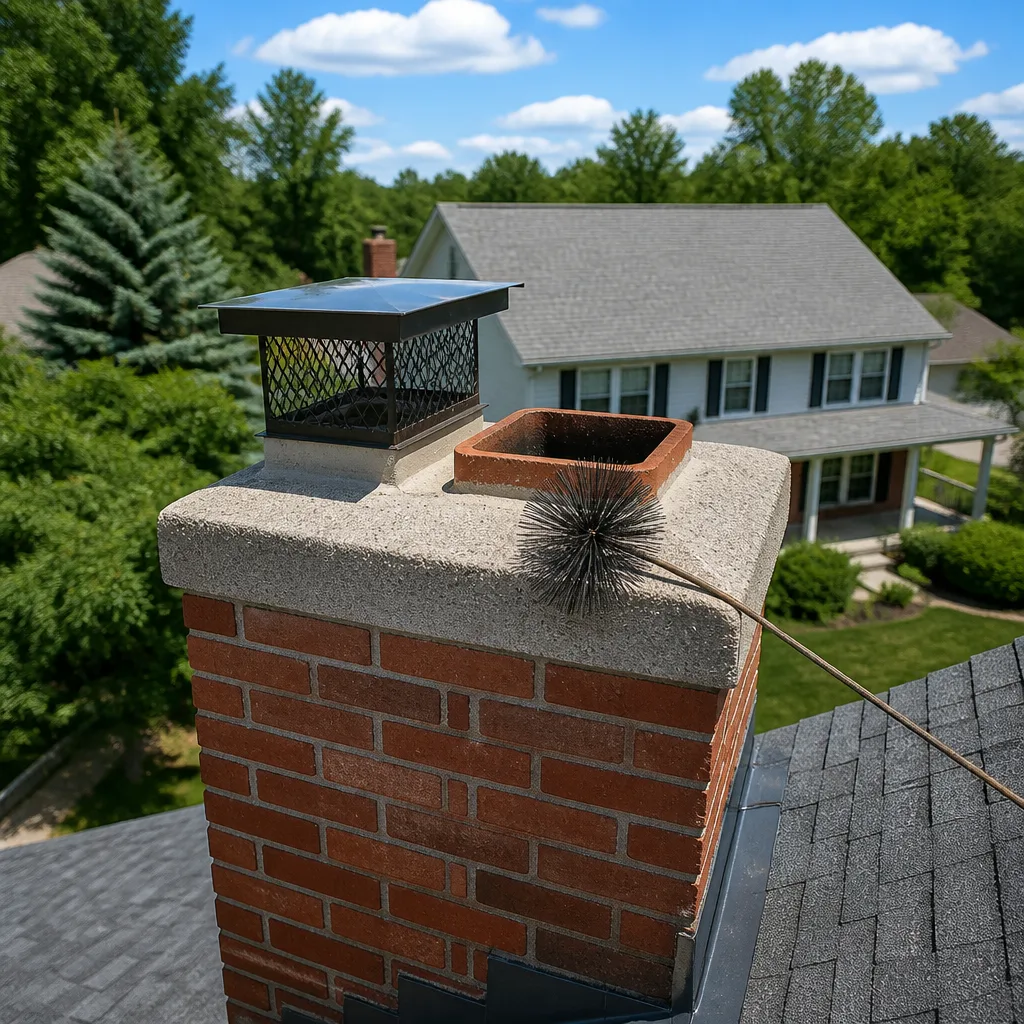
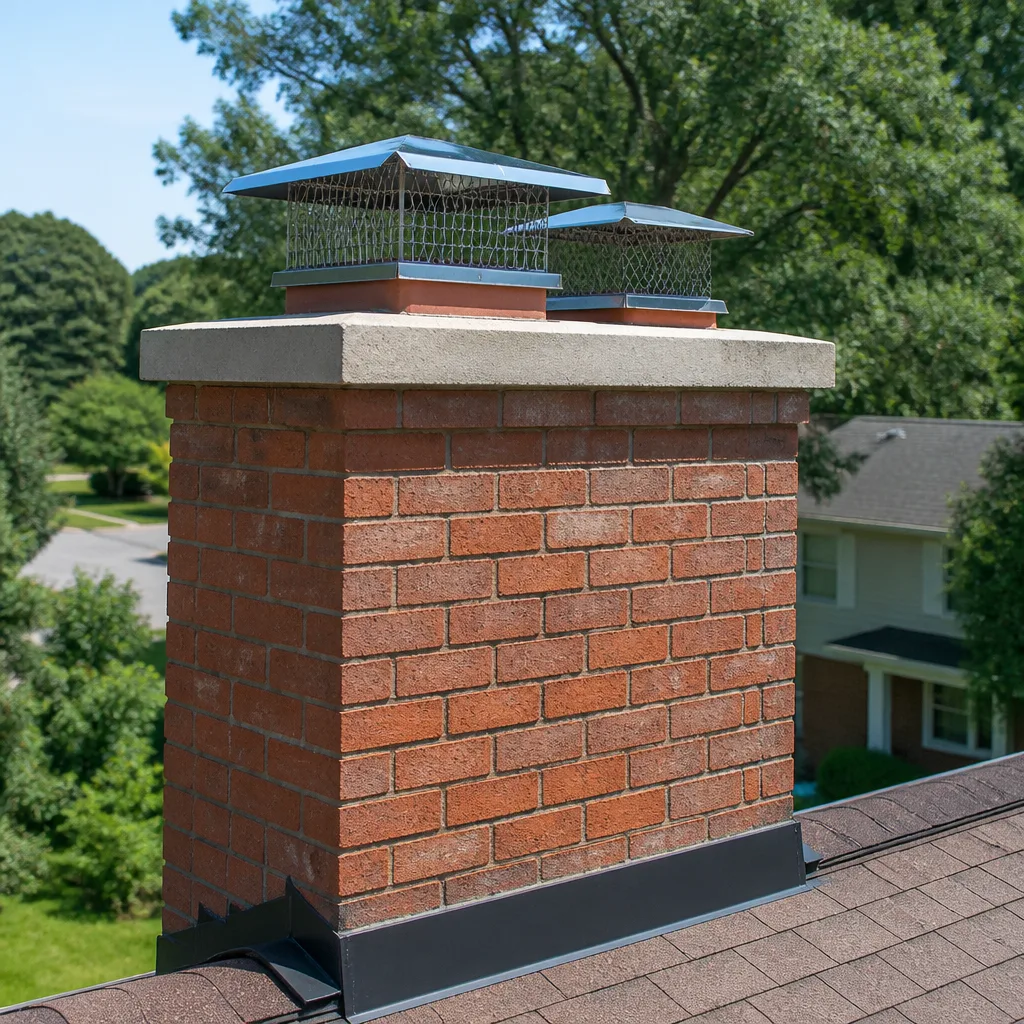
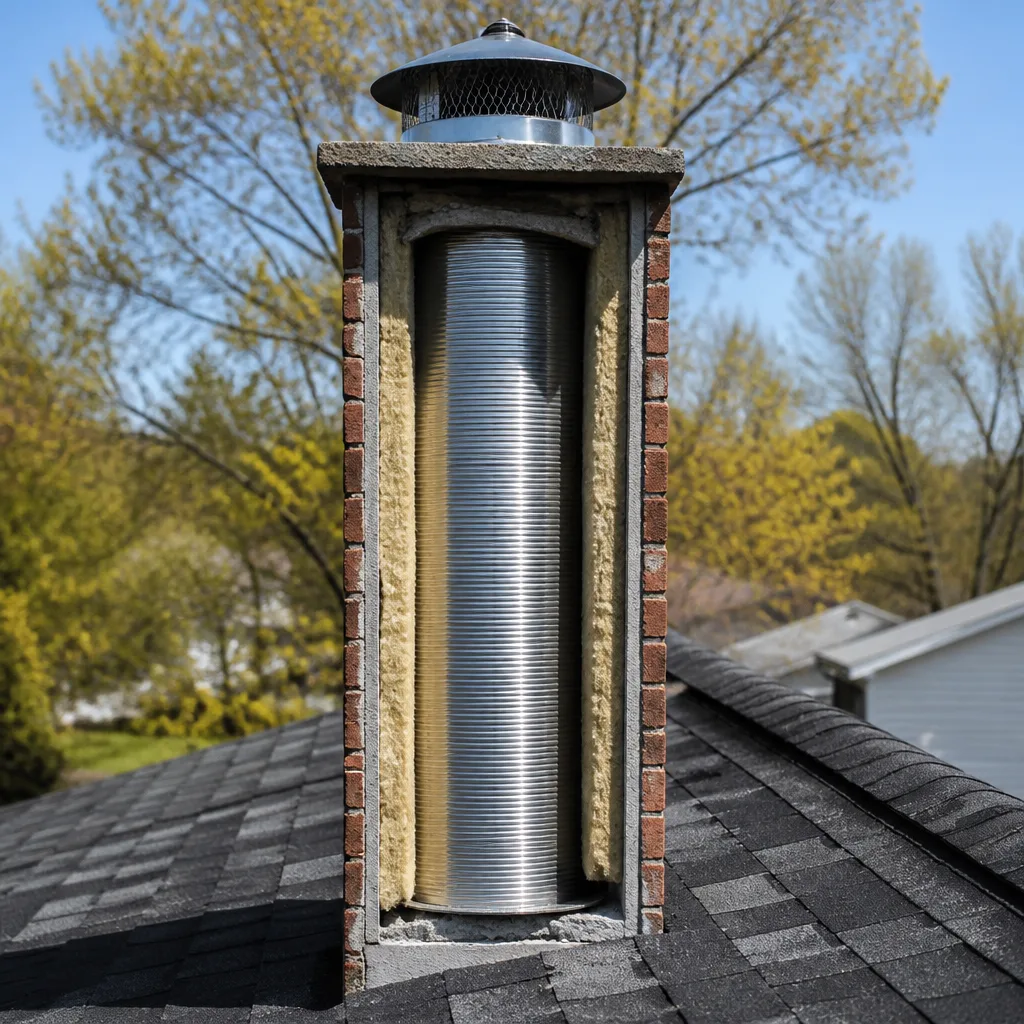
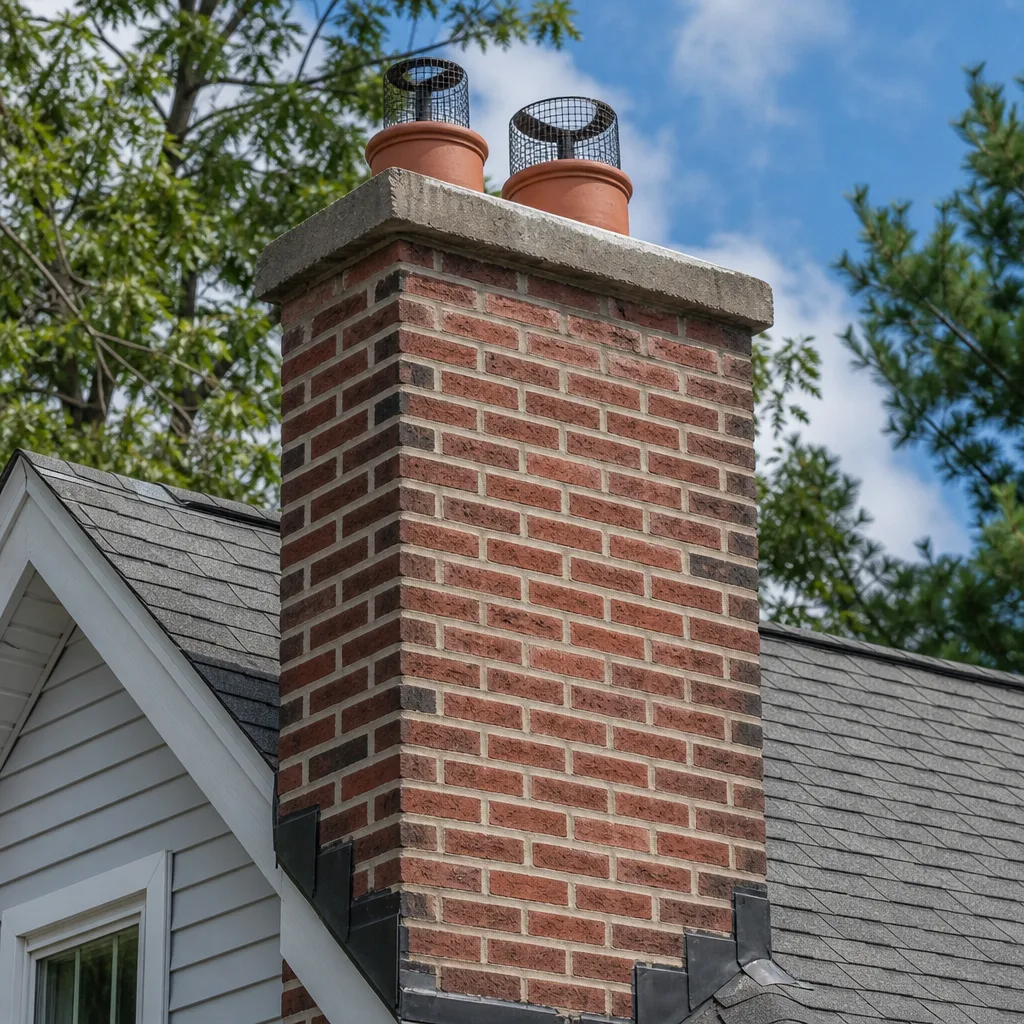
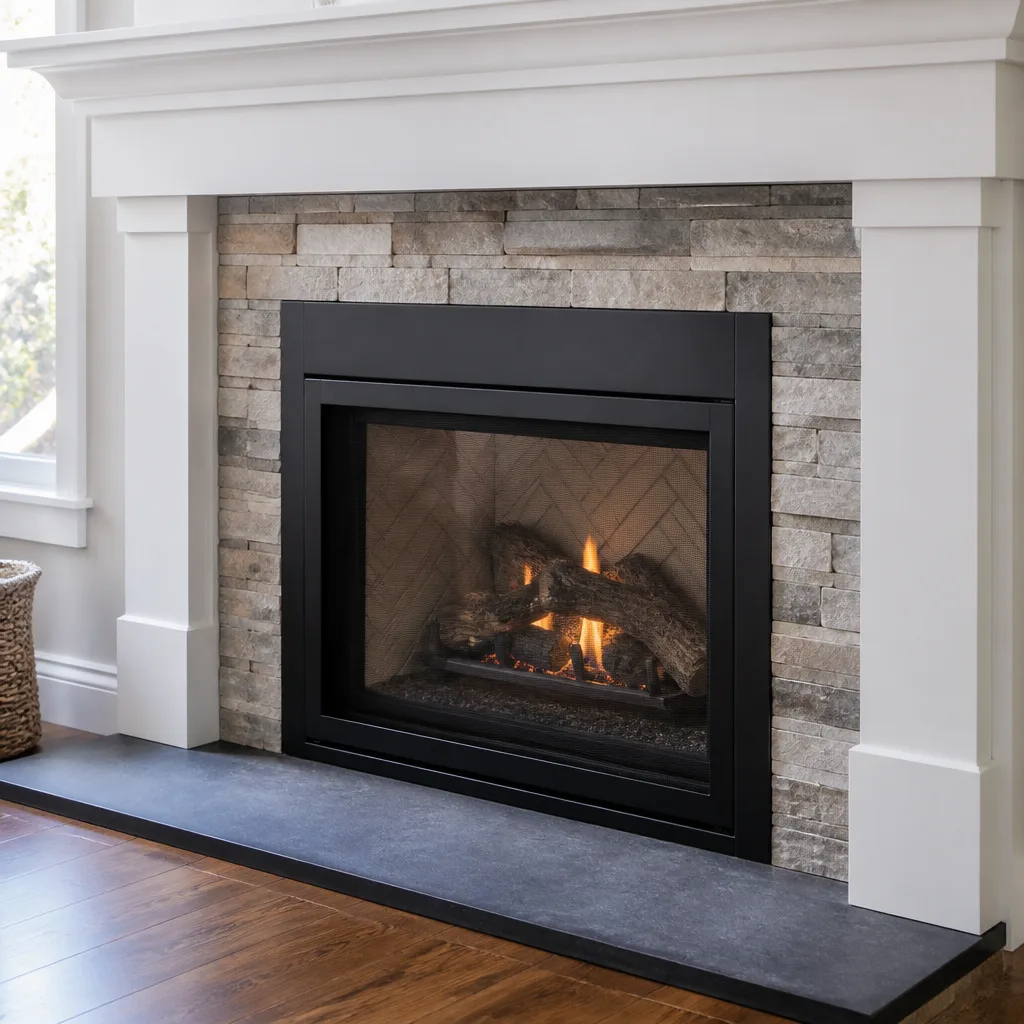
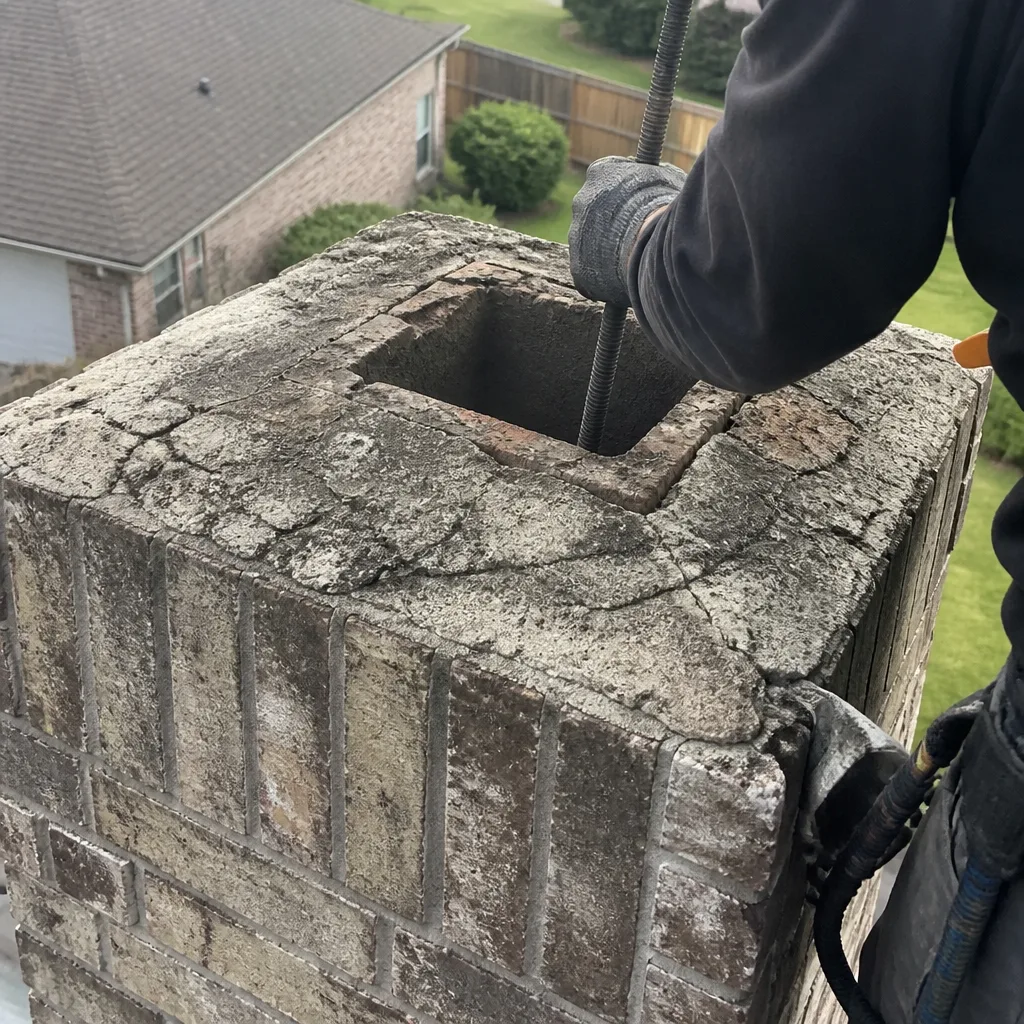 Before
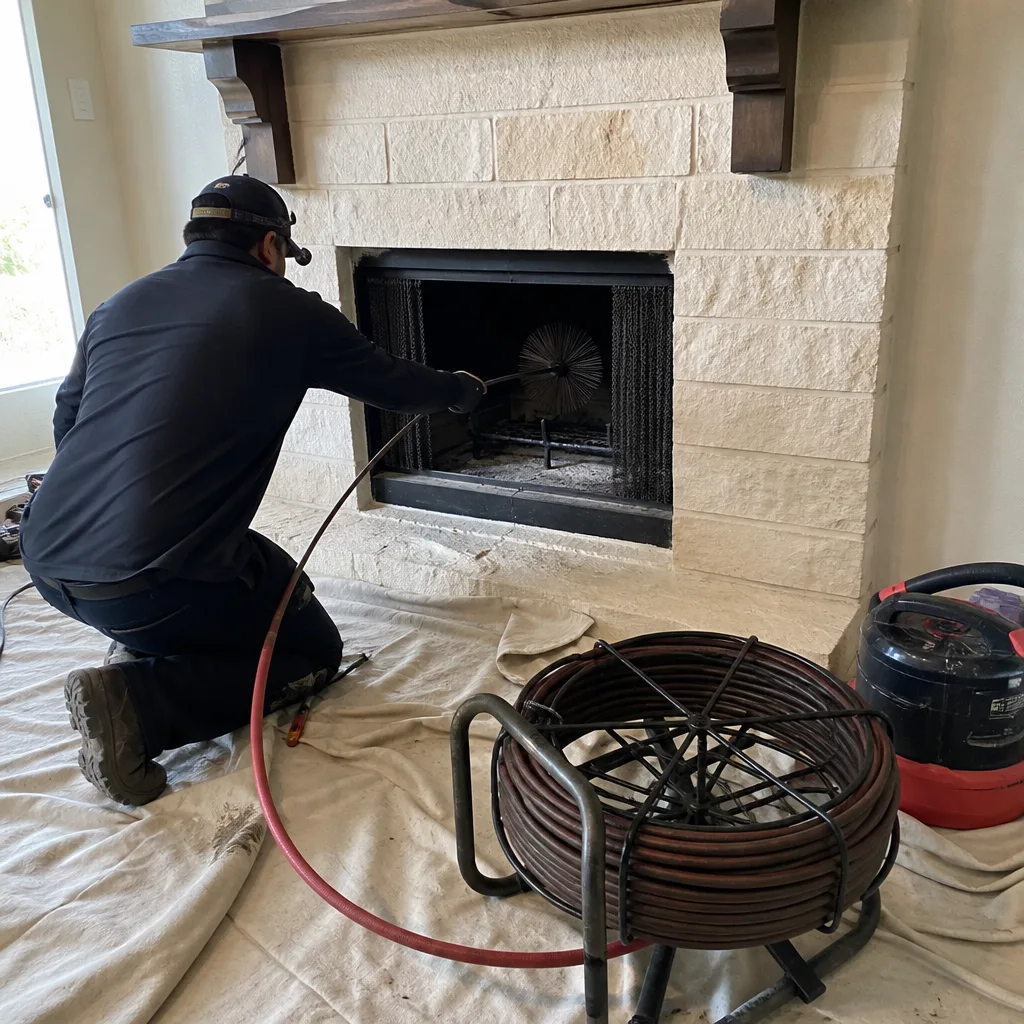 After
After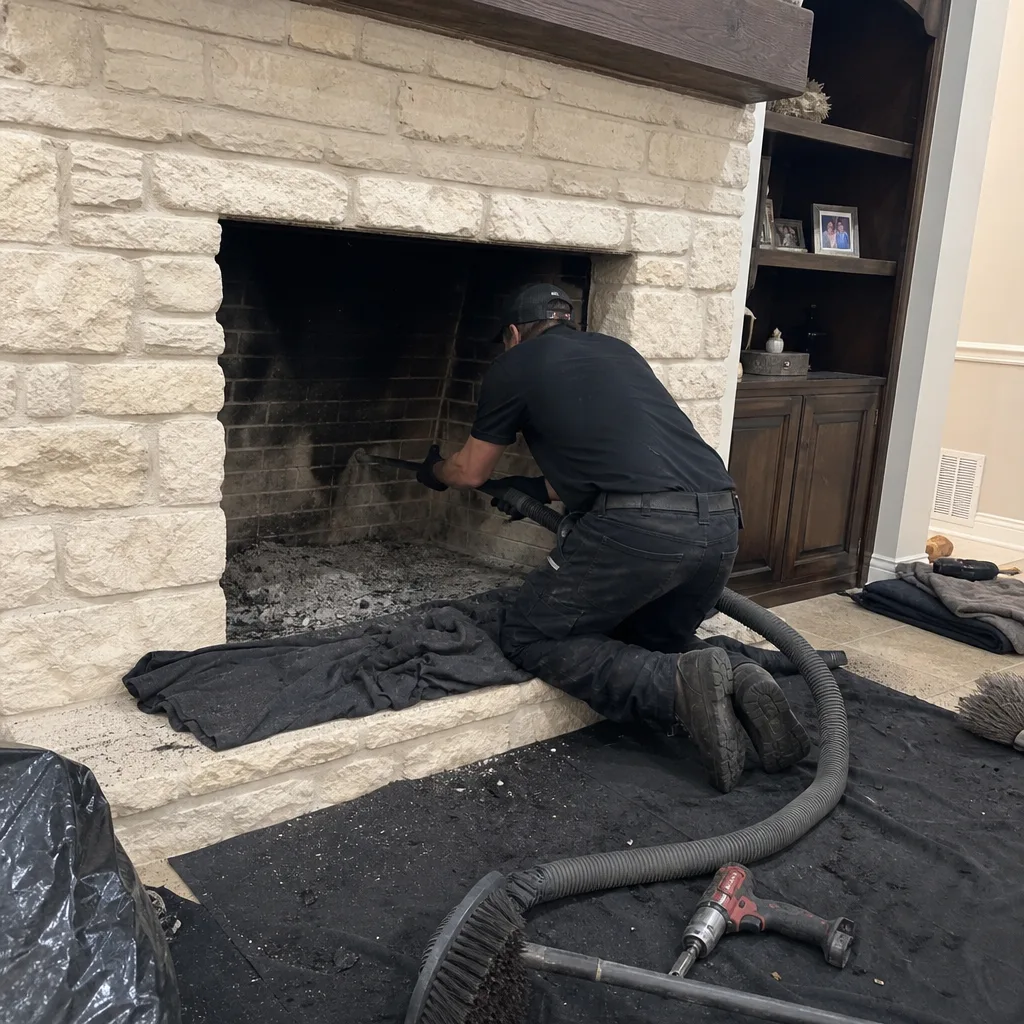 Before
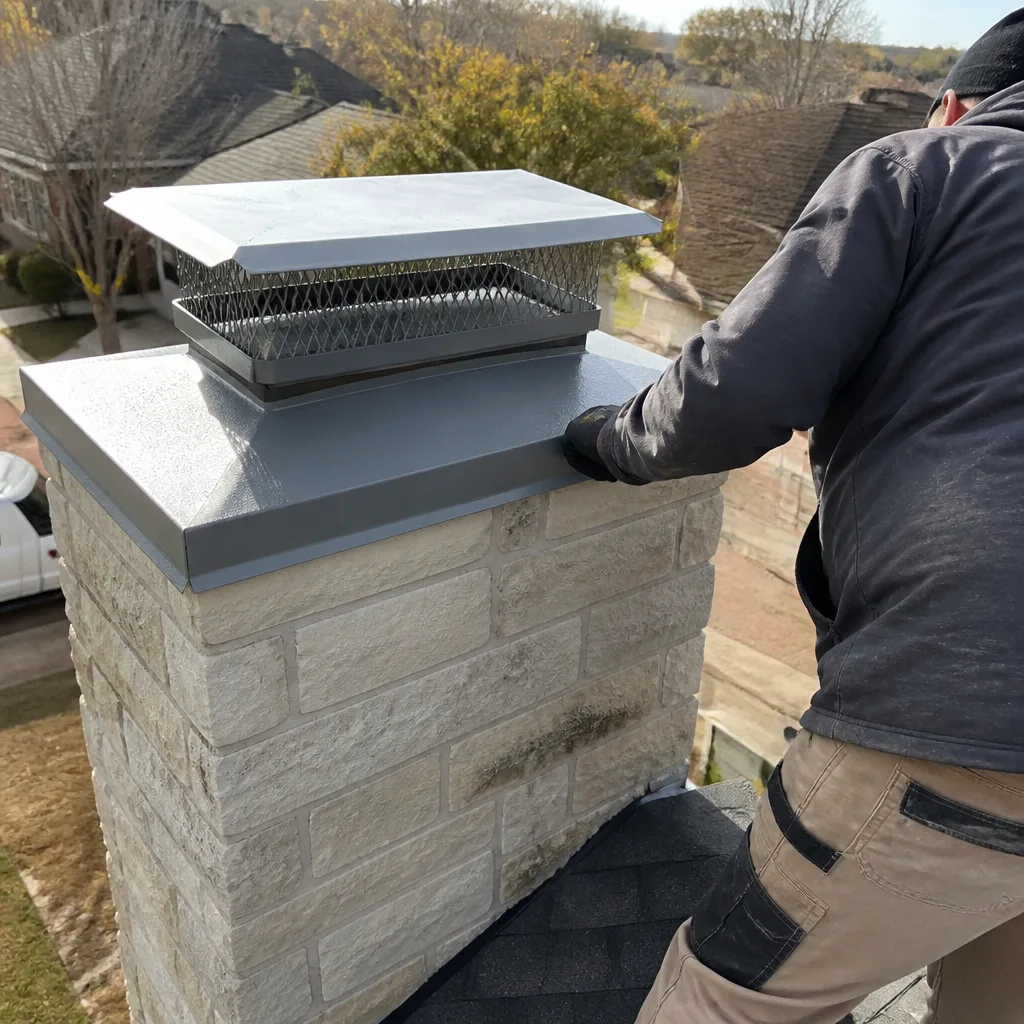 After
After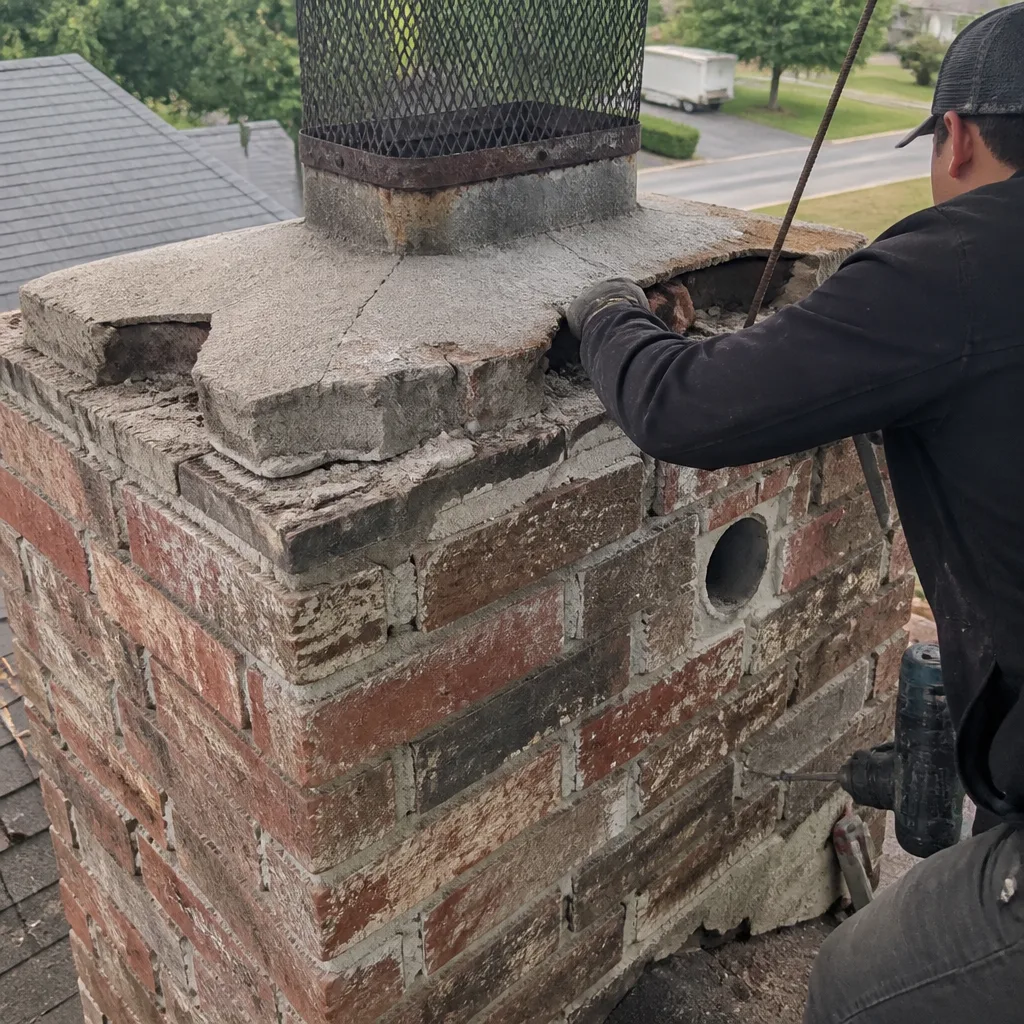 Before
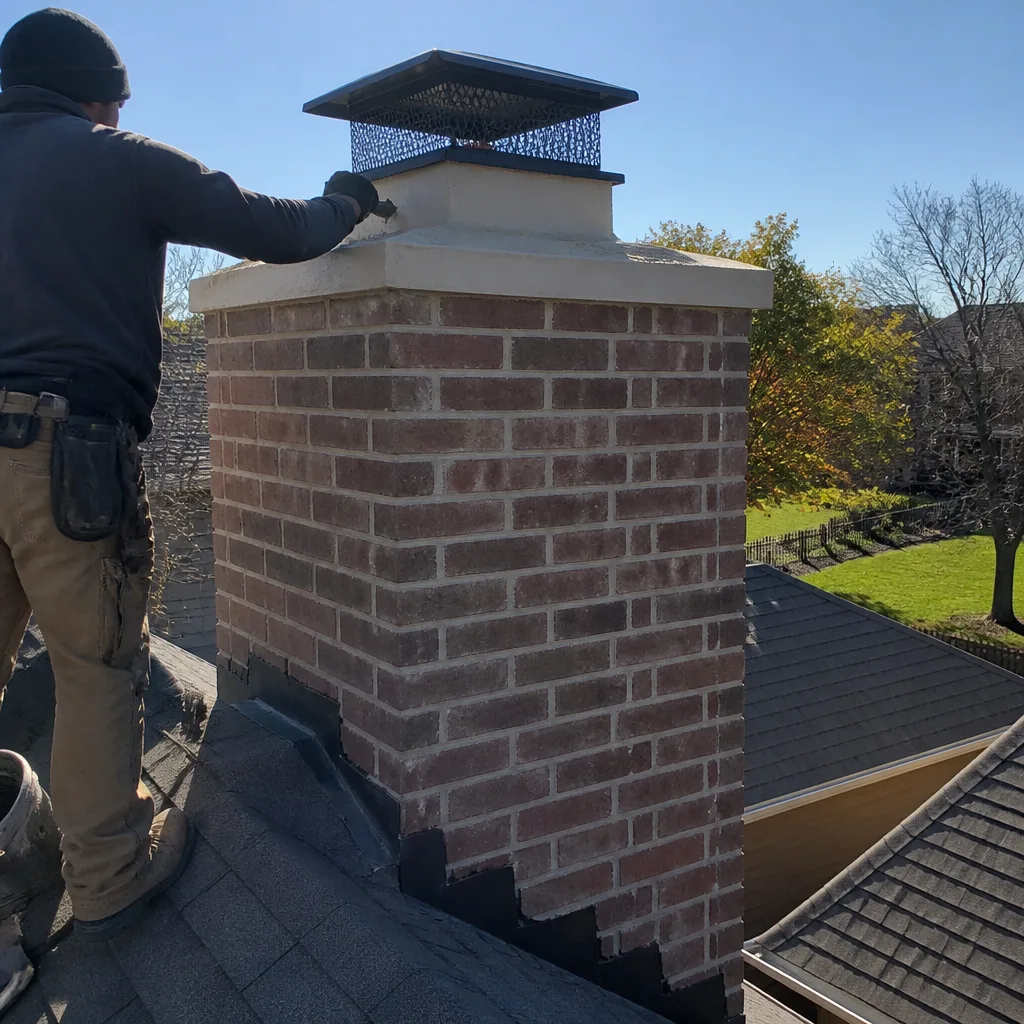 After
AfterChimney Cleaning Warning Signs: A Frisco Homeowner’s Reference Guide
That crack in your firebox back wall that’s been there “forever”? If it’s wider than 1/8 inch, it’s not cosmetic. At that width, flame contact with the combustible framing behind it violates NFPA 211, voids most homeowner insurance policies, and creates a pathway for carbon monoxide into wall cavities. In Frisco, where freeze-thaw cycles hit hard after wet winters and new construction settling continues for years, the warning signs that predict chimney fires appear 6 to 18 months before any smoke backs up into your living room. Most homeowners walk past them daily without recognizing what changed. This guide catalogs the subtle, measurable thresholds that separate normal aging from active hazard, with specific dimensions, odors, and documentation methods you can use today. For more guides & resources on chimney maintenance, explore our blog.
Quick Answer
The most dangerous chimney warning signs in Frisco homes are measurable structural changes, not dramatic symptoms: firebox cracks exceeding 1/8 inch, mortar recession deeper than 1/2 inch between flue tiles, white efflorescence staining on exterior brick that spreads more than 12 inches in a season, and a damper that won’t fully open or close. These conditions develop silently and are the leading predictors of chimney fires and carbon monoxide intrusion in Collin County homes built between 1995 and 2020.
Table of Contents
- Measurement-Based Thresholds: When Cosmetic Becomes Structural
- What the Smell Tells You: Odor Chemistry by Flue Zone
- Efflorescence on Exterior Chases: Frisco’s Wet-Winter Signature
- Damper and Smoke Chamber: Four Things to Check With a Flashlight
- How to Document a Warning Sign: Phone Photography That Professionals Can Use
- Frisco-Specific Risks: New Construction, Clay Soil, and Hard Water
- Common Mistakes to Avoid
- When to Call a Professional
- Frequently Asked Questions
BeforeAfterMeasurement-Based Thresholds: When Cosmetic Becomes Structural
Most chimney warning sign articles stop at “look for cracks.” That’s useless. A hairline crack in a firebrick is normal thermal cycling. A 3/16-inch gap with blackening at the edges is a breach that lets flame touch wood framing. The difference is measurement, not intuition.
Here are the specific thresholds we document on every Chimney Cleaning & Sweep in Frisco visit under Haven Standard Clause 4:
Firebox Back and Side Walls
Measure crack width at the widest point using a standard tape measure or ruler held against the surface. Under 1/16 inch: monitor annually. Between 1/16 and 1/8 inch: photograph and measure quarterly; schedule inspection if any widening. At or above 1/8 inch: stop using the fireplace and schedule a Level 2 inspection with camera scan. This is the width at which flame impingement on combustibles becomes a code violation under NFPA 211, Section 11.2.
Check for spalling, too. That’s the flaking or popping of brick or refractory surfaces. Spalling deeper than 1/4 inch exposes the inner aggregate and weakens the thermal barrier. In Frisco’s clay-soil areas, particularly in neighborhoods like The Trails and Panther Creek, we’ve seen accelerated spalling from minor foundation settling that shifts the firebox assembly by fractions of an inch.
Mortar Joints Between Flue Tiles
The flue liner is a stack of terra cotta or refractory segments. The mortar between them should be recessed no more than 1/4 inch from the tile face. Recession beyond 1/2 inch allows creosote to accumulate in the gap, creating a fuel source outside the intended flue path. At 3/4 inch or more, gases can escape into the chimney cavity, a condition we find in roughly 15% of Frisco homes built during the 2005-2012 construction boom when speed often outpaced craft.
Liner Gaps and Displacement
A visible gap between flue liner segments, or a liner that’s shifted off-center by more than 1 inch from the flue axis, requires immediate attention. These gaps don’t seal themselves. They widen with thermal cycling and can admit combustion gases directly into the chimney structure. Our camera documentation under Haven Standard Clause 4 captures these with measurement overlays so homeowners see exactly what we see.
| Location | Measurement | Action Threshold |
|---|---|---|
| Firebox crack width | Widest point, perpendicular to crack | 1/8 inch: stop use, schedule inspection |
| Mortar recession (flue joints) | Depth from tile face | 1/2 inch: clean and evaluate; 3/4 inch: repair required |
| Flue liner offset | Centerline deviation | 1 inch: structural evaluation |
| Spalling depth | Deepest point of material loss | 1/4 inch: monitor; 1/2 inch: replacement zone |
| Crown crack width | Widest point on horizontal surface | 1/4 inch: seal; 1/2 inch: rebuild evaluation |
These numbers aren’t arbitrary. They come from 38,000+ inspections since 2009, cross-referenced with NFPA 211 and the IRC, and they’re the standards we apply on every job before any work starts.
What the Smell Tells You: Odor Chemistry by Flue Zone
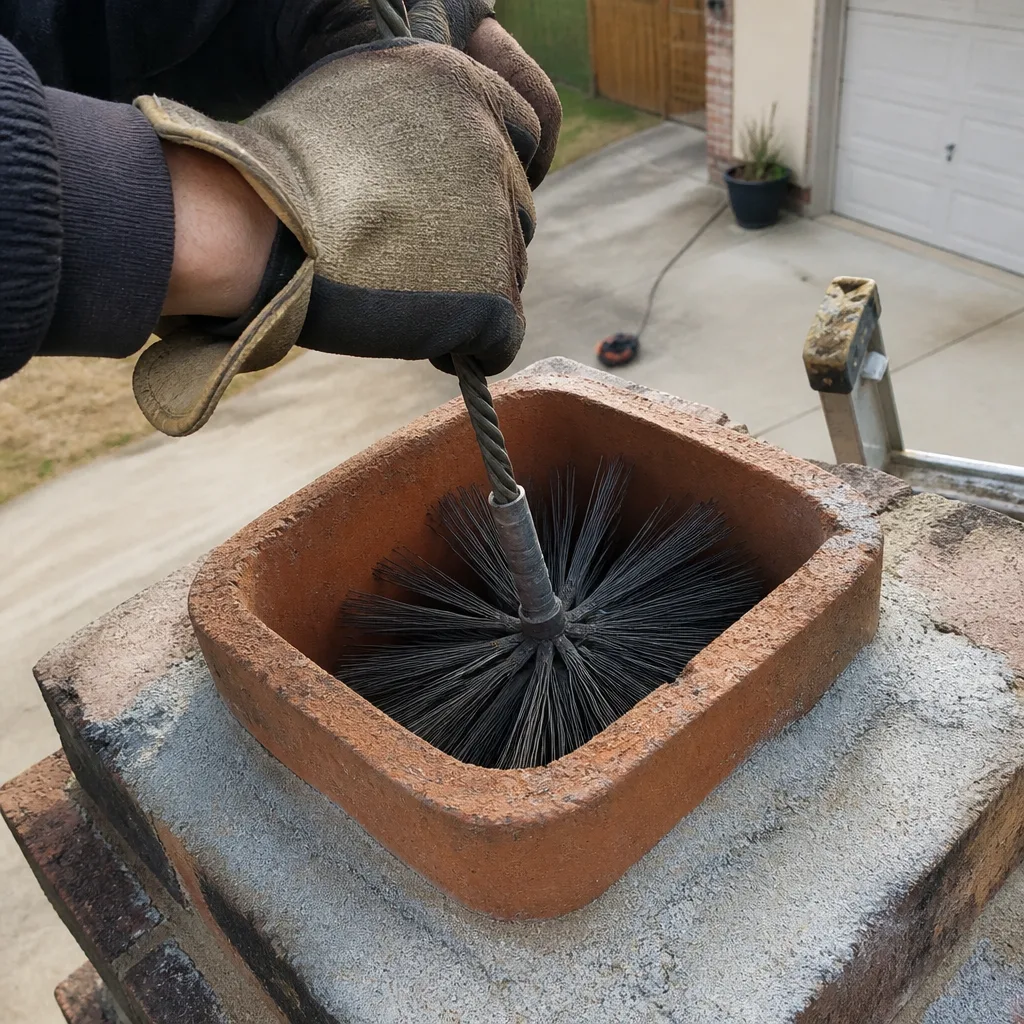
Odors are chemical signatures. Each one points to a specific location and condition in the chimney system. Generic “unusual odor” advice wastes the diagnostic information your nose provides.
Musty, Damp Earth Smell
This indicates moisture intrusion, usually at the chimney crown or through deteriorated mortar joints in the exterior brick. The smell intensifies after rain and may fade as the chimney dries. In Frisco, where spring storms can drop 2-3 inches in an afternoon and summer humidity hangs above 70%, moisture is the most common hidden enemy.
The musty smell comes from microbial growth on organic material in the flue: accumulated soot, bird nesting debris, or deteriorated creosote that’s absorbed water. The critical zone is the smoke chamber, the area above the damper and below the flue liner. If you smell mustiness when the damper is closed, water is entering above the damper line. If it persists when open, the flue itself is compromised.
Sulfurous, Rotten-Egg Odor
This is hydrogen sulfide or sulfur dioxide from incomplete combustion, or from water reacting with sulfates in mortar or flue gases. It’s not normal. A properly drafting chimney should carry all combustion products outside. Sulfur smells that enter the living space indicate:
- Downdraft conditions, common in Frisco’s flat terrain when wind hits from the north at 15+ mph
- Blocked or partially obstructed flue
- Negative pressure in the house from tight construction and exhaust fans
- Deteriorated flue liner allowing gases into wall cavities
If you smell sulfur when the fireplace is not in use, the condition is urgent. Call for inspection.
Acrid, Sharp Burning Smell
This is active creosote heating to ignition temperature, or pyrolysis of nearby combustibles. Creosote has a distinct sharp, tarry odor when it’s approaching combustion. If you smell it during a fire, the creosote deposit is likely Class II or III (gummy or glazed), and the flue temperature is reaching 451°F or higher, the approximate ignition point.
Pyrolysis odor is different: it’s the smell of wood or other combustibles slowly cooking from radiant heat through a compromised thermal barrier. It’s often described as “hot” or “like a sauna heater.” This smell means the framing or sheathing near the chimney is being chemically altered by sustained heat, lowering its ignition temperature over time. This is the condition that leads to delayed-ignition chimney fires that burn for hours undetected inside walls.
Sweet, Chemical Smell
This indicates a liner or sealant failure, often in stainless steel liners with deteriorated insulation, or in chimneys where inappropriate materials (like standard silicone) were used for repair. The smell comes from off-gassing of adhesives or coatings at temperature. In Frisco, we’ve traced this to DIY repairs using hardware-store products not rated for flue temperatures exceeding 1,200°F. Before attempting any fix yourself, read our DIY vs Professional Chimney Cleaning: The Frisco Homeowner’s Decision Guide.
Efflorescence on Exterior Chases: Frisco’s Wet-Winter Signature
Efflorescence is the white, powdery or crystalline deposit that appears on brick, stone, or concrete surfaces. It’s salt migration: water enters the masonry, dissolves soluble salts, and deposits them on the surface as it evaporates. In Frisco, it appears most dramatically on north-facing chimney exposures and after winters with multiple freeze-thaw cycles.
Here’s what matters: efflorescence is not merely cosmetic. It’s evidence of water passage through the masonry, and that passage accelerates deterioration.
What Causes It
Water enters through crown cracks, deteriorated mortar joints, porous brick (common in lower-grade brick used during rapid construction periods), or inadequate chimney cap coverage. In Frisco’s Blackland Prairie clay soils, minor foundation movement opens hairline pathways that water exploits. The 2021-2023 period saw particularly heavy efflorescence reports after the February 2021 freeze and subsequent wet seasons.
How Fast It Progresses
Measure the stained area and photograph it monthly during wet seasons. Spread of more than 12 inches in a single season indicates active, significant water intrusion. Spread of less than 6 inches may be residual from a single event. The rate matters because salt crystallization inside the brick pores causes spalling, the surface flaking that destroys the brick face.
Why Frisco Brick Chimneys Are Vulnerable
Many Frisco homes in neighborhoods like Stonebriar, Legacy Hills, and later phases of Phillips Creek Ranch use brick with moderate porosity and mortar mixes from the construction-era standard. These perform adequately in dry climates but suffer when water is introduced repeatedly. The combination of hard, alkaline water in Frisco’s municipal supply and the salts naturally present in local aggregate accelerates the chemical reaction.
Efflorescence that returns after brushing indicates an ongoing source. Efflorescence accompanied by mortar softening (test with a screwdriver: if it penetrates more than 1/4 inch, the mortar is failing) requires crown and cap evaluation, potentially tuckpointing, and in advanced cases, partial rebuild. Our Chimney Repair in Frisco service documents the progression with dated photos under Haven Standard Clause 4 so homeowners have evidence for insurance claims if structural damage develops.
Damper and Smoke Chamber: Four Things to Check With a Flashlight
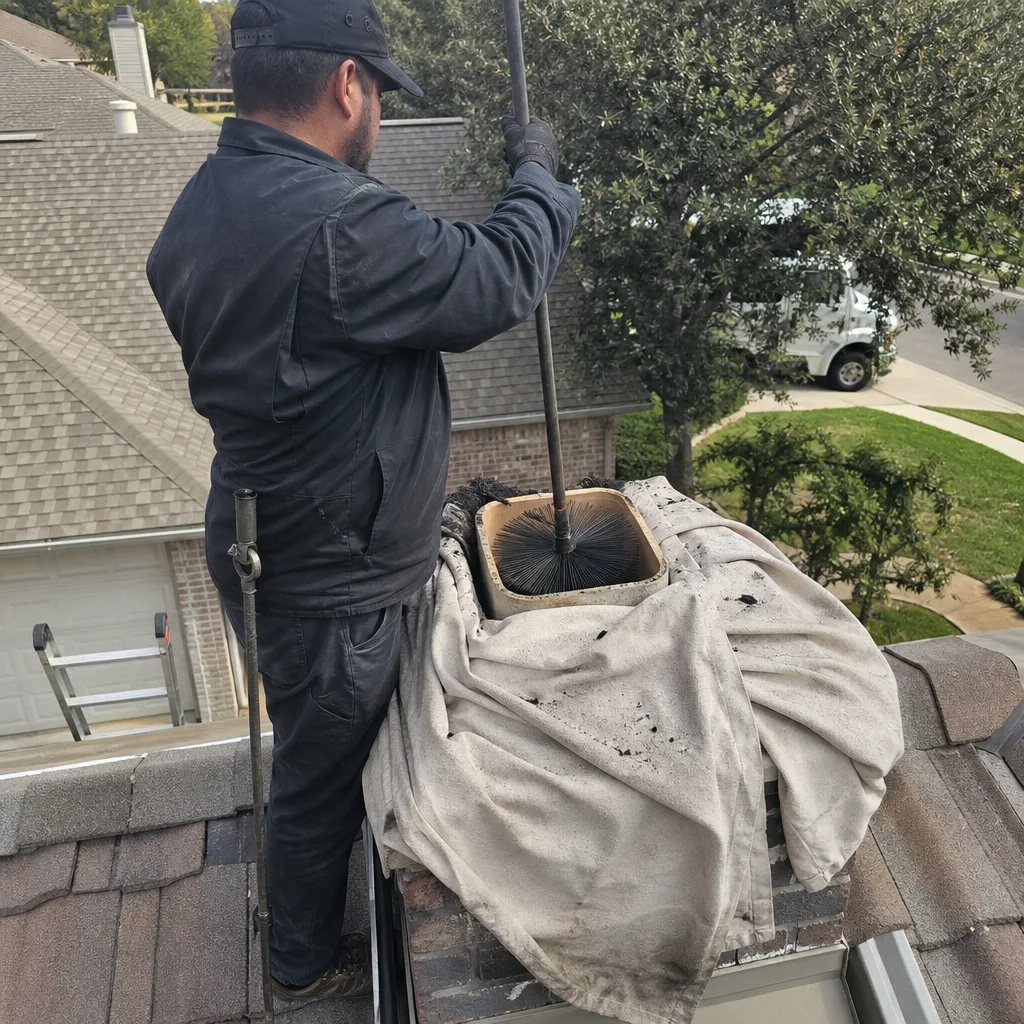
Before you light a fire in a home you just bought, or after a season of disuse, four visible conditions in the firebox predict problems that a casual look misses. You don’t need our camera for these. You need a flashlight, a mirror on an extension handle (or a phone camera), and 10 minutes.
- Damper operation and seating. Open the damper fully. It should move smoothly through its entire range and seat flat when closed. Look for gaps of more than 1/8 inch when closed: that’s heated air escaping up the flue all winter, and it’s a path for downdrafts and animal entry. Look for warping or corrosion that prevents full opening: a partially open damper restricts draft and causes smoky fires. In Frisco, we’ve replaced dampers in homes less than 10 years old because builders installed galvanized steel units that corrode in humid flue conditions.
- Smoke chamber shape and surface. The smoke chamber is the area above the damper, sloping inward to the flue liner. It should be parged smooth with refractory mortar. A rough, corbeled brick surface creates turbulence that reduces draft and provides surface area for creosote accumulation. Shine your light upward: if you see exposed brick edges, gaps, or a surface that looks like a staircase rather than a smooth funnel, the chamber needs parging. This is a common deficiency in Frisco homes built 2000-2010 when smoke chamber parging was inconsistently enforced by inspectors.
- Firebox floor and hearth extension. The hearth extension (the non-combustible surface in front of the firebox) must extend at least 16 inches in front of the opening and at least 8 inches to each side for fireplaces with openings less than 6 square feet; larger openings require more. Measure it. Many Frisco homeowners have added flooring that encroaches on this clearance, especially in remodeled homes in older neighborhoods like Frisco Square original phases. The firebox floor itself should be flat and intact; a cracked or sunken floor can indicate heat damage to the supporting structure beneath.
- Lintel condition. The lintel is the steel or masonry support across the top of the firebox opening. Look for rust staining on the brick below it, sagging, or cracking in the mortar immediately above. A failed lintel can drop the masonry above the opening into the firebox. We’ve documented lintel corrosion in Frisco homes where sprinkler systems or roof drainage directed water behind the chimney face, a condition particularly common in zero-lot-line homes in Villages of Stonelake and similar communities.
If any of these four conditions are present, schedule a Level 2 inspection before lighting a fire. The camera scan will reveal what the flashlight cannot: the condition of the flue liner, the crown interior, and any gaps or obstructions above the smoke chamber.
How to Document a Warning Sign: Phone Photography That Professionals Can Use
A useful photograph conveys scale, location, and condition. A useless photograph is a blurry close-up that could be any chimney in any house. Here’s how to document so that a sweep, structural contractor, or insurance adjuster can act on what you send.
Angle and Framing
Take three photographs of every condition: one wide shot showing the chimney or firebox in context, one medium shot showing the specific area, and one close-up with a measurement reference. The wide shot establishes location. The medium shot shows the condition relative to surrounding features. The close-up provides detail.
For exterior conditions like efflorescence or crown cracks, include the roofline and a recognizable architectural feature in the wide shot. For interior conditions, include the damper handle or firebox edge in the frame for scale reference.
Scale Reference
Place a ruler, tape measure, or common object of known size (a quarter is 0.955 inches in diameter) directly adjacent to the condition being photographed. Align it parallel to the crack or stain, not at an angle. The measurement must be readable in the photograph. A crack described as “about an inch” is useless; a crack shown with a tape measure reading 3/16 inch is actionable.
Lighting
Use your phone’s flashlight feature, not the room light, for interior shots. Hold the light at a low angle to the surface, not straight on. Raking light (low-angle illumination) reveals texture and depth that overhead light flattens. For exterior shots, photograph in diffuse daylight, not direct sun. Harsh shadows hide crack detail; overcast conditions or open shade provide even illumination.
Documentation Sequence
- Photograph the overall condition today, with date stamp enabled.
- Mark the location with painter’s tape if monitoring over time (remove before any fire use).
- Rephotograph in 30 days using identical framing and lighting.
- Compare: any measurable change is active deterioration, not stable aging.
When you call Level Two Chimney Frisco home, we can review your photographs during scheduling and prioritize urgency based on what you’ve documented. Every inspection we perform adds professional camera footage and written measurements to your record under Haven Standard Clause 4.
Frisco-Specific Risks: New Construction, Clay Soil, and Hard Water
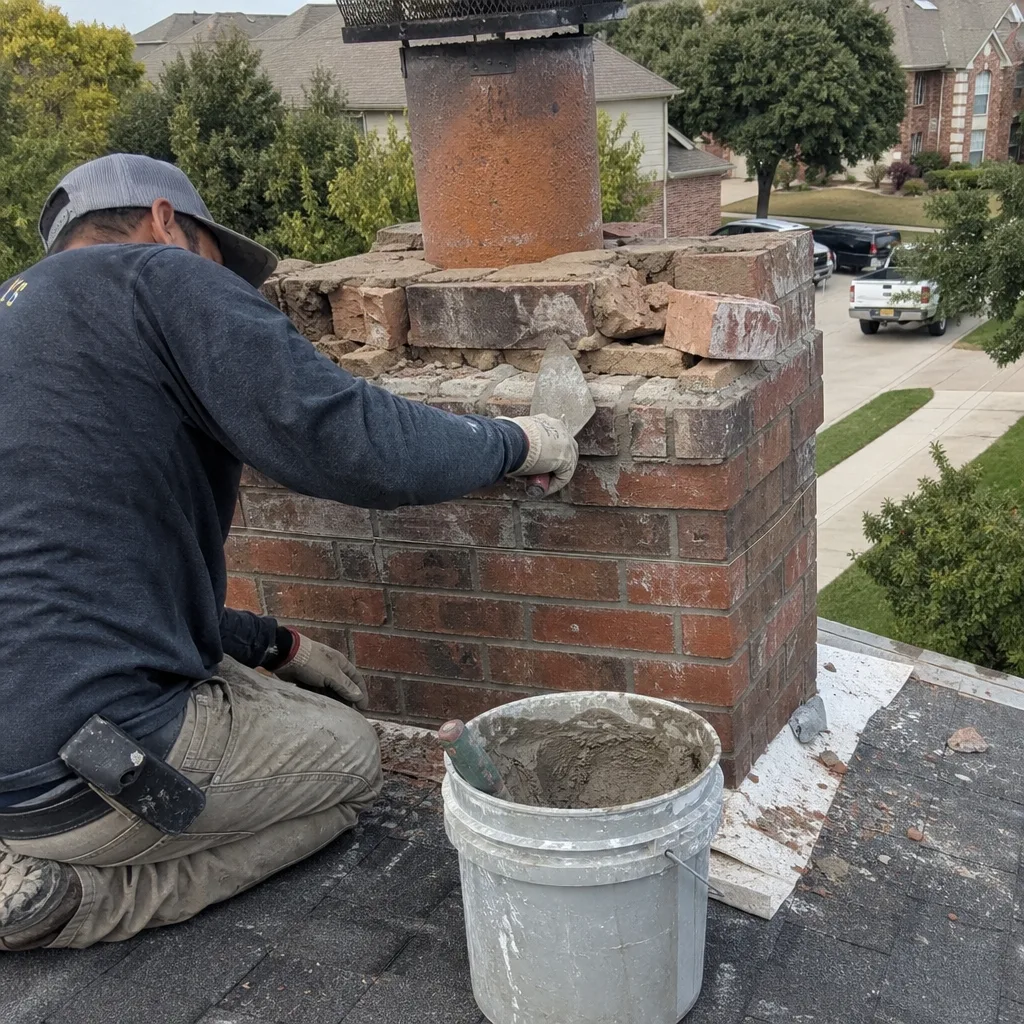
Frisco’s growth from 33,000 residents in 2000 to over 220,000 today created a housing stock with specific vulnerability patterns. Understanding them helps interpret warning signs correctly.
Construction-Era Deficiencies
Homes built 2005-2012, the peak construction years, often have chimneys built to minimum code with materials selected for speed, not longevity. We’ve found unlined chimney flues in Frisco homes that passed city inspection because the liner requirement wasn’t consistently enforced for factory-built fireplaces paired with metal chimneys. The warning sign is a metal chimney with no visible liner termination at the top, or a factory-built fireplace with a chimney that shows rust staining at the exterior joints.
Clay Soil Movement
Frisco sits on the Blackland Prairie, with expansive clay soils that swell when wet and shrink when dry. This creates seasonal foundation movement that cracks chimney crowns, separates flue liners at joints, and opens gaps between chimney and house framing. The warning sign is a crown crack that reopens after sealing, or new interior drywall cracks that align with the chimney chase. In neighborhoods like Newman Village and later phases of The Grove, we’ve documented chimney separation from house walls of 1/2 inch or more after drought-to-wet transitions.
Hard Water and Sprinkler Systems
Frisco’s municipal water hardness averages 180-220 ppm. Sprinkler systems that spray chimney surfaces leave mineral deposits that accelerate mortar deterioration and stain brick. The warning sign is white or gray staining below sprinkler head height on the chimney face, distinct from efflorescence by its pattern: it follows the spray arc, not the masonry joints. Over time, this constant wet-dry cycling destroys mortar joints that would otherwise last decades.
Wind and Downdraft
Frisco’s flat terrain and position on the southern edge of Tornado Alley create sustained north winds in winter that drive downdrafts in chimneys without proper cap height or draft induction. The warning sign is smoke or odor entry when the fire is first lit, or when wind exceeds 15 mph, even with the damper fully open. This is a design or cap issue, not a flue obstruction, but it creates the same hazardous conditions.
Common Mistakes to Avoid
- Assuming a gas log fireplace doesn’t need inspection. Gas fireplaces produce corrosive condensation, and their metal chimneys deteriorate from the inside. The warning sign is rust debris in the firebox or a white, powdery deposit on the fake logs. Annual inspection applies to all fuel types.
- Sealing cracks with hardware-store caulk. Standard silicone and latex caulks fail above 200°F and can release toxic fumes. They also trap moisture behind them, accelerating deterioration. We’ve removed pounds of inappropriate sealant from Frisco chimneys where homeowners attempted DIY repair.
- Ignoring a chimney because “it’s not that old.” Age is irrelevant to condition. We’ve found critical defects in 3-year-old chimneys and pristine 40-year-old systems. Construction quality, maintenance history, and local conditions determine safety, not the installation date.
- Using the fireplace as a “test” after noticing a warning sign. A small fire to “see if it’s really a problem” is how minor defects become house fires. If you’ve identified a measurable crack, odor, or operational issue, stop use and schedule inspection.
- Trusting a home inspector’s chimney assessment without a Level 2 camera inspection. General home inspectors in Frisco do excellent work, but they’re limited to accessible areas and visual examination. NFPA 211 Level 2 requires camera inspection of the flue interior, which most general inspectors don’t perform. Their “chimney appears serviceable” is not a clean bill of health.
- Waiting for “burning season” to schedule. In Frisco, sweep schedules compress between October 15 and December 1. Warning signs identified in September can be addressed before first use. Warning signs identified in November may wait weeks for appointment availability.
- Accepting a verbal quote or “estimate range” without written scope. Haven Standard Clause 1 requires a written price, written scope, and written warranty before any work starts. Verbal estimates create disputes about what was included and what the final price covers.
When to Call a Professional
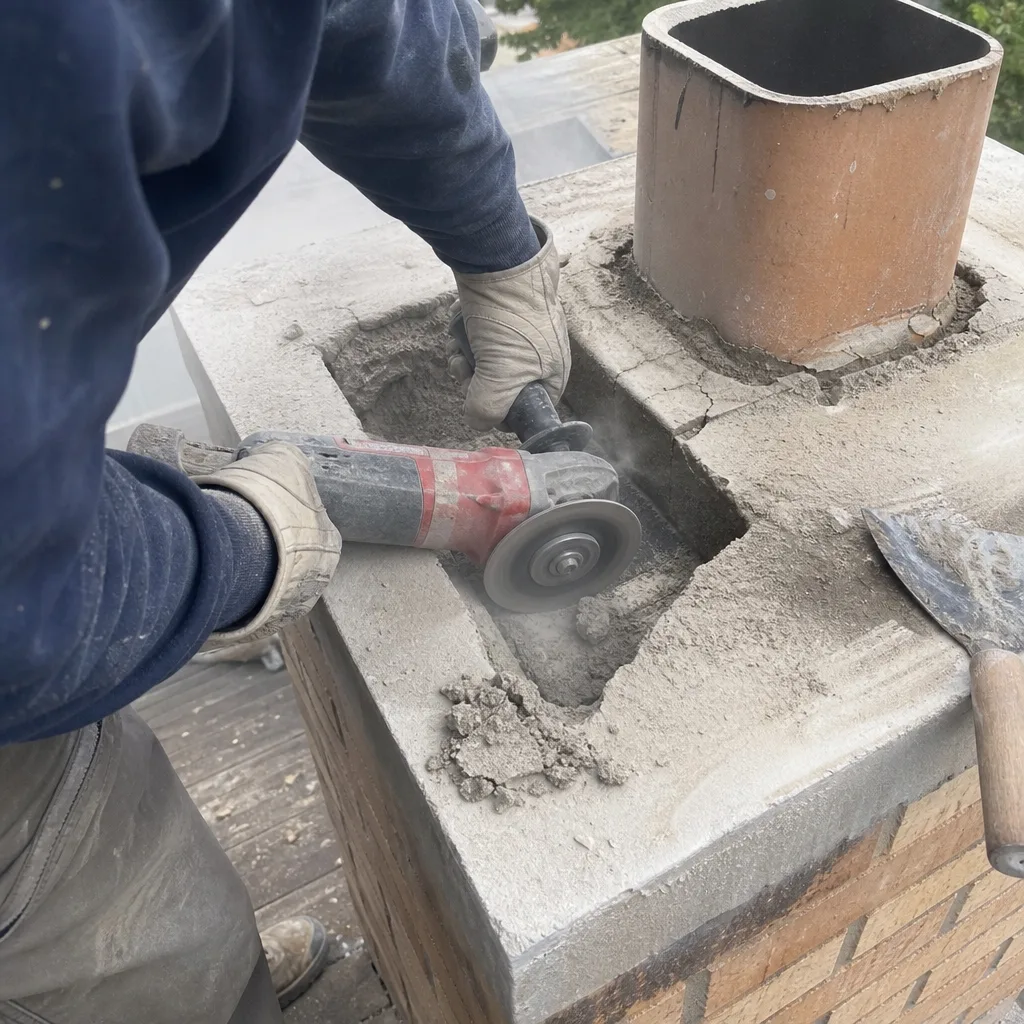
Call for a Level 2 inspection if you’ve measured any crack at or above the thresholds in this guide, if you smell sulfur or acrid burning when the fireplace is not in use, if efflorescence has spread more than 12 inches in a season, or if your damper doesn’t fully open and seat. These are not maintenance items. They’re active hazard indicators.
Call immediately if you’ve had a chimney fire, even a small one: the thermal shock damages flue liners in ways visible only by camera, and continued use risks carbon monoxide intrusion or a second, larger fire.
Level Two Chimney Frisco offers free estimates in Frisco. Every estimate includes a written price before work starts, a documented photo record on completion, and the 365-Day Done Right Promise. Call (940) 290-7230 to schedule, or bring us any competitor’s written estimate for a free second opinion.
Frequently Asked Questions
A standard chimney sweep and Level 2 inspection in Frisco typically ranges from $199 to $349, depending on flue accessibility, creosote accumulation level, and whether the fireplace is a standard masonry unit or a factory-built insert with a metal chimney. Level Two Chimney Frisco delivers a written price before any work starts, with no hidden charges for the camera inspection or photo documentation, both included as standard under Haven Standard Clause 4. Call (940) 290-7230 for an exact quote; estimates are free.
You need a new flue liner only if the existing one is damaged, improperly sized, or absent, and only when that condition is documented by camera inspection. In our experience across 38,000+ inspections, roughly 30% of recommended liner replacements are unnecessary; the “damage” is superficial staining or a joint gap that can be sealed. We provide the camera footage and explain exactly what we found before recommending replacement. If another company has recommended a liner, bring us their written estimate for a free second opinion.
NFPA 211 recommends annual inspection for all chimneys, and cleaning when creosote accumulation reaches 1/8 inch. In Frisco, where many homeowners burn oak and pecan from local tree services, we find cleaning is needed every 1-2 cord-years of use. Gas fireplaces need annual inspection for corrosion and debris, though they typically don’t require sweeping. The definitive answer comes from the inspection, not the calendar.
Skipped maintenance leads to creosote accumulation that ignites at 451°F, causing chimney fires that damage flue liners and can spread to framing. It also allows moisture intrusion that destroys mortar and brick from the inside, and it permits carbon monoxide to enter living spaces through deteriorated liners or missing cleanout doors. In Frisco, where tight new construction creates negative house pressure, CO intrusion risk is elevated even without a fireplace in use if the water heater or furnace shares the chimney. The cost of prevention is a fraction of the cost of remediation or hospitalization.
Summer chimney odor in Frisco is usually moisture-activated creosote or animal entry. High humidity rehydrates dried creosote deposits, releasing their volatile compounds. The smell enters the house when the damper leaks or when negative pressure from air conditioning draws air down the flue. A proper-fitting chimney cap, a sealed damper, and annual cleaning eliminate most summer odor. If the smell is sulfurous rather than musty, schedule inspection; that indicates gas leak or flue gas intrusion, not normal creosote.
No. The width of the crack, not your perception of “small,” determines safety. A 1/8-inch crack in the firebox is the threshold at which flame contact with combustibles becomes a code violation. Measure it. If it’s at or above 1/8 inch, stop use and schedule inspection. If you can’t measure it accurately, assume it exceeds the threshold and schedule inspection. The cost of an inspection is negligible compared to the cost of a fire.
The Bottom Line
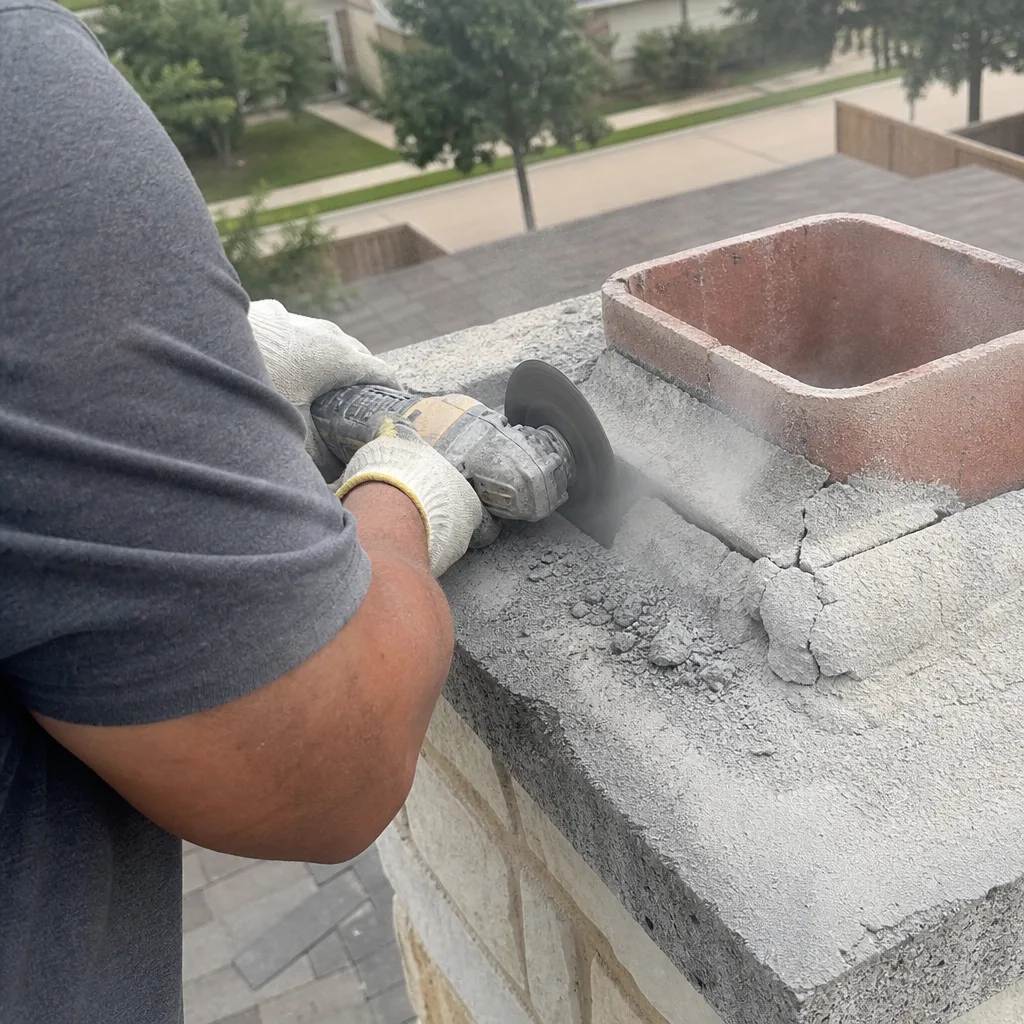
The chimney warning signs that matter are measurable, not dramatic. A 1/8-inch crack, a 1/2-inch mortar recession, a 12-inch efflorescence spread, a damper that won’t seat: these are the quiet predictors of fire and CO hazard, appearing months before any visible symptom. In Frisco’s specific conditions of clay soil, hard water, rapid construction, and tight new homes, these signs appear earlier and progress faster than in other markets. Document what you find with dated, scaled photographs. Measure before you assume. And when a condition crosses threshold, stop use and get a Level 2 camera inspection that provides evidence, not opinion.
Level Two Chimney Frisco has performed these inspections since 2009, with a written price before every job, a documented photo record after every visit, and materials from DuraFlex, HeatShield, and Famco procured through our buying network to keep prices honest. The 365-Day Done Right Promise applies to everything we do.
Call (940) 290-7230 for a free estimate, or schedule your inspection online. We’re available by live phone 24 hours a day, 7 days a week.
Written by Corrine Halstead, Owner at Level Two Chimney Frisco, serving Frisco since 2009.