
Last updated September 22, 2026
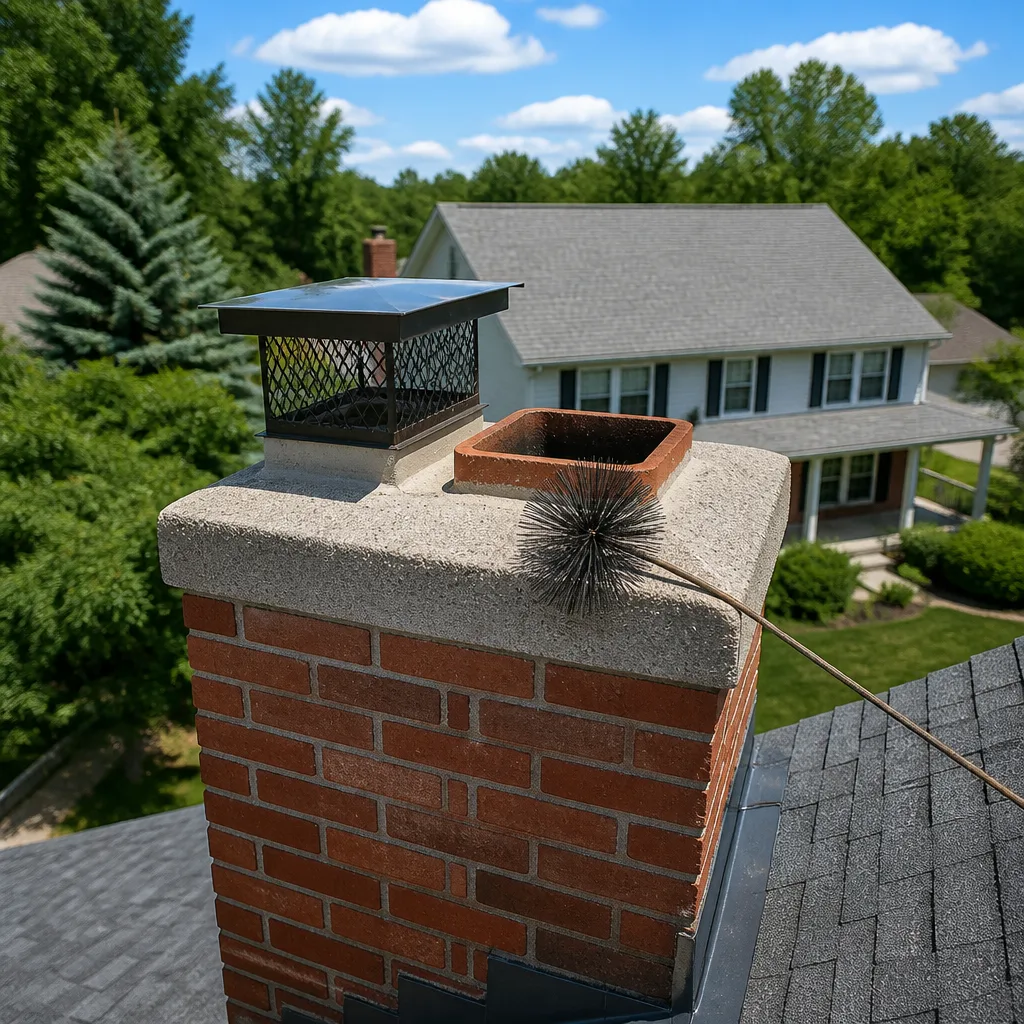
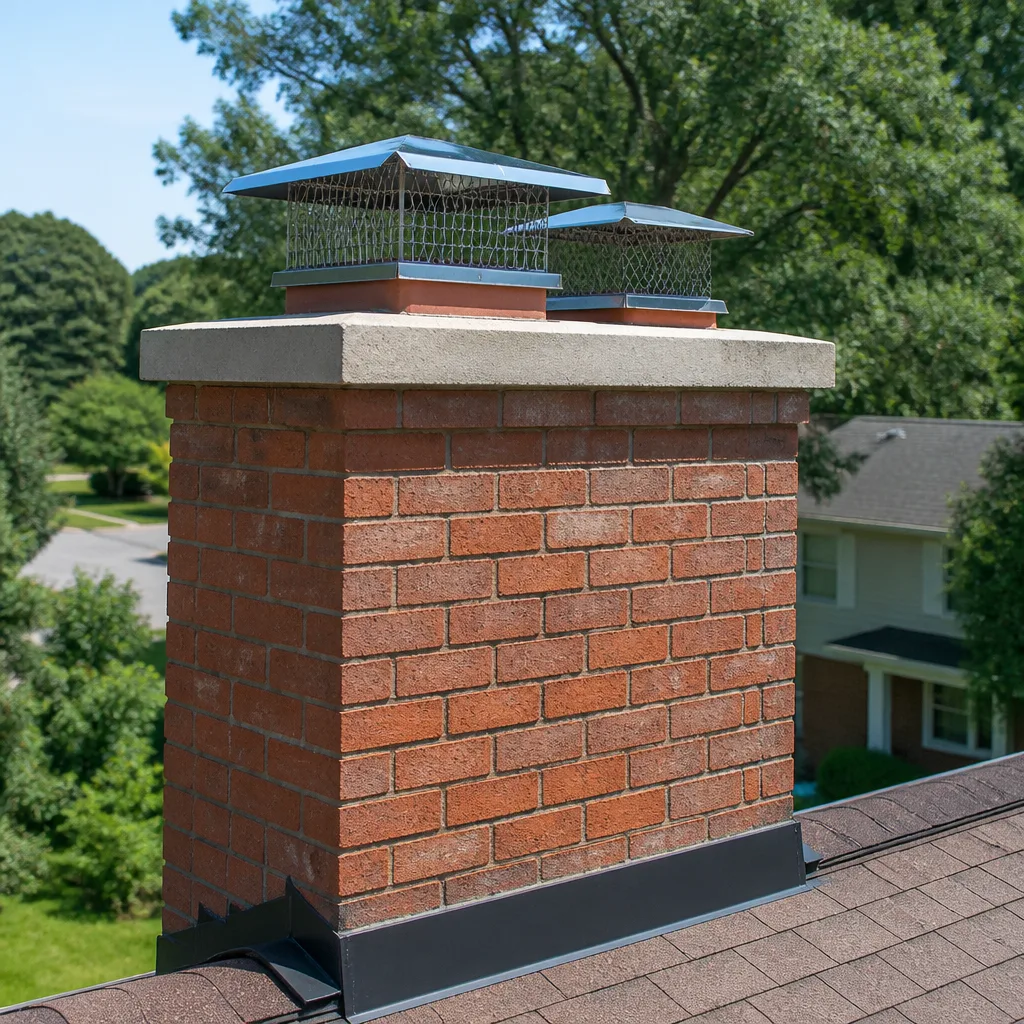
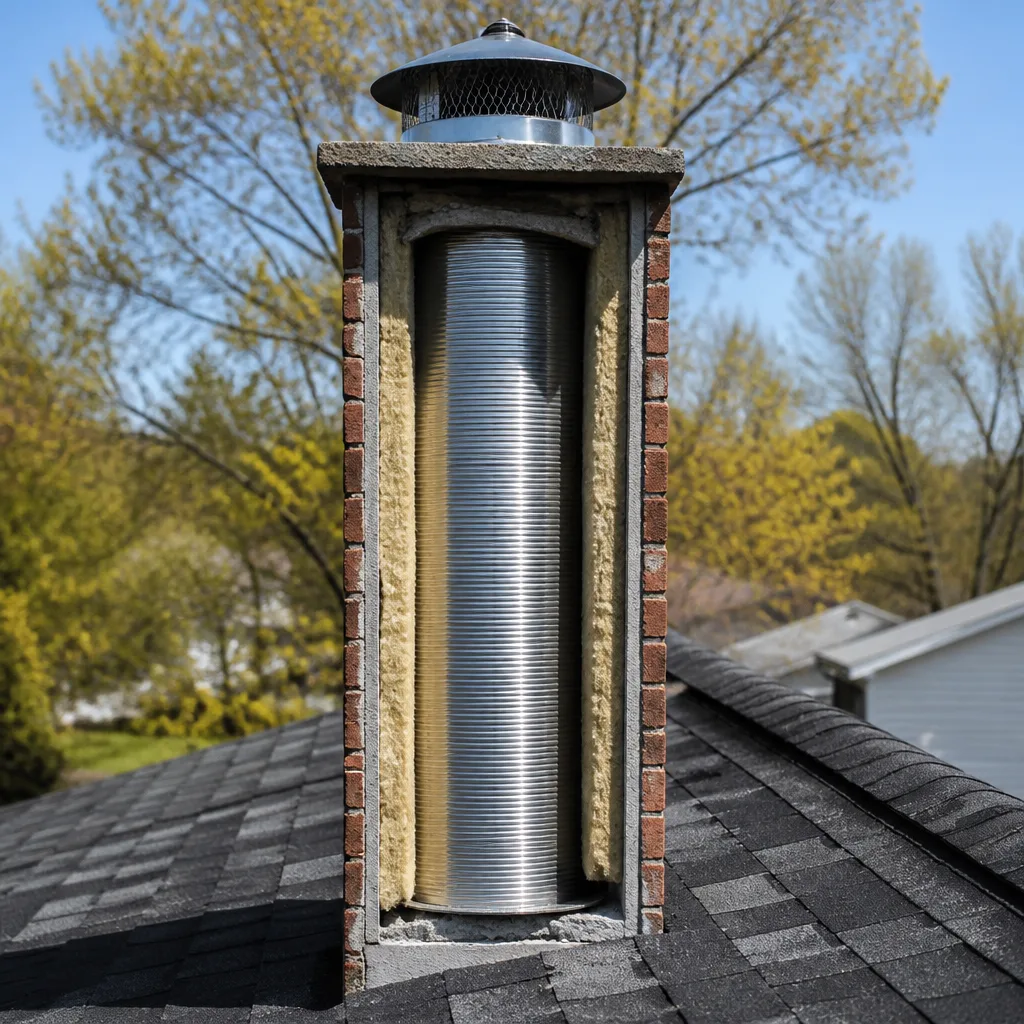
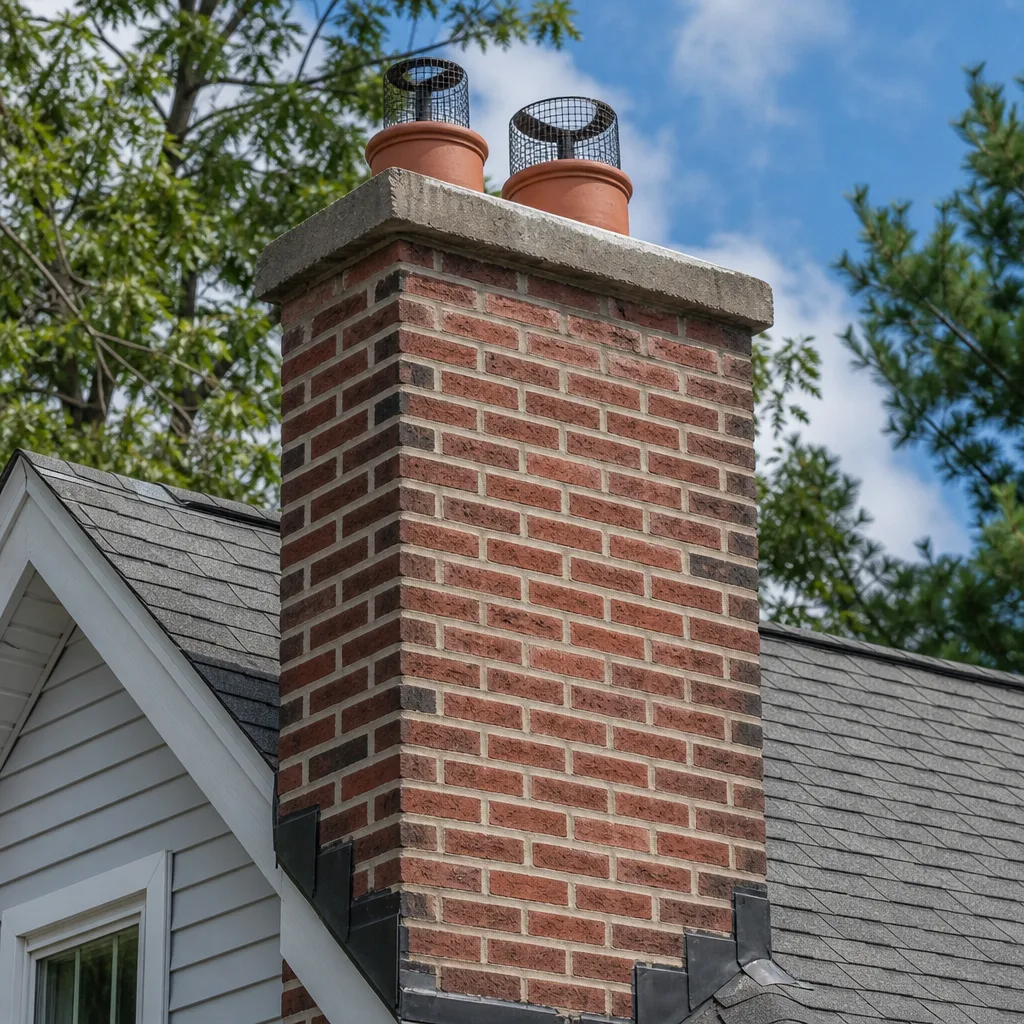
Level 1 sweep and inspection to the NFPA 211 annual standard - flue, crown, cap, and flashing checked and photographed
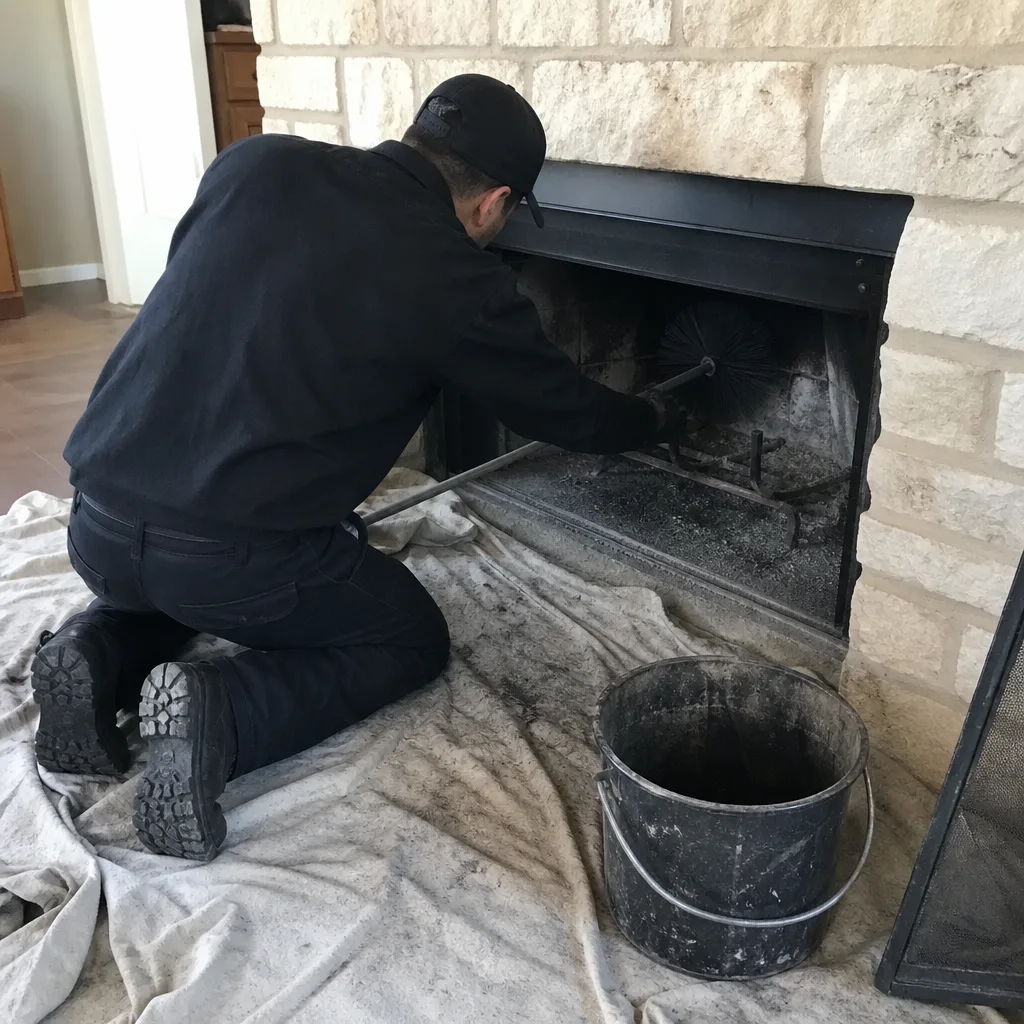
Chimney sweep logs do not sweep chimneys. They loosen some creosote - which then falls where a brush and vacuum still have to collect it.
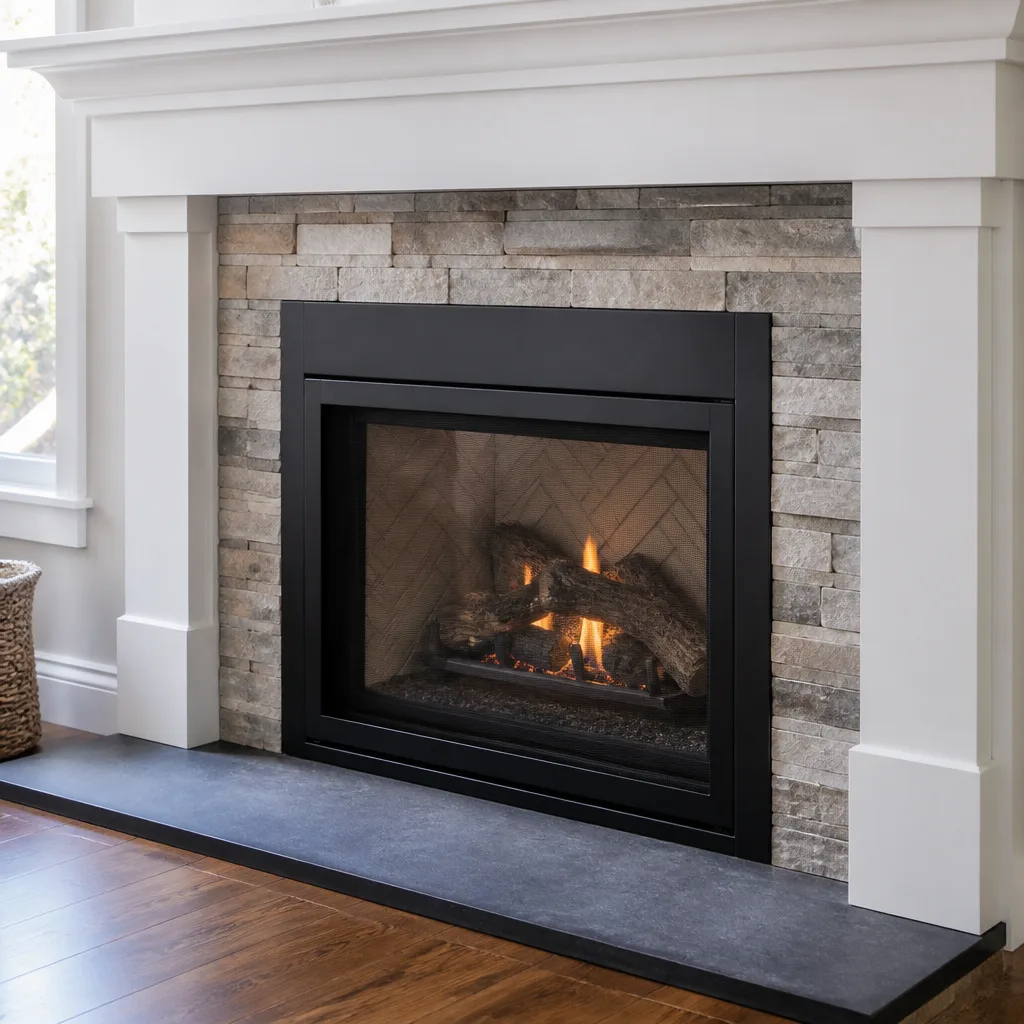
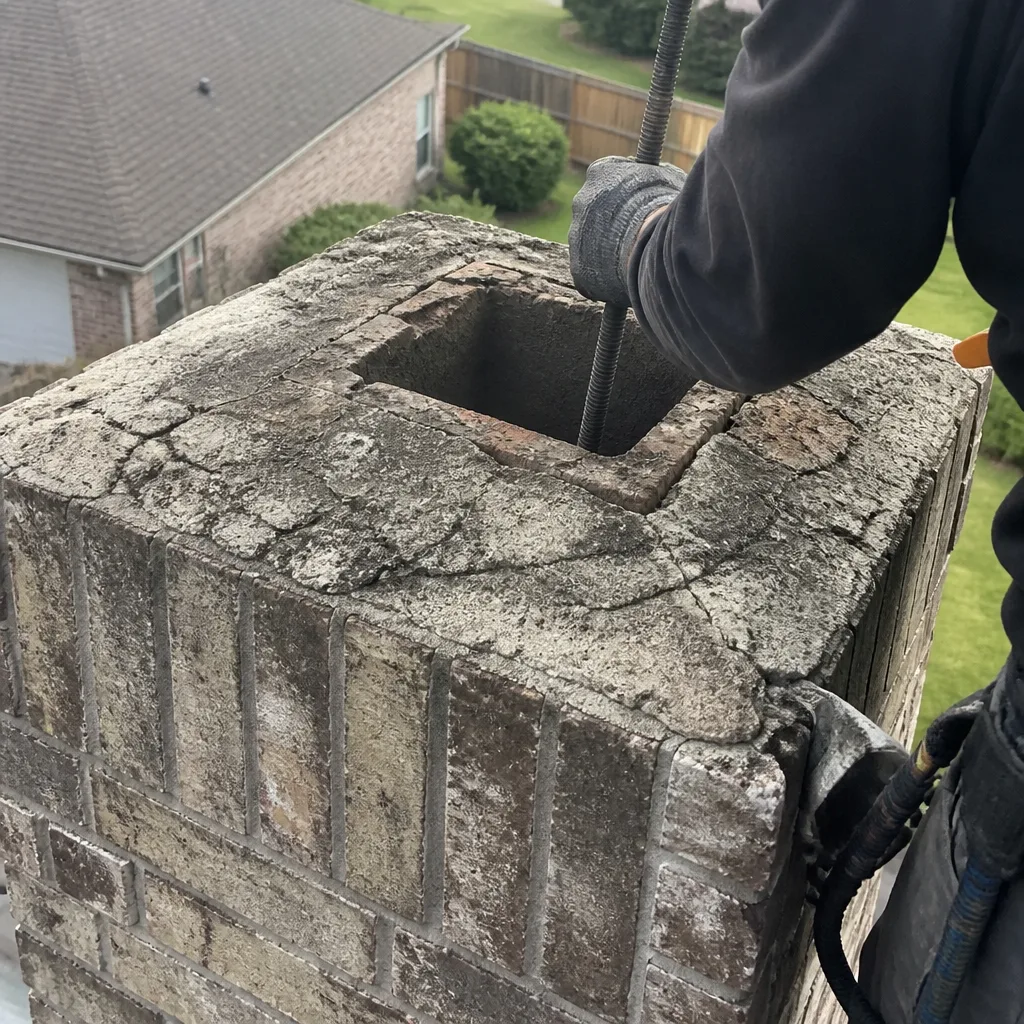 Before
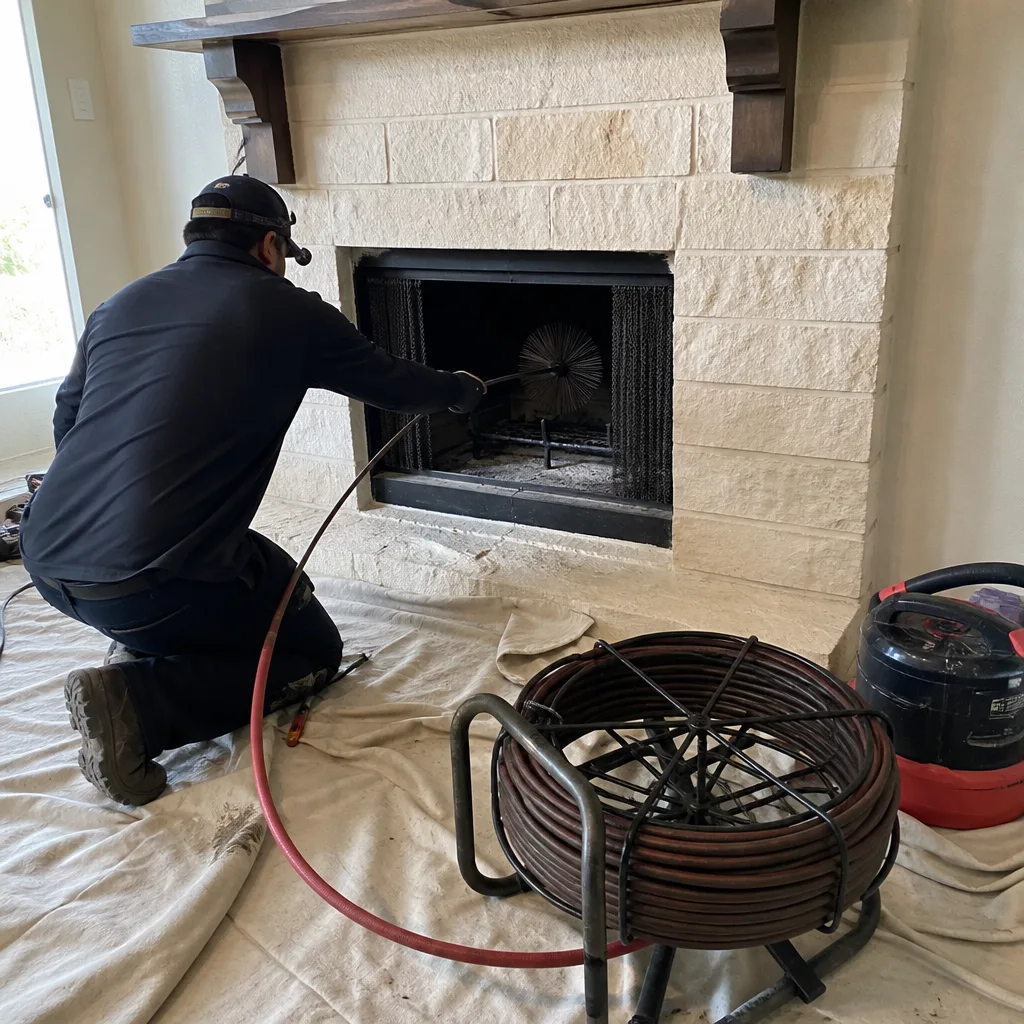 After
After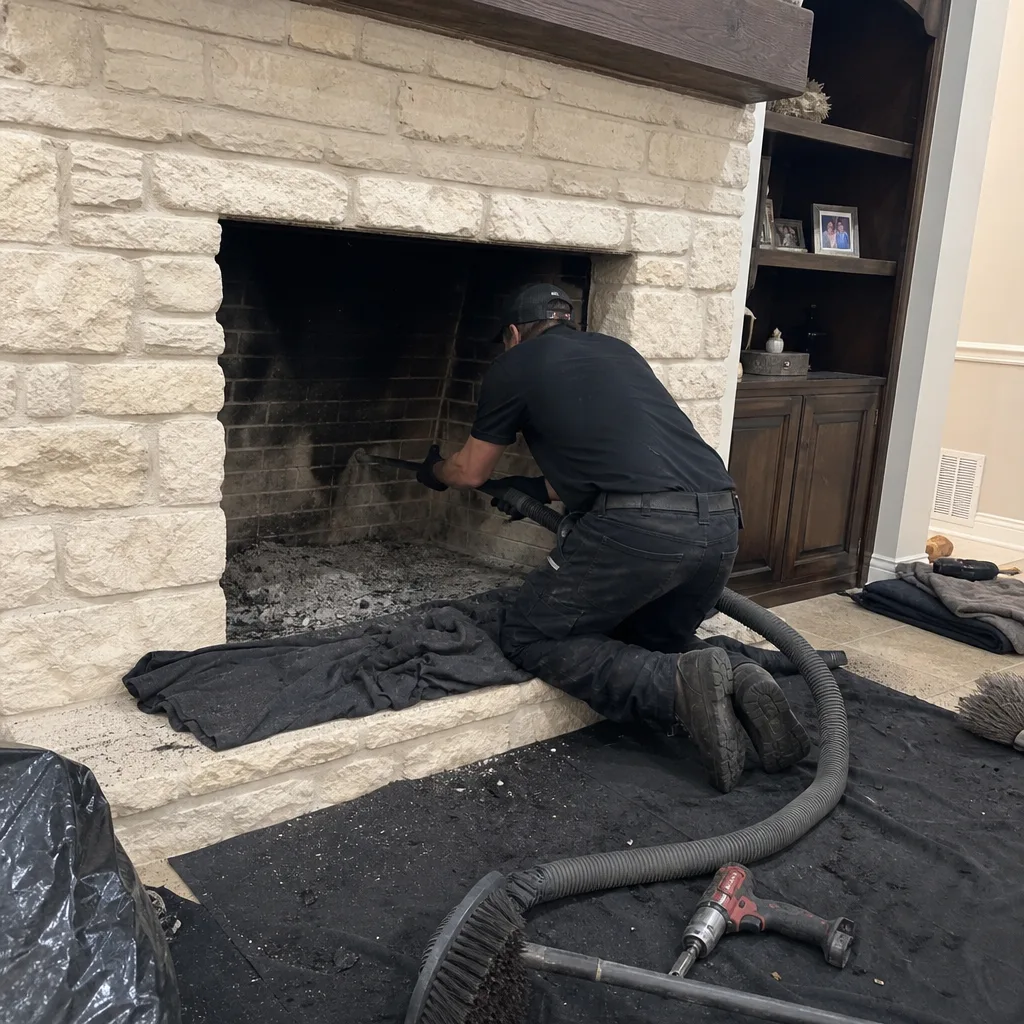 Before
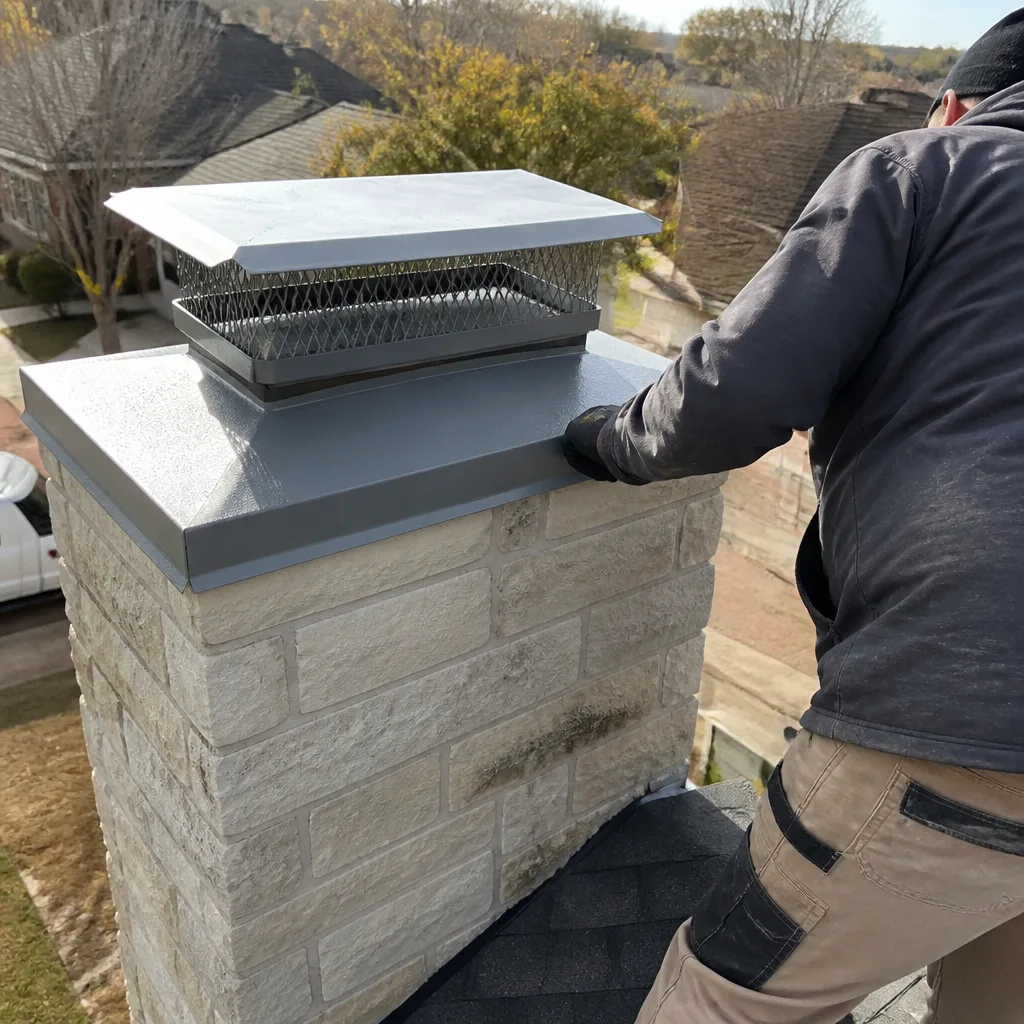 After
After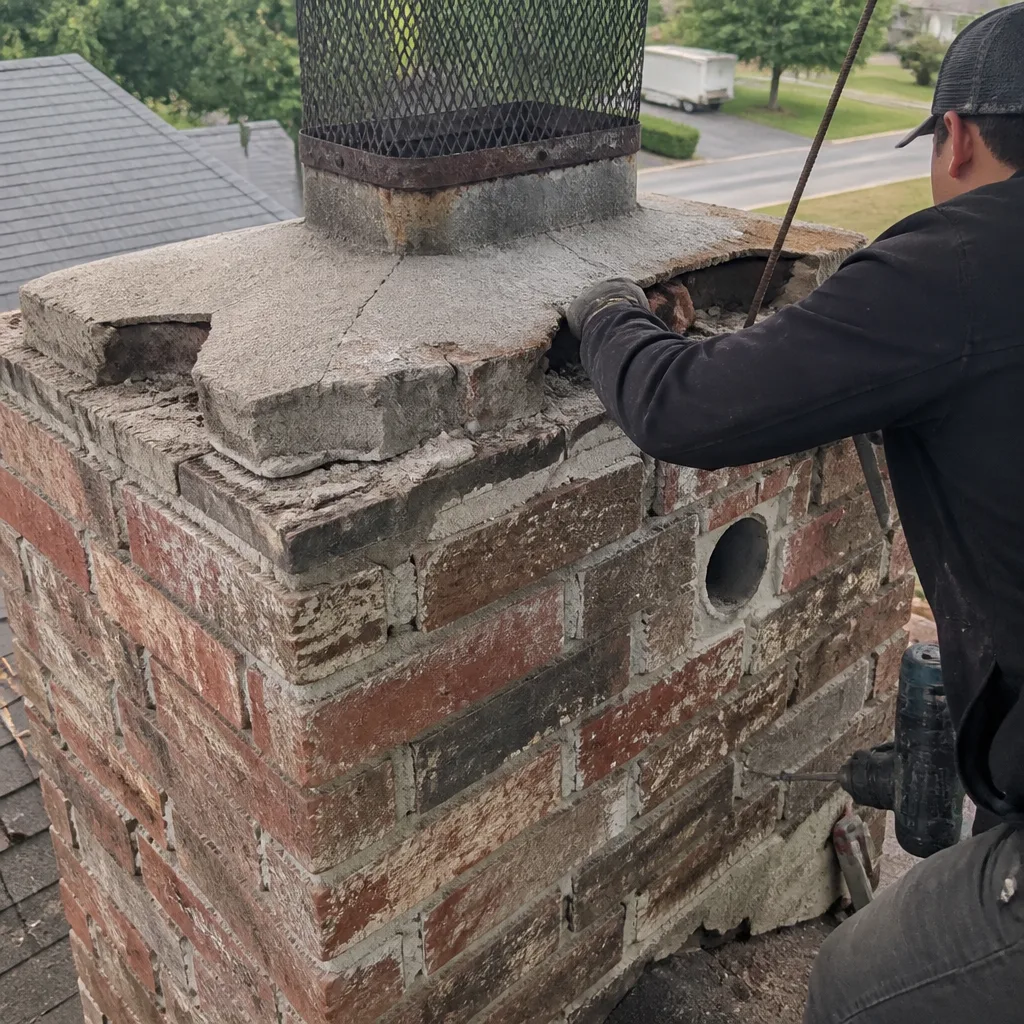 Before
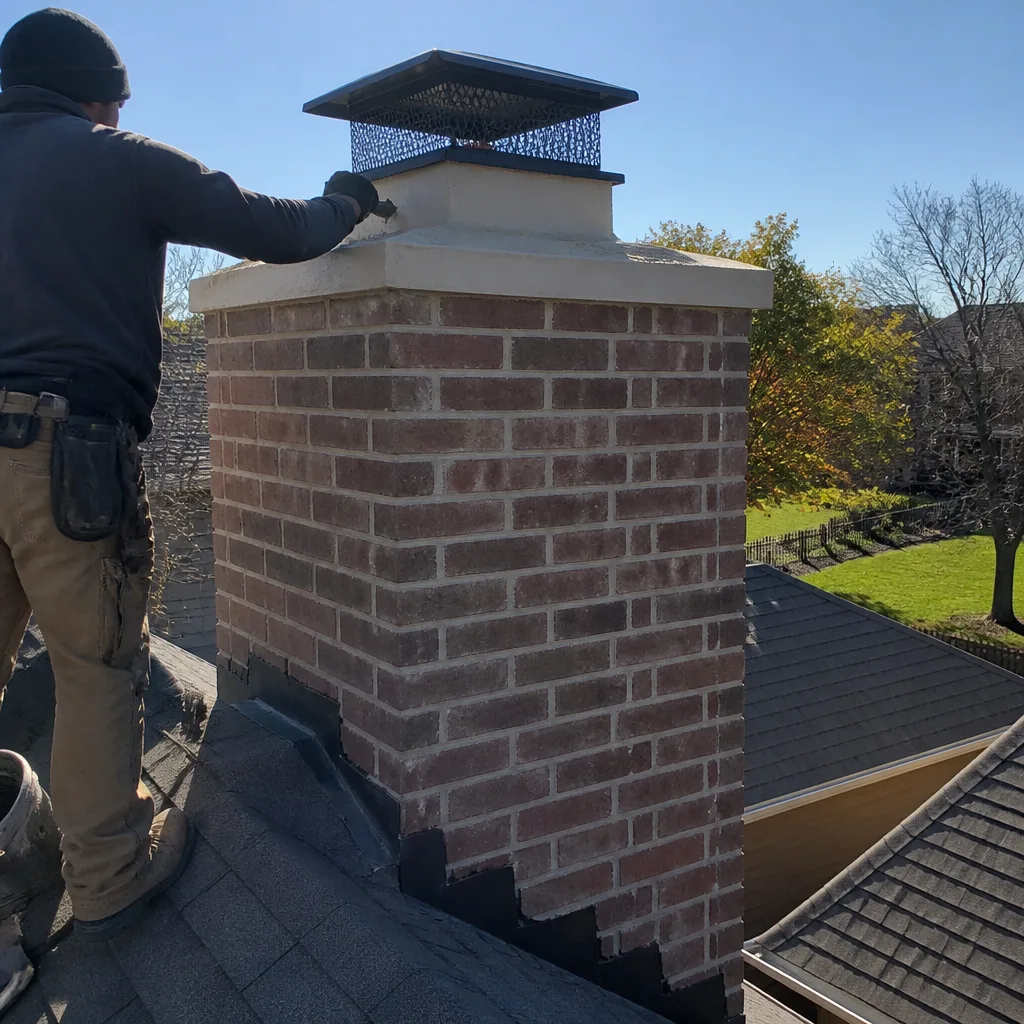 After
AfterDIY vs Professional Chimney Cleaning: The Frisco Homeowner’s Decision Guide
Chimney brush kits are $60 at any hardware store in Frisco, and they work - on the 77% of flues that are clean, intact, and free of glazed creosote. The problem is you don’t know which category your flue is in until after the brush comes back down. We’ve inspected more than 38,000 chimneys since 2009, and the hidden conditions we find in that remaining 23% are what separate a Saturday morning project from a four-figure repair bill or worse. This guide shows you exactly where DIY cleaning ends, what a camera inspection reveals that a brush cannot, and how to make the right call for your specific fireplace setup - or see our How to Hire a Chimney Cleaning Contractor in Frisco: A Step-by-Step Guide if you decide to go pro.
Quick Answer
Most Frisco homeowners with a gas fireplace or light wood-burning use can safely handle basic brush maintenance between professional visits. For wood-burning systems, pellet stoves, or any fireplace used more than three times weekly during burning season, a professional NFPA 211 Level 2 inspection with camera documentation is necessary annually because cracks, liner gaps, and Class III creosote are invisible until a camera finds them. The true cost comparison favors professional service once you factor in equipment, disposal, and the uninsured risk of missing a hidden defect.
Table of Contents
- The Five Conditions That Make DIY Cleaning Appropriate
- What You Physically Cannot See Without a Camera
- True Cost Comparison: DIY Kit vs Professional Sweep
- Legal and Insurance Exposure of DIY Cleaning
- The Hybrid Approach: Homeowner Brush + Professional Inspection
- Frisco-Specific Considerations: Climate, Codes, and Common Issues
- Common Mistakes to Avoid
- When to Call a Professional
- Frequently Asked Questions
BeforeAfterThe Five Conditions That Make DIY Cleaning Appropriate
DIY chimney cleaning is not universally reckless. In specific circumstances, it’s a reasonable maintenance task. The key is confirming all five conditions before you start, not assuming them.
1. Fuel Type: Gas or Occasional Wood Only
Natural gas and propane fireplaces produce minimal soot and no creosote. A visual check of the burner ports and a gentle vacuum of the firebox is typically sufficient. If you burn wood, DIY brushing is only appropriate if you burn seasoned hardwood (oak, hickory, mesquite) for fewer than 30 fires per season. Pine, cedar, and construction scrap accelerate creosote buildup beyond what a homeowner brush can manage.
2. Burn Frequency: Light Use Defined
“Light use” means fewer than three fires per week during burning season, with each fire under four hours. Exceed this, and creosote deposits enter Stage 2 (glazed, tar-like) territory where homeowner brushes skid over the surface rather than removing it. In our Frisco inspections, we find Stage 2 or 3 creosote in roughly 40% of chimneys where the homeowner self-reported “light” use - the gap between perception and measurement is wide.
3. Flue Liner Material: Clay Tile or Stainless Steel in Good Condition
You need to know your liner type. Clay tile liners (common in Frisco homes built 1985-2005) crack from thermal shock. Stainless steel liners (retrofit or newer construction) corrode at weld points. If you don’t know your liner condition from a prior professional inspection, DIY brushing risks catching a brush head on a spalled tile edge or unseen joint separation, lodging equipment in the flue or worsening damage. We use Chimney Cleaning & Sweep in Frisco protocols that include liner identification before any brush enters the flue.
4. Deposit Classification: Stage 1 Creosote Only
Creosote has four stages. Stage 1 is flaky, sooty, and brushes off easily - this is what DIY kits handle. Stage 2 is shiny and tar-like; Stage 3 is hardened, glossy, and essentially a layer of fuel coating your flue. Stage 4 is the fully ignited state - a chimney fire. You cannot distinguish Stage 1 from Stage 2 by looking up from the firebox. A professional camera inspection is the only way to classify deposits before cleaning.
5. Physical Access: Straight Flue, No Offsets
DIY brush rods flex minimally. If your flue has an offset (a bend to avoid a structural element), a standard rod kit will not navigate it. Many Frisco homes in The Trails and Phillips Creek Ranch have offsets where the chimney routes around second-story HVAC runs. Without a camera to confirm flue geometry, you may push a brush into a bend it cannot clear, leaving deposits above the offset or stuck equipment in the flue.
How to confirm each condition before starting:
- Check your fuel type and burn log (or start one).
- Schedule one professional baseline inspection to establish liner type, flue geometry, and creosote stage.
- If the professional reports straight flue, intact clay tile or stainless liner, and Stage 1 deposits, note the date and plan annual re-checks.
- Purchase only a brush sized to your flue diameter (measured, not guessed) and rods rated for your chimney height.
- Never skip the re-check - conditions change, and creosote stages progress silently.
What You Physically Cannot See Without a Camera
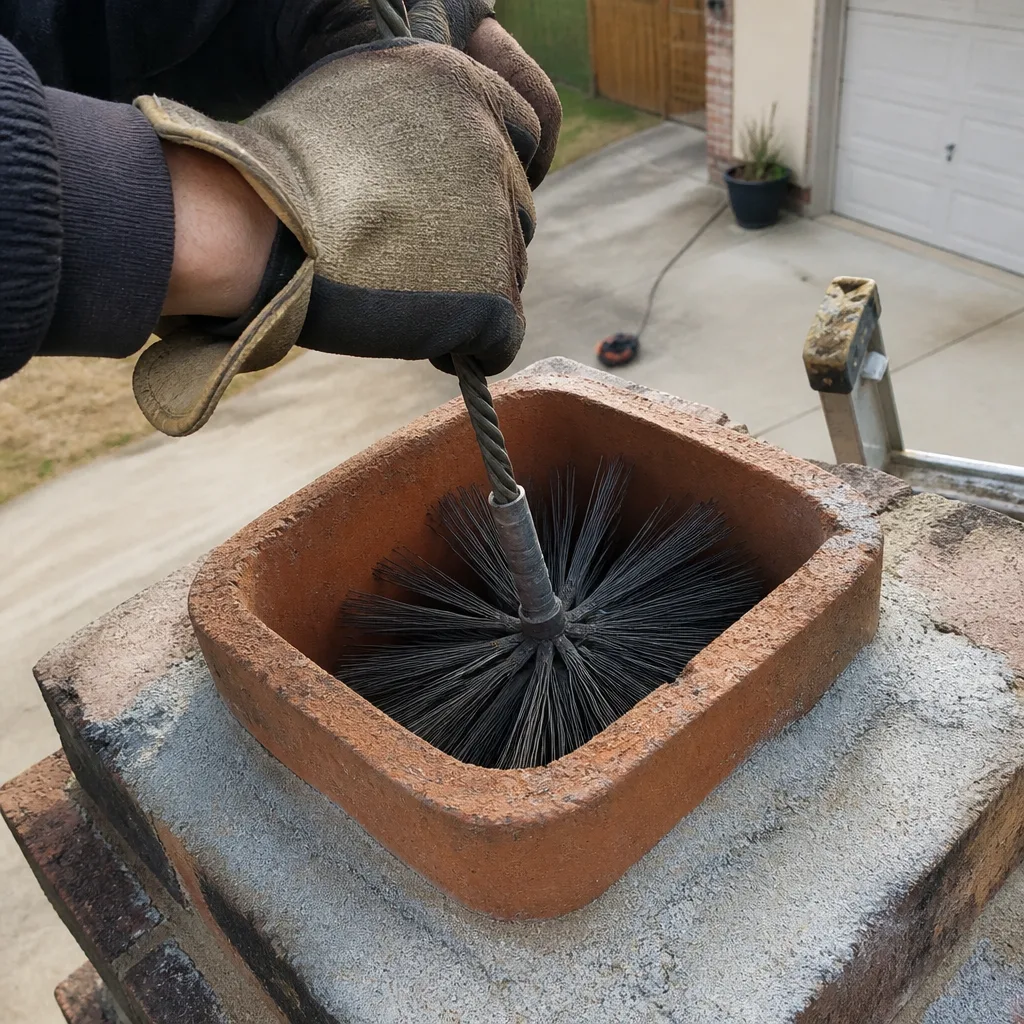
A chimney brush removes loose deposits from the flue wall. It does not diagnose. The conditions that cause chimney fires and carbon monoxide intrusion are structural and hidden. Here’s what we find in Frisco chimneys during routine Level Two Chimney Frisco home inspections, all invisible to a homeowner looking up from the hearth or down from the roof.
Liner Joint Separation
Clay tile liners are installed in 2-foot sections with refractory mortar joints. Thermal cycling opens these joints over time, creating gaps where combustion gases escape into the chimney cavity. In a framed chase, this means gases entering wall spaces. In a masonry chimney, it means accelerated deterioration of the surrounding brick. A brush passes over a joint gap without resistance; a camera reveals the daylight showing through.
We documented liner joint separation in 18% of Frisco inspections last burning season. The homes ranged from 1990s construction in Preston Vineyards to 2010 builds in Newman Village. Age is not the predictor - thermal stress history is.
Smoke Chamber Erosion
The smoke chamber is the area above the damper and below the flue throat, where fireplace dimensions narrow to flue dimensions. NFPA 211 requires parging (smooth coating) here to encourage laminar smoke flow. Eroded, corbelled brick in the smoke chamber creates turbulence, depositing creosote and slowing draft. You cannot see the smoke chamber walls from the firebox without a specialized camera on an articulating head. We include smoke chamber imaging on every Level Two inspection - it’s where many chimney fires originate, and it’s entirely hidden from homeowner view.
Third-Degree Creosote in the Offset
Offsets collect creosote because airflow slows at the bend. Third-degree creosote - hard, glossy, and fuel-dense - forms in these low-velocity zones. A standard brush skids across it. A rotary mechanical cleaner is required, operated by a technician who can monitor progress via camera. In Frisco’s older Stonebriar Creek and newer Hollyhock developments alike, we’ve removed 1/4-inch and thicker glazed deposits from offsets that the homeowner had “cleaned” annually with a brush kit.
Crown Cracking and Water Intrusion
The concrete crown at the chimney top sheds water away from the flue. Hairline cracks allow water to freeze, expand, and propagate damage through the freeze-thaw cycle. Frisco sees 20-30 freeze-thaw events annually, enough to turn a minor crack into spalling concrete and rusted flue liners within two to three seasons. A crown inspection requires roof access and close visual examination - not a task for most homeowners, and not visible from the ground.
Flue Liner Deterioration and Spalling
Clay tiles spall (flake and crumble) from internal acid attack and external moisture. The resulting debris accumulates at the flue base, restricting draft. A brush pushes past loose material; a camera reveals the thinning tile wall and the debris pile below. We’ve replaced liners in Frisco homes where the homeowner reported “the brush went through fine” - because it did, while missing the structural degradation entirely.
Key distinction: A brush cleans. A camera inspects. Cleaning without inspection is maintenance without diagnosis, and diagnosis is what prevents the failure modes that destroy chimneys and endanger occupants.
True Cost Comparison: DIY Kit vs Professional Sweep
The hardware store price tag is misleading. Here’s the full accounting for a typical Frisco wood-burning fireplace.
DIY Cleaning: Real Cost Breakdown
| Item | Cost Range |
|---|---|
| Brush and rod kit (properly sized) | $60 - $120 |
| Drop cloths, PPE, eye protection | $25 - $50 |
| HEPA vacuum or shop vac with fine filter | $80 - $200 (or rental) |
| Creosote disposal (Frisco environmental regulations) | $15 - $40 per bag |
| Camera inspection (to know what you’re cleaning) | $150 - $250 |
| Roof ladder or extension ladder rental | $40 - $80 |
| DIY Total (with camera) | $370 - $740 |
| DIY Total (without camera - incomplete) | $220 - $490 |
Professional Sweep with Documentation
| Item | Cost Range |
|---|---|
| NFPA 211 Level 2 inspection with camera scan | $199 - $349 |
| Chimney sweep/cleaning (if needed) | $150 - $250 |
| Written report with photo documentation | Included |
| Written price for any recommended repairs | Included |
| 365-Day Done Right Promise warranty | Included |
| Professional Total | $199 - $599 |
The ranges overlap significantly. A homeowner who buys the camera inspection they should (to know what they’re dealing with) spends nearly as much as professional service and still lacks the documented record, warranty, and trained interpretation of findings.
The cost gap widens when the professional finds something. A DIY cleaning that misses a cracked liner or Stage 3 creosote leads to:
- Chimney fire damage: $5,000 - $50,000+ in structure and content loss
- Emergency liner replacement: $2,500 - $7,000
- Smoke chamber parging: $1,200 - $3,500
- Crown rebuild: $800 - $2,500
Early detection during routine professional inspection prevents most of these escalations. We flag conditions when they’re monitorable or repairable, not when they’ve failed catastrophically.
Our Chimney Cleaning & Sweep in Frisco service includes the camera inspection, cleaning, and documentation as an integrated scope - no itemized surprises, no “we found this, now it costs extra” add-ons after arrival.
Legal and Insurance Exposure of DIY Cleaning
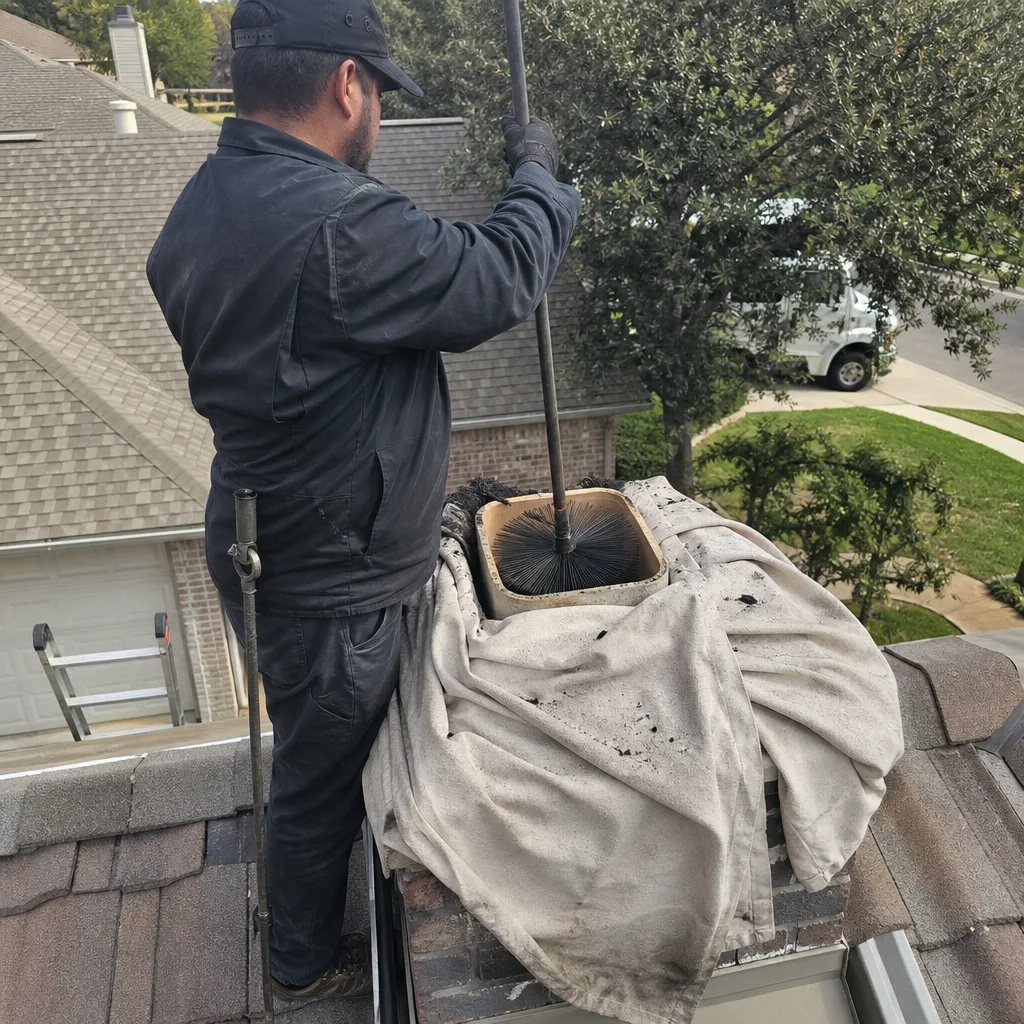
This is the factor most Frisco homeowners overlook until it’s too late. Your homeowner’s insurance policy contains conditions of coverage for fire damage. One standard condition is “reasonable maintenance” - the policyholder must demonstrate that the loss was not caused by negligence or failure to maintain.
The Documentation Gap
A DIY cleaning produces no record. No photo. No written scope. No technician certification. If a chimney fire occurs and the cause is traced to a pre-existing condition (cracked liner, obstructed flue, glazed creosote), the insurer’s adjuster will request maintenance records. Your receipt for a $79 brush kit proves purchase, not proper execution. Your verbal account of “I cleaned it last fall” carries no evidentiary weight.
By contrast, a professional inspection under NFPA 211 Level 2 standards produces:
- Dated photo record of flue condition
- Written scope of work performed
- Technician identification and license information
- Written warranty of workmanship
Clause 4 of the Haven Standard requires this documentation on every job specifically because insurers and fire marshals request it. We’ve provided inspection records to Frisco homeowners during claims - records that supported coverage because they proved due diligence.
Liability for Rental Properties
If you rent your Frisco property, DIY chimney maintenance may violate your landlord insurance requirements. Many policies mandate professional servicing of heating appliances and venting systems by licensed technicians. A tenant fire traced to an uncertified cleaning exposes you to coverage denial and direct liability.
Frisco Municipal Code Considerations
Frisco adopts the International Residential Code with local amendments. While the code does not explicitly prohibit homeowner chimney maintenance, it requires compliance with manufacturer installation instructions and NFPA 211 standards for wood-burning appliances. Professional sweeps are trained to these standards; homeowners are presumed to comply but rarely can demonstrate it. In a post-fire investigation, this distinction matters.
The Haven Standard’s Clause 1 - written price, written scope, written warranty before work starts - exists partly to create this documentation trail. Not as paperwork for its own sake, but as the record that protects the homeowner when something goes wrong.
The Hybrid Approach: Homeowner Brush + Professional Inspection
For high-use Frisco fireplaces, we recommend a specific protocol that splits the maintenance task appropriately.
The Protocol
- Homeowner brush between seasons: After the final fire of winter, when the system is cool, run a properly sized brush through a straight, known-intact flue to remove loose Stage 1 deposits. This keeps the firebox and flue base clear and reduces the professional cleaning burden.
- Professional NFPA 211 Level 2 inspection before the next burning season: Schedule in September or early October, before Frisco’s first sustained cold snap. This timing ensures any summer moisture intrusion or off-season deterioration is caught before first fire.
- Camera documentation annually: Even if the flue “looks clean,” structural conditions progress independently of deposit buildup. Liner cracks, crown damage, and water entry develop year-round.
- Repair deferral with monitoring: If the professional finds a condition that does not require immediate repair (minor crown crack, early spalling), request a written monitoring plan with re-inspection interval. This avoids both neglect and unnecessary expenditure.
What the Homeowner Brush Should Never Attempt
- Any flue with known or suspected offset
- Any chimney without a prior professional baseline inspection within 24 months
- Systems with pellet stoves or inserts (different venting dynamics, specific manufacturer requirements)
- Chimneys with history of chimney fire, lightning strike, or seismic event
- Any system showing draft problems, smoke spillage, or odor issues
This hybrid model respects what a motivated homeowner can safely accomplish while acknowledging the hard limits of homeowner equipment and access. The professional inspection is not an upsell - it’s the diagnostic layer that makes the homeowner’s maintenance meaningful rather than performative.
Materials for repairs identified during hybrid protocol inspections are sourced through our buying network from HeatShield for smoke chamber restoration, Gelco for cap and screening solutions, and Olympia Chimney for liner components - procured specifically to keep customer prices honest, not to inflate margins on proprietary products.
Frisco-Specific Considerations: Climate, Codes, and Common Issues
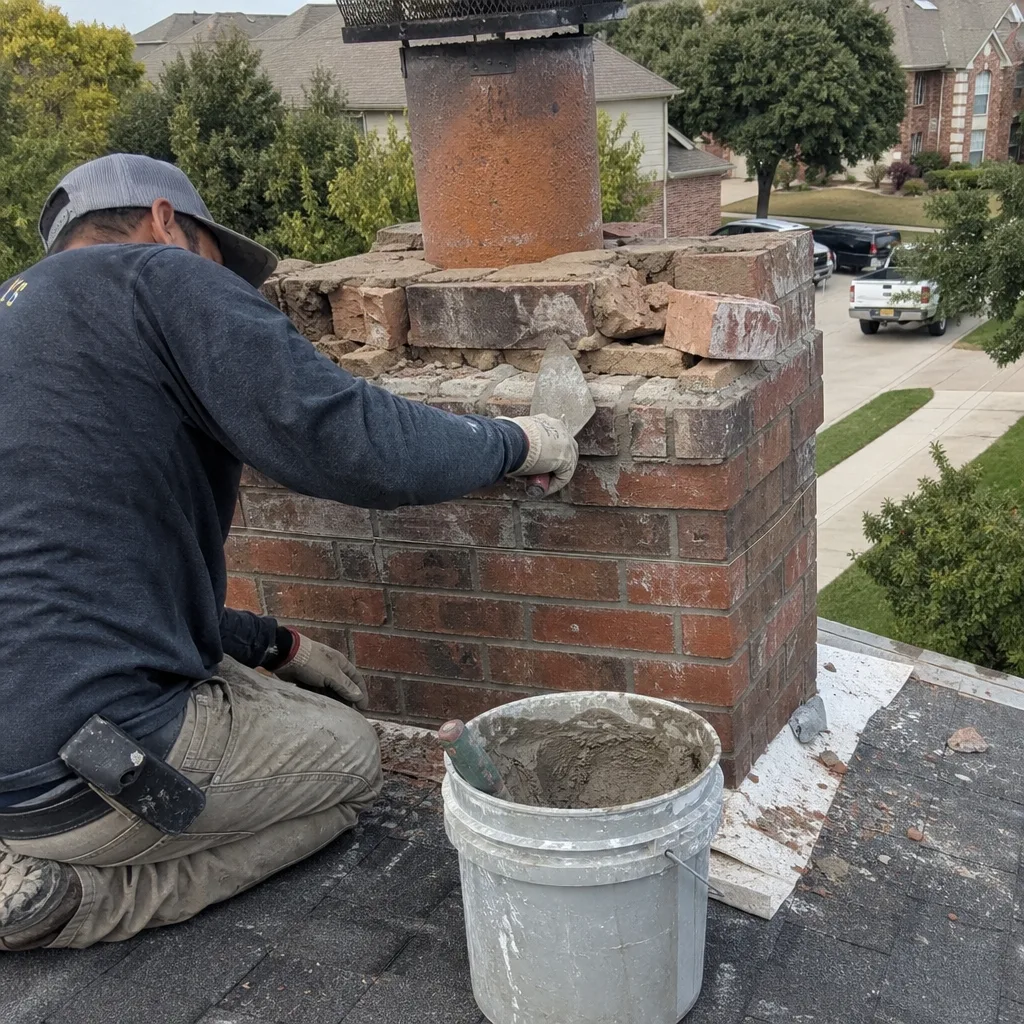
Frisco’s position on the Blackland Prairie, with its clay soils and rapid suburban growth, creates chimney conditions distinct from Dallas to the south or McKinney to the north.
Soil Movement and Chimney Settlement
The expansive clay beneath Frisco shifts with moisture. We’ve measured lateral chimney settlement in homes throughout The Grove and Richwoods that has opened mortar joints and tilted chimney crowns. A homeowner brush does not detect settlement - the flue may brush clean while separating from the structure around it. Our camera inspections include assessment of chimney plumb and crown level; settlement beyond 1/2 inch triggers structural evaluation.
Hard Water and Masonry Staining
Frisco’s municipal water supply, drawn from surface and groundwater sources with moderate hardness, produces efflorescence (white mineral deposits) on exterior masonry. This is cosmetic, but it signals moisture movement through the chimney structure that accelerates freeze-thaw damage. We document efflorescence patterns during exterior inspection and correlate them with interior moisture readings.
New Construction Chimney Quality
Frisco’s building boom 2015-2022 produced thousands of homes with builder-grade chimney installations. Common issues we find in these properties:
- Improperly sized flues for the fireplace opening (violates NFPA 211, causes chronic smoking)
- Missing or inadequate chimney caps (allows direct water and animal entry)
- Unparged smoke chambers (rough brick creates turbulence and creosote accumulation)
- Zero-clearance fireplaces with damaged refractory panels (fire risk, invisible without close inspection)
These are not conditions a homeowner brush addresses. They’re design and construction defects that require professional identification and remediation, often under builder warranty if caught within the statutory period.
Burning Season Timing
Frisco’s first sustained cold typically arrives in late November, with peak fireplace use December through February. The compression of demand creates scheduling pressure. We recommend booking professional inspections by October 15 - this is not urgency theatre, it’s practical capacity management. For year-round maintenance timing, see our Seasonal Chimney Cleaning Care for Frisco: Year-Round Homeowner’s Guide. Our 24/7 live phone support exists partly to handle the October scheduling volume without voicemail dead-ends.
Common Mistakes to Avoid
- Assuming gas fireplaces need no professional attention. Gas systems require burner inspection, venting verification, and carbon monoxide testing. A clean flue does not mean a safe system. We’ve found deteriorated flex connectors and blocked termination caps in Frisco gas fireplaces that presented no visible symptom until tested.
- Using a brush that’s the wrong diameter. An undersized brush centers poorly and leaves wall deposits. An oversized brush wedges and may damage clay tile edges. Flue diameter must be measured at multiple points; oval flues common in 1990s Frisco construction require oval brushes, not round.
- Cleaning from the top down without roof safety equipment. Falls from residential roofs are a leading cause of homeowner injury. If you cannot work from a secured ladder with fall protection, do not access the roof. Clean from the firebox upward, accepting that this method is less effective for the flue top.
- Disposing of creosote in household trash. Frisco’s environmental regulations classify creosote as a hazardous combustion byproduct. Improper disposal risks fines and creates fire hazard in collection vehicles. Professional sweeps handle disposal through licensed waste streams.
- Skipping inspection after a chimney fire event. Even a “small” chimney fire (loud popping, dense smoke, hot exterior masonry) causes liner damage that may be invisible. We’ve inspected Frisco chimneys where the homeowner reported “a little incident last year” and found cracked clay tile, warped metal liners, and pyrolyzed nearby framing. These require professional evaluation, not a fresh brush pass.
- Trusting “chimney cleaning logs” as substitute for mechanical cleaning. These products claim to loosen creosote through catalytic action. In our experience, they produce flaky debris that falls to the smoke shelf but does not exit the system. The loosened material often obstructs the flue base and requires professional removal.
- Neglecting the exterior during interior focus. A clean flue with a failed crown is a chimney that will deteriorate rapidly. Frisco’s wind-driven rain from spring thunderstorms enters through cap and crown defects, undermining everything below. Include exterior visual inspection in any maintenance plan.
When to Call a Professional
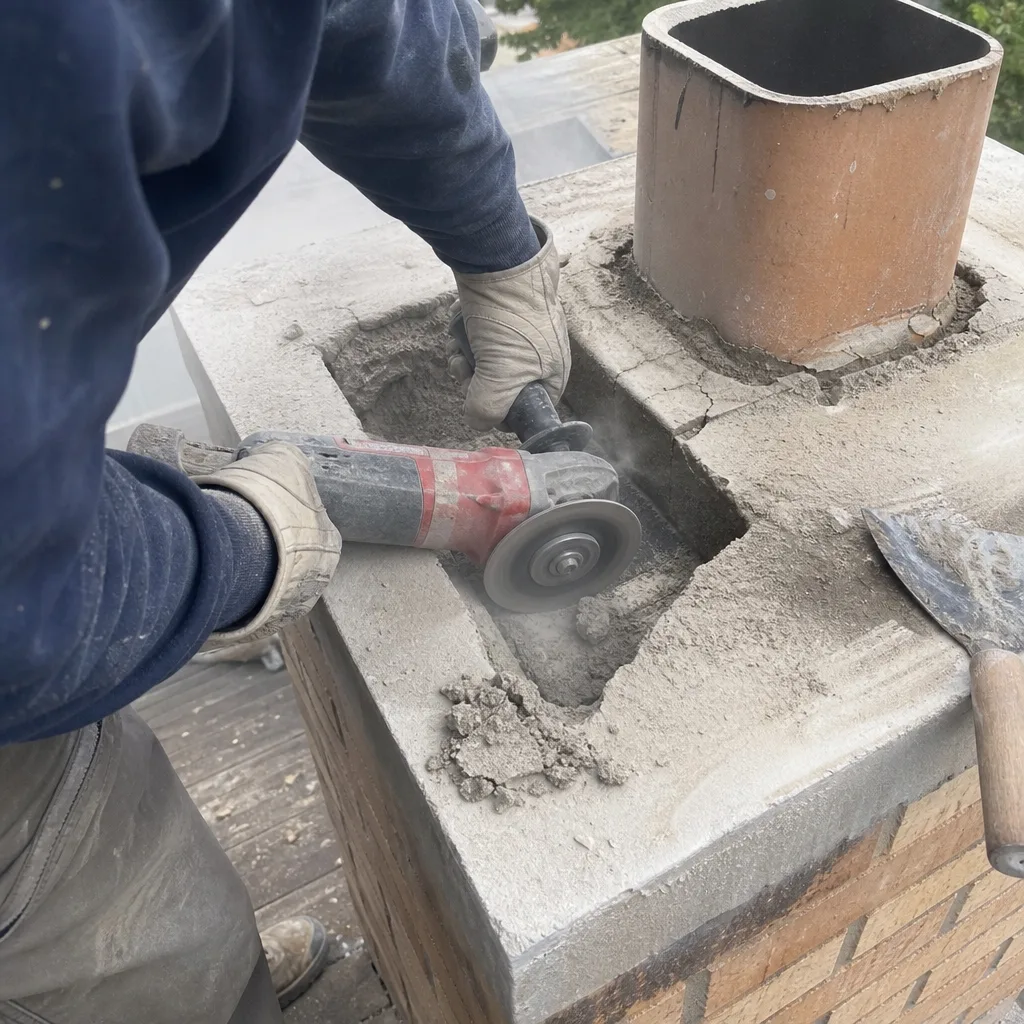
Call a professional before you DIY if any of the following apply: you don’t know your liner type or condition; you’ve never had a camera inspection; you burn wood more than three times weekly; your chimney has an offset or insert; you’ve noticed draft problems, smoke odor, or debris falling into the firebox; or your home was built before 2010 and has never had a Level Two inspection.
Level Two Chimney Frisco offers free estimates in Frisco - call (940) 290-7230 - and explore more guides & resources on chimney safety and maintenance. Every estimate includes a written scope, written price, and written warranty before any work begins, under Clause 1 of the Haven Standard. We also provide free second opinions on any competitor’s written estimate, with no obligation to book.
Our Chimney Repair in Frisco and Fireplace Services in Frisco teams handle the full range of remediation, from liner replacement to smoke chamber restoration, with the same documentation standards that apply to our cleaning work.
Frequently Asked Questions
A professional chimney sweep in Frisco typically ranges from $199 to $349 for the NFPA 211 Level 2 inspection with camera scan, plus $150 to $250 if cleaning is needed based on findings. The total rarely exceeds $599 for a standard wood-burning fireplace in good condition. We deliver a written price before any work starts - no post-arrival surprises. Call (940) 290-7230 for an exact quote; estimates are free.
You can, if all five conditions are met: gas or light wood use, straight flue with known-intact liner, Stage 1 creosote confirmed by prior inspection, proper equipment, and safe roof or firebox access. Without the prior inspection to confirm these conditions, you’re cleaning blind. We recommend one professional baseline inspection to establish your system’s status before any DIY maintenance.
NFPA 211 recommends annual inspection for all chimney systems, with cleaning frequency determined by deposit accumulation rather than calendar. In Frisco’s climate, wood-burning fireplaces used regularly typically need cleaning annually; gas systems may extend to every two to three years if inspection confirms minimal buildup. The inspection, not the cleaning, is the non-negotiable annual requirement.
Skipped maintenance leads to progressive creosote accumulation, structural deterioration from moisture and acid attack, and eventual failure modes: chimney fire from ignited deposits, carbon monoxide intrusion from liner breaches, or water damage to surrounding structure. These outcomes develop over years, not weeks, which makes them easy to ignore until they’re catastrophic. Annual inspection catches progression while it’s still inexpensive to address.
You need documentation, not a sales pitch. At Level Two Chimney Frisco, we show you the camera footage of the crack, gap, or deterioration before recommending replacement. Clause 4 of the Haven Standard requires this photo record precisely to eliminate trust gaps. If a company recommends liner replacement without showing you the specific defect, get a second opinion - ours is free, with no booking required.
No. Cleaning logs may loosen superficial creosote, but they do not remove it from the system and they provide zero diagnostic information. The loosened material often accumulates at the flue base or smoke shelf, creating an obstruction risk. They are not recognized by NFPA 211 as a maintenance substitute and do not satisfy insurance documentation requirements.
A Level 1 inspection is visual, accessible-surface examination - what you can see from the firebox and roof without tools. A Level 2 inspection includes camera scan of the flue interior, smoke chamber examination, and attic/crawl space access where safe and accessible. Level 2 is required at property sale, after chimney fire or seismic event, and whenever the system changes (new appliance, fuel type, or liner). Level Two Chimney Frisco performs Level 2 as our default because surface examination misses the conditions that cause failures.
The Bottom Line
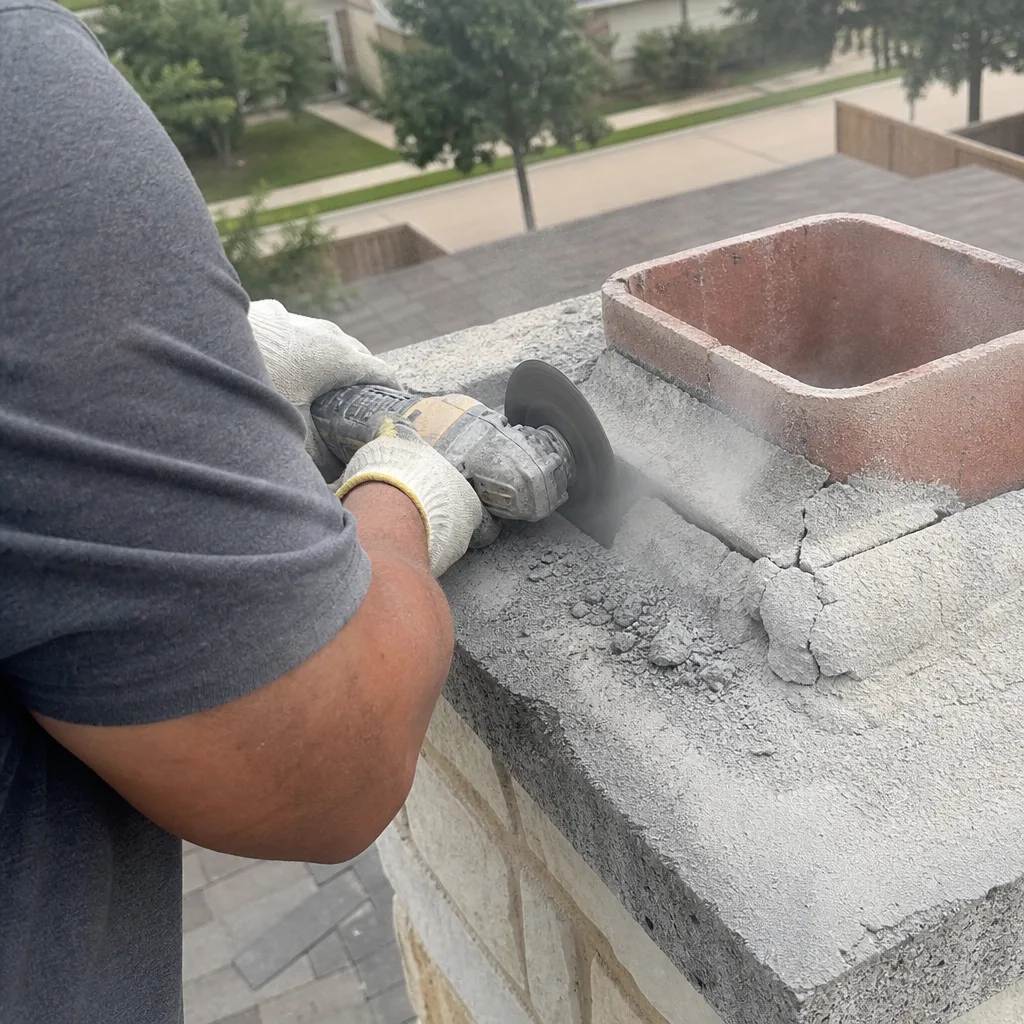
DIY chimney cleaning is a reasonable maintenance task for a narrow set of confirmed conditions: gas or light wood use, straight flue, intact liner, Stage 1 creosote, and safe access. For everyone else, and for anyone who hasn’t had a professional baseline inspection, the brush kit is a gamble with unknown odds. The 23% of chimneys with hidden cracks, liner gaps, or advanced creosote aren’t marked - they’re discovered by camera, documented by protocol, and addressed before they become emergencies. The true cost of DIY isn’t the kit price; it’s the uninsured risk of missing what matters.
Written by Corrine Halstead, Owner at Level Two Chimney Frisco, serving Frisco since 2009.