
Last updated September 22, 2026
Level 1 sweep and inspection to the NFPA 211 annual standard - flue, crown, cap, and flashing checked and photographed
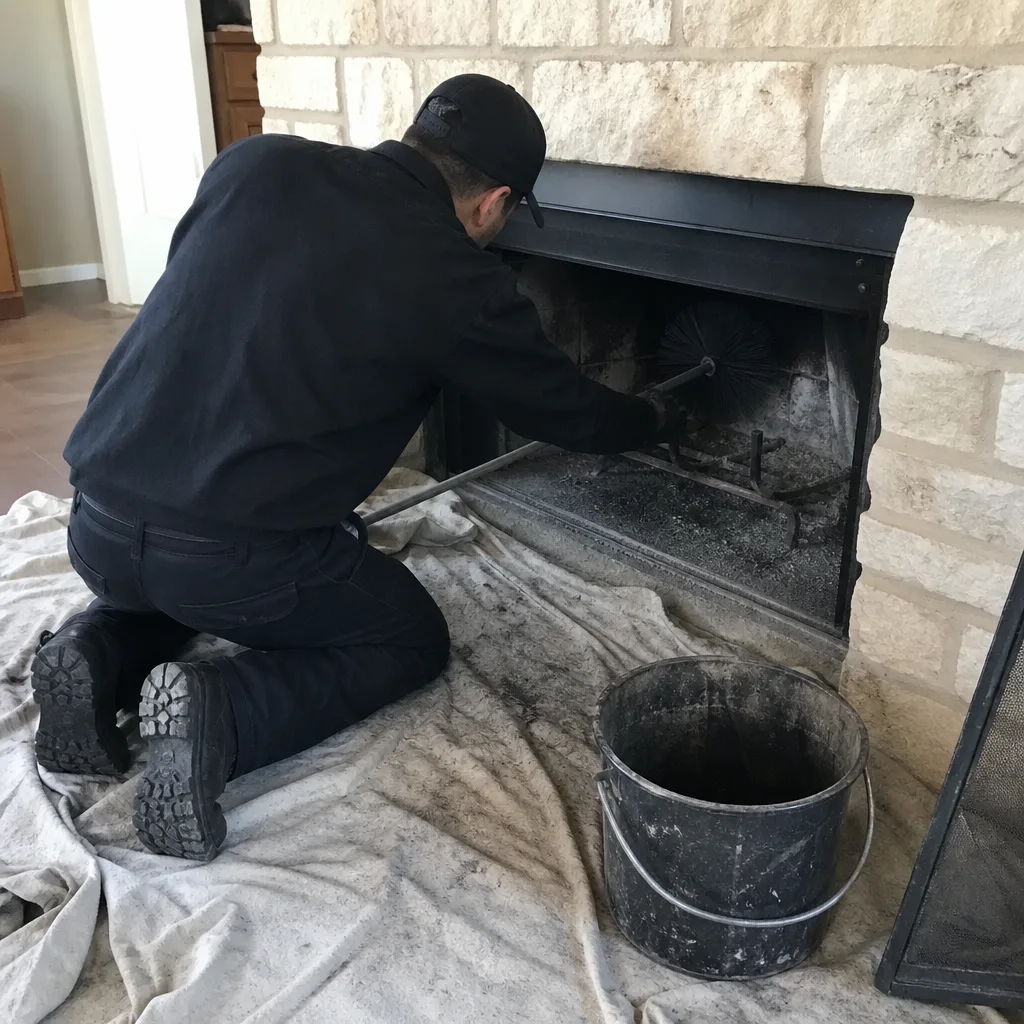
Chimney sweep logs do not sweep chimneys. They loosen some creosote - which then falls where a brush and vacuum still have to collect it.
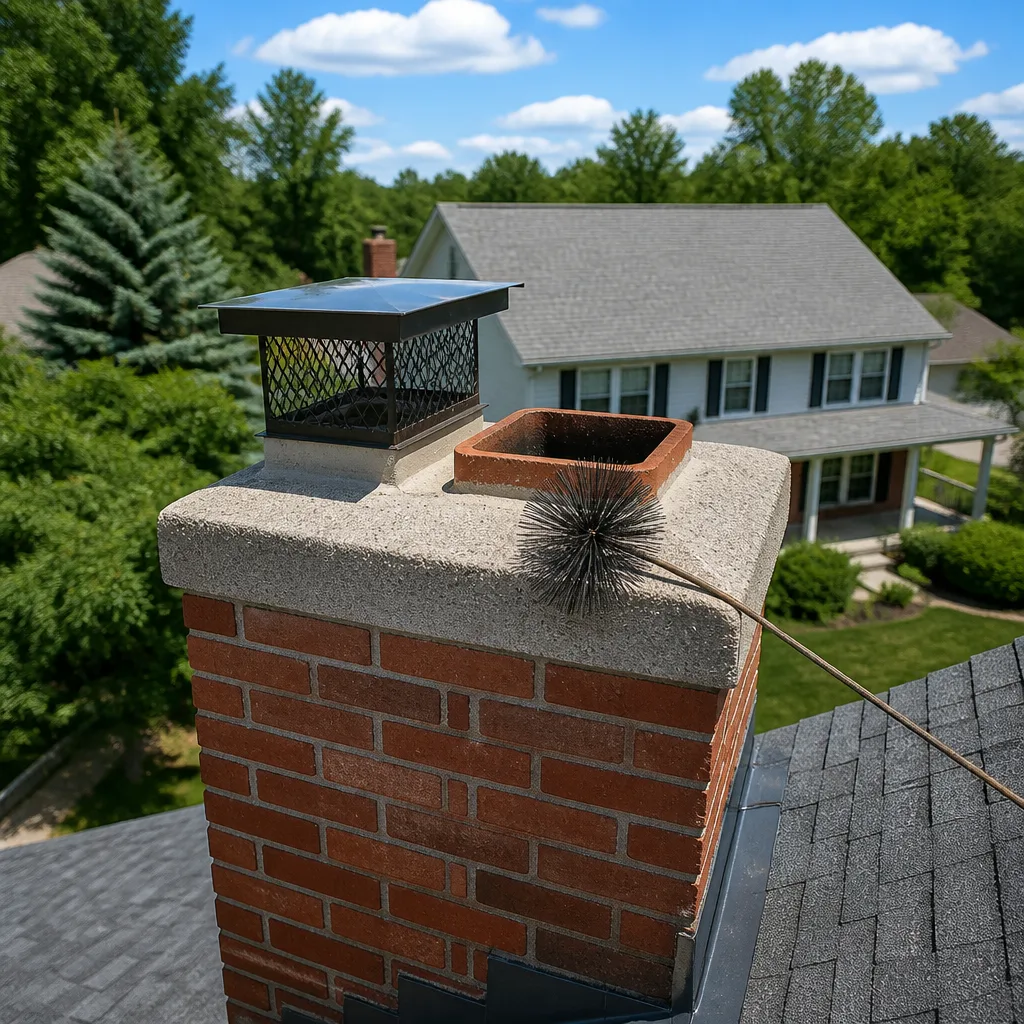
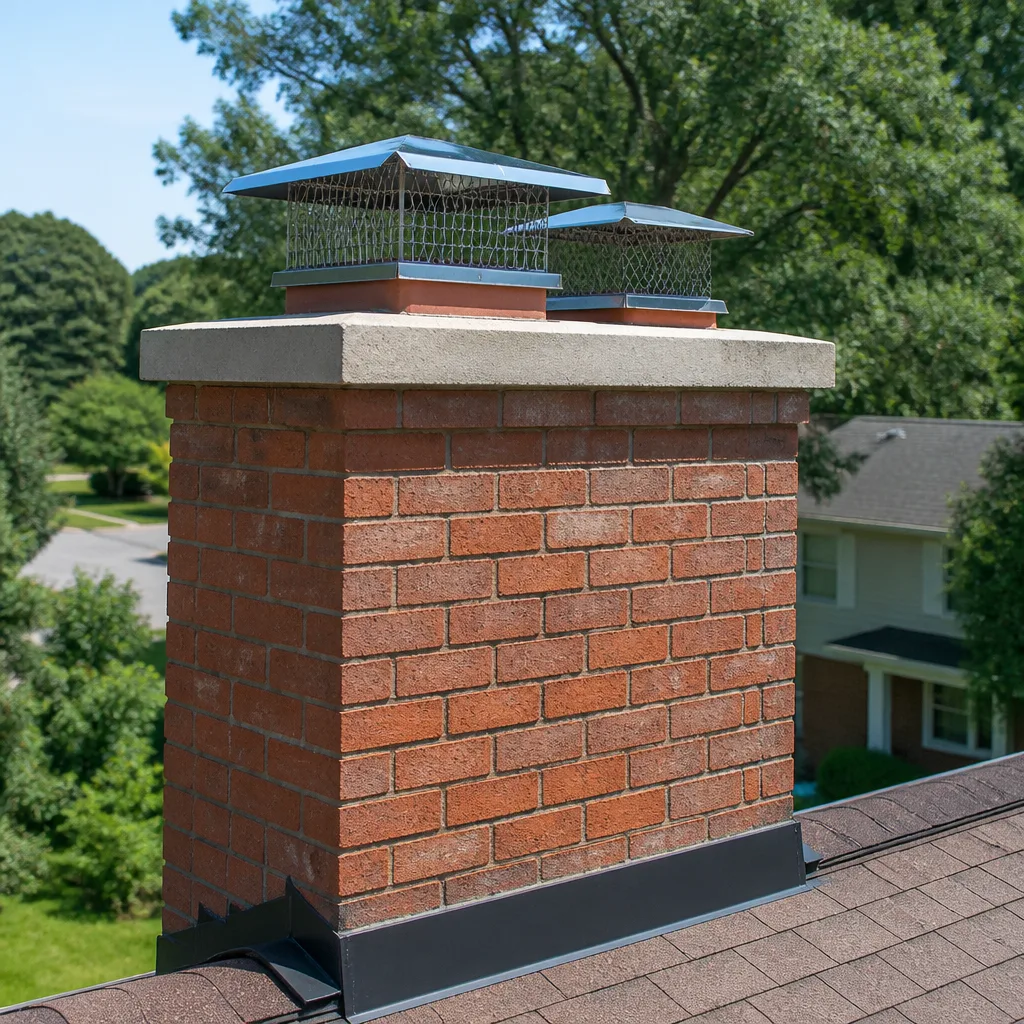
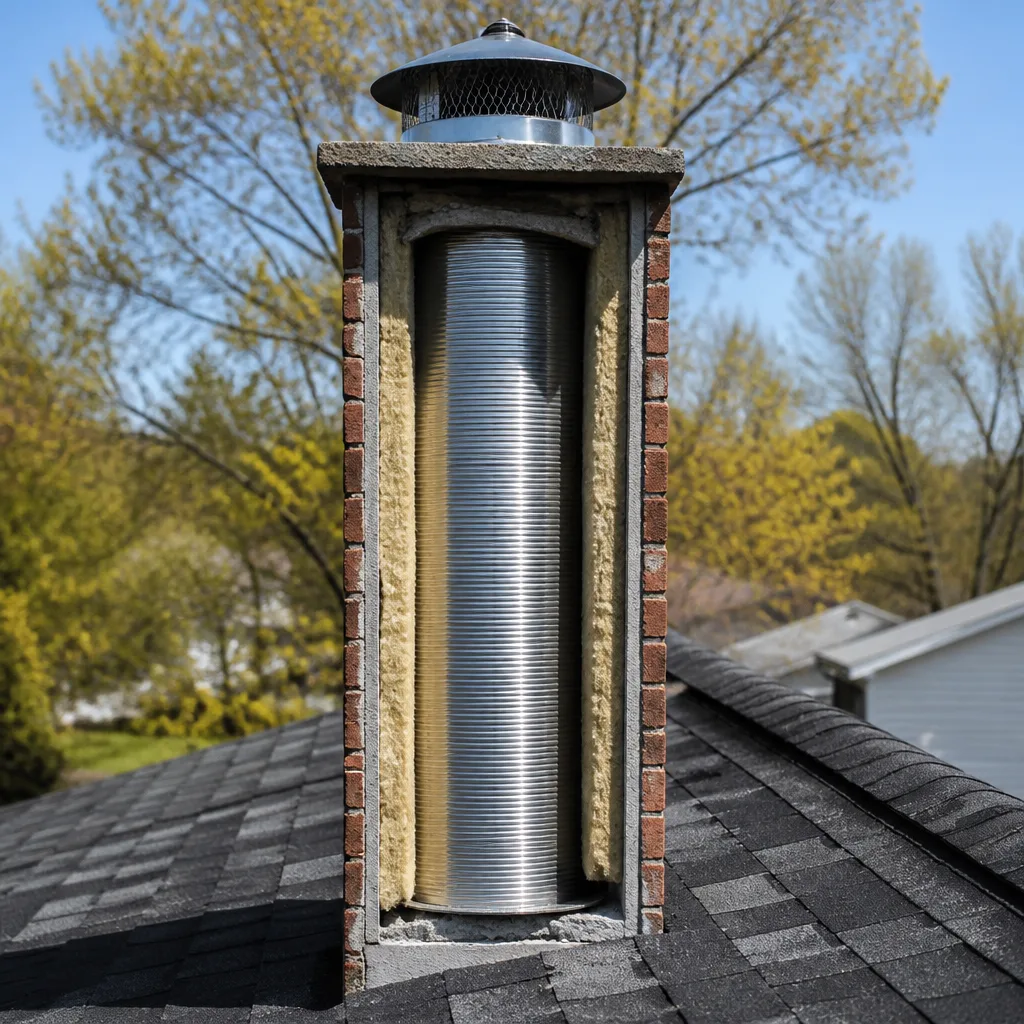
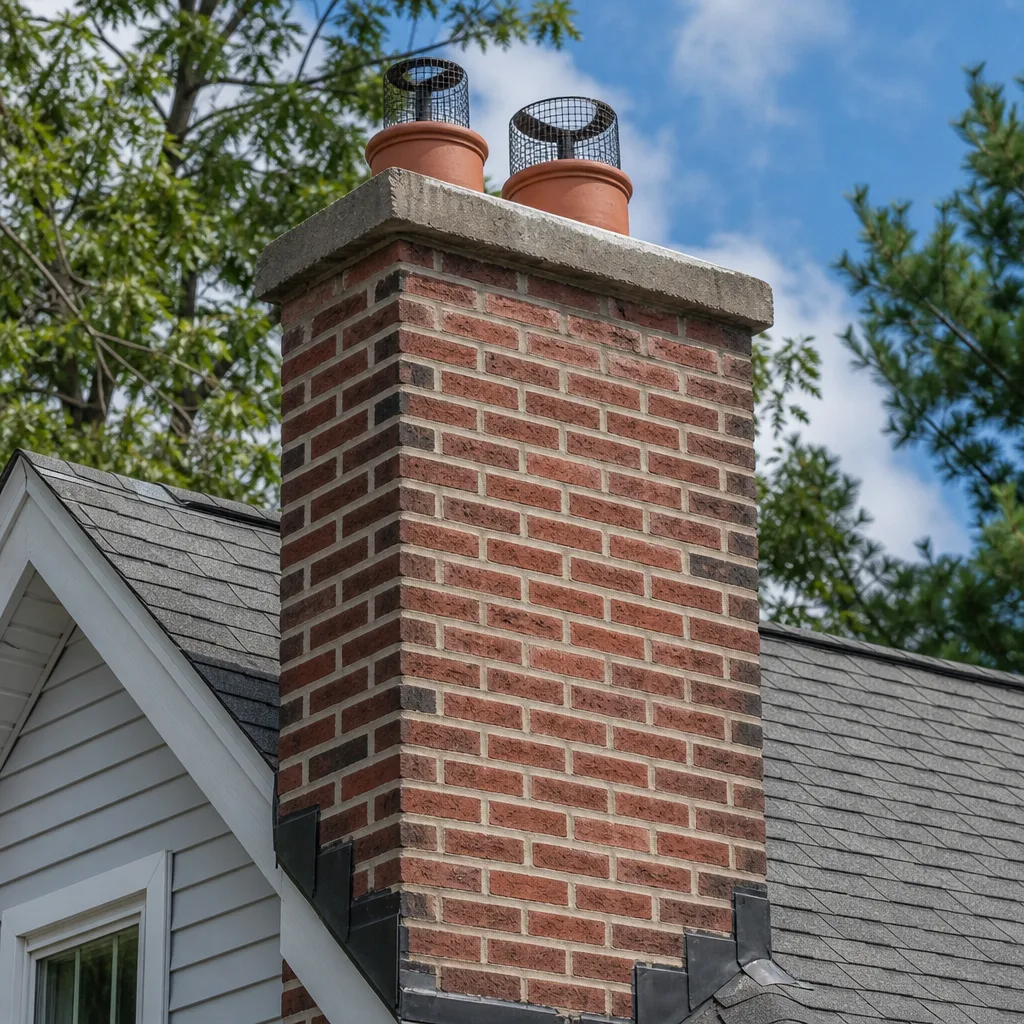
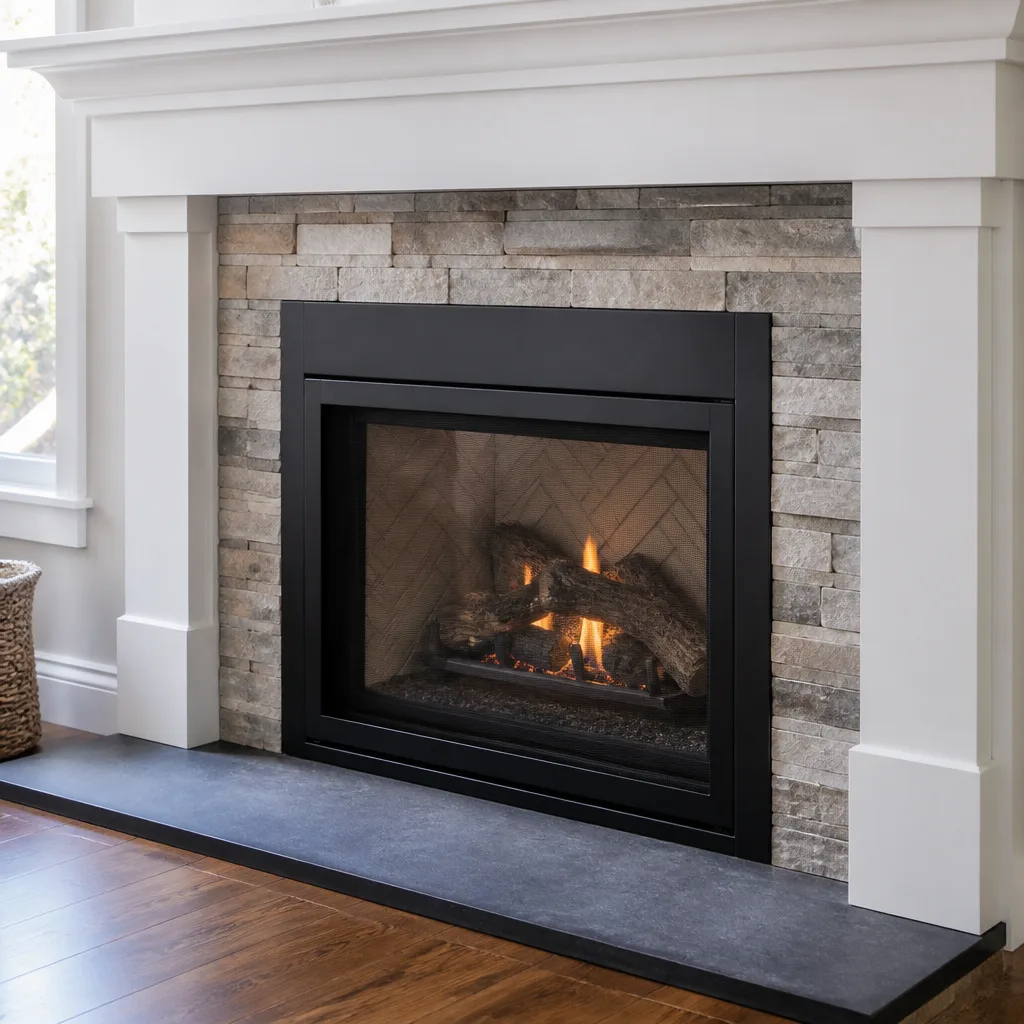
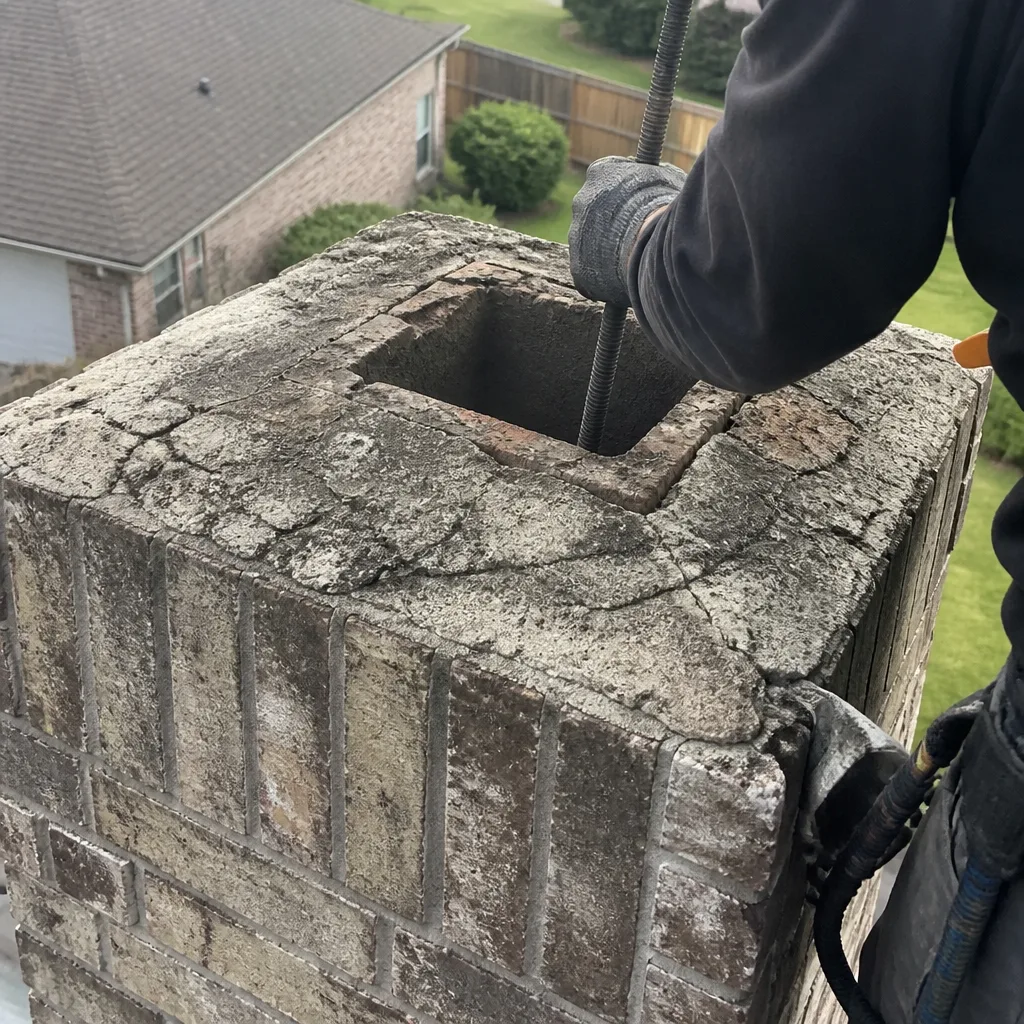 Before
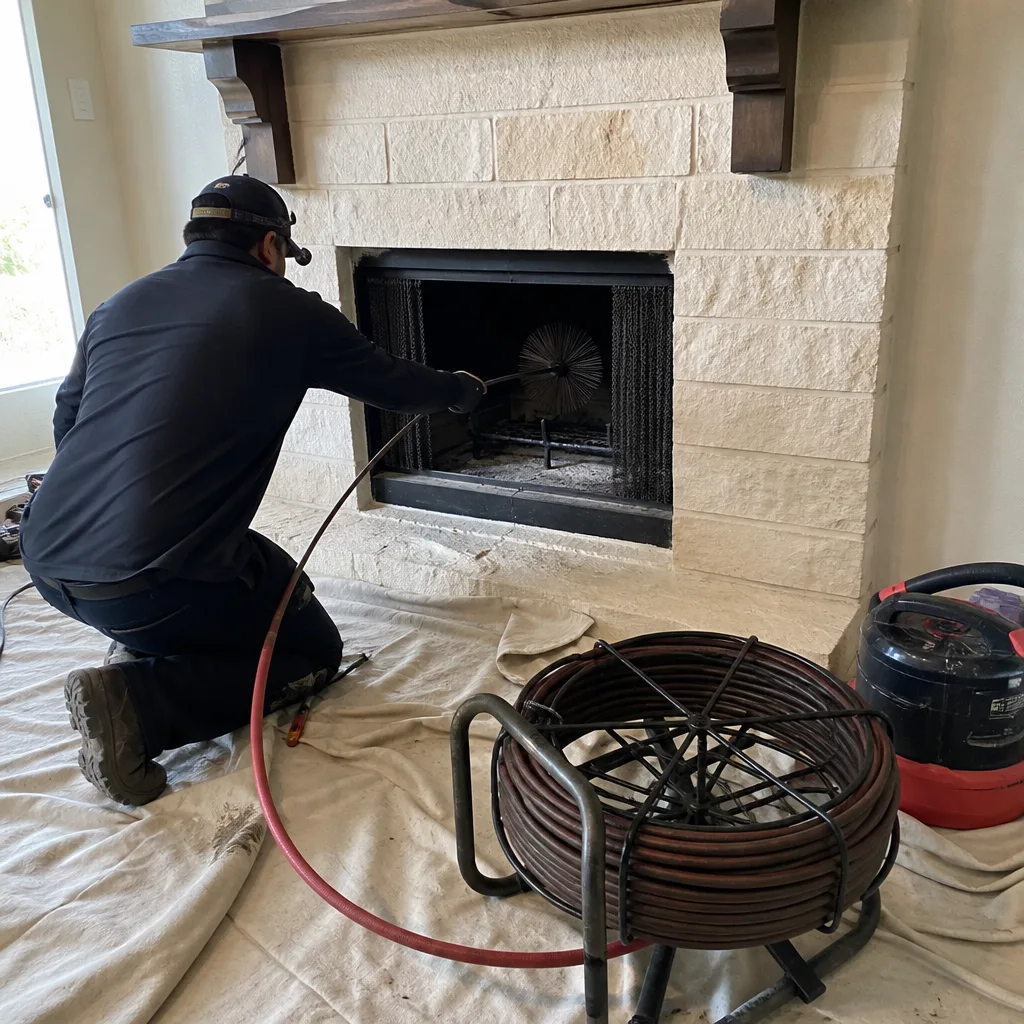 After
After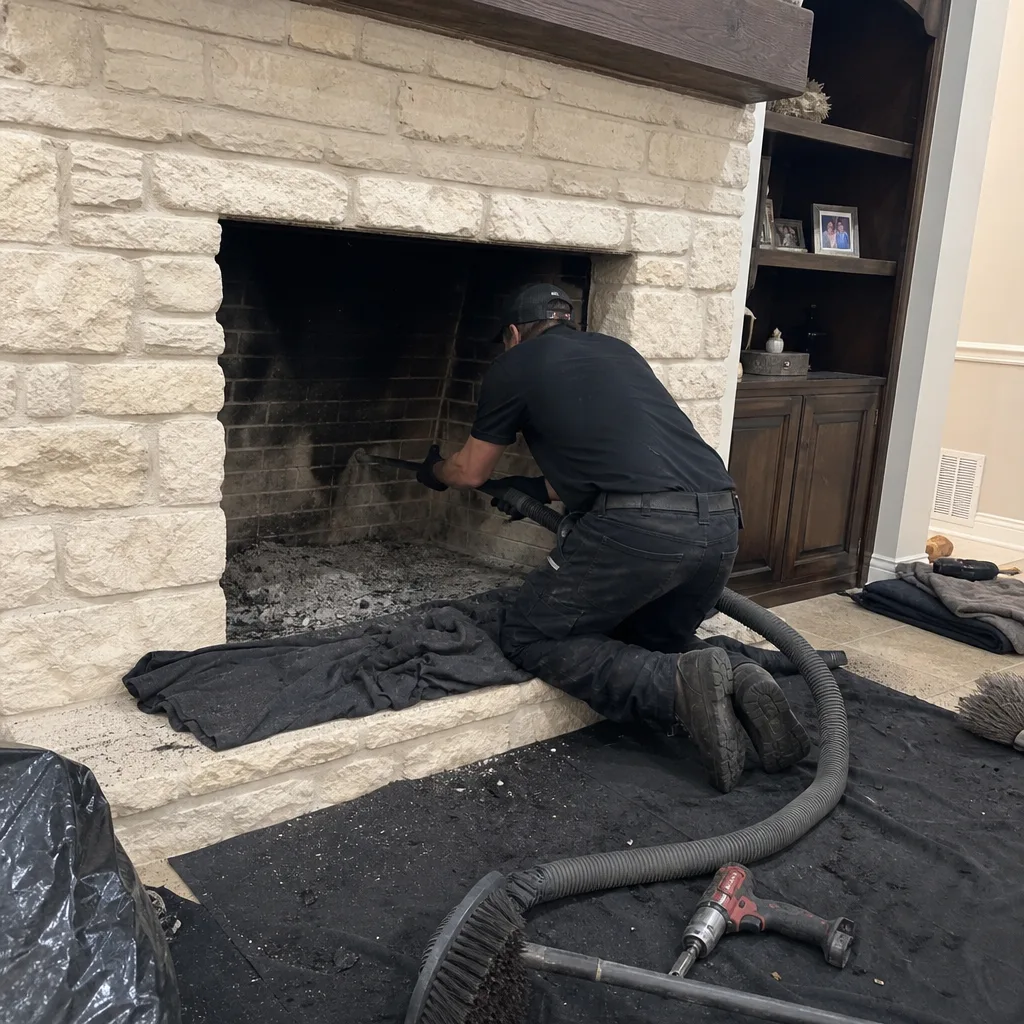 Before
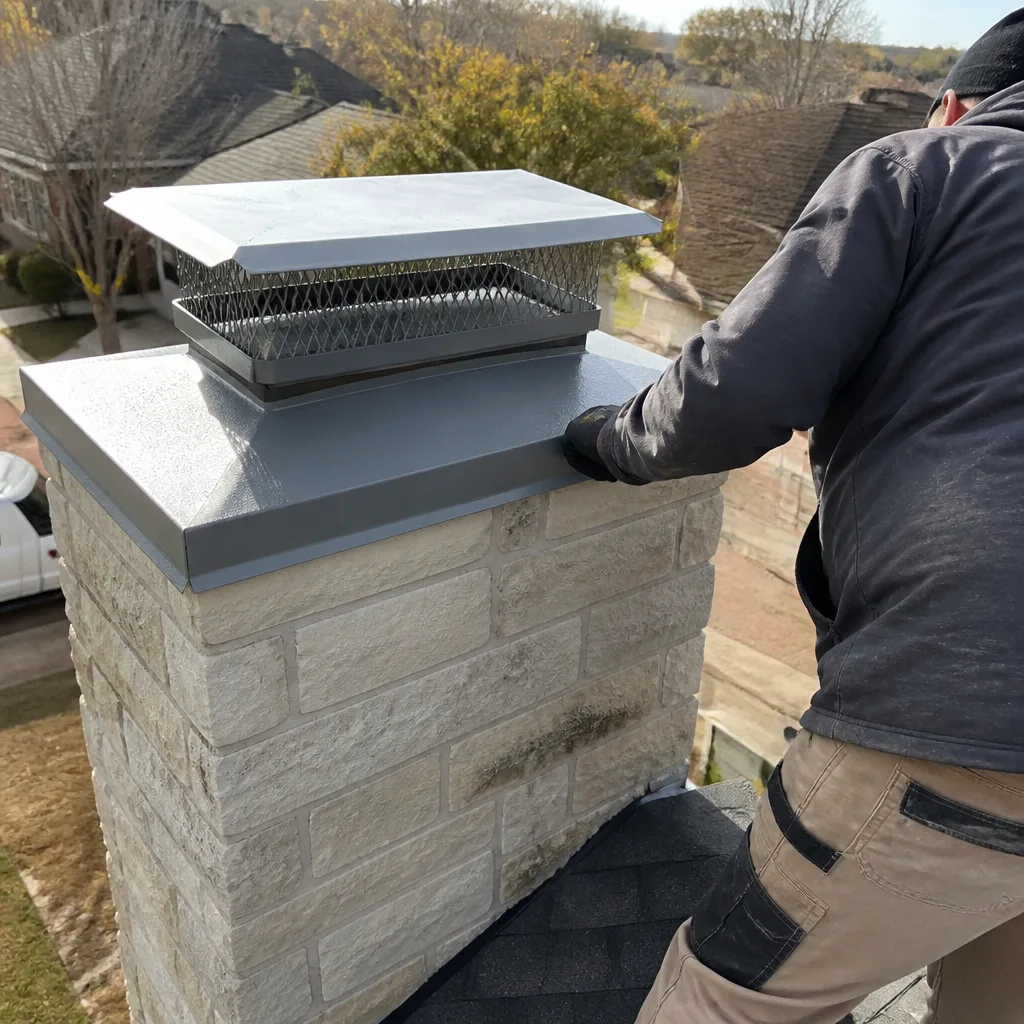 After
After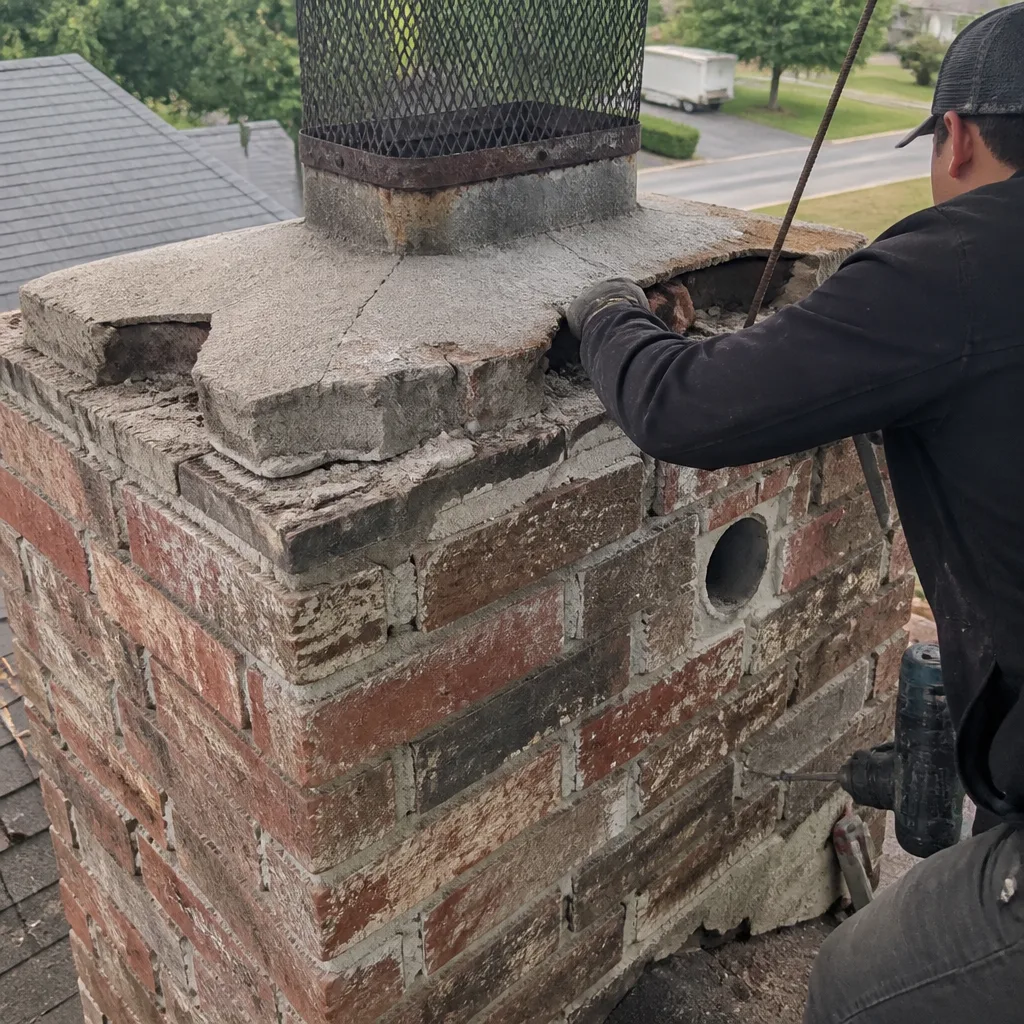 Before
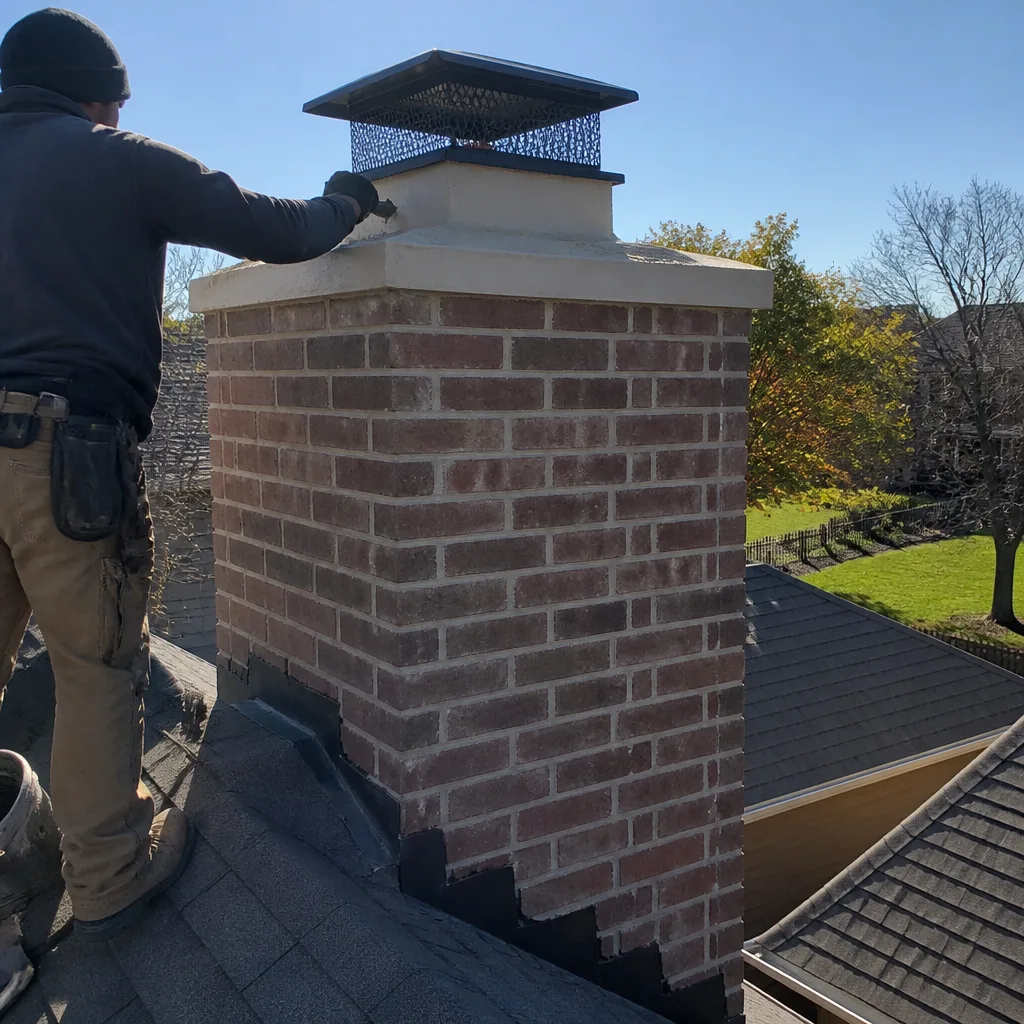 After
AfterHow to Hire a Chimney Cleaning Contractor in Frisco: A Step-by-Step Guide
Texas does not require chimney sweeps to hold a state license. Anyone who passes a background check and buys a $200 brush set can quote your flue today. In Frisco, where new construction from 2015 to 2025 has added thousands of first-time fireplace owners, that regulatory gap matters more than most homeowners realize. This guide gives you the specific questions that separate a qualified sweep from a liability risk, and the exact answers that should disqualify a contractor before they park in your driveway. For more guides & resources, visit our blog.
Quick Answer
A qualified chimney cleaning contractor in Frisco provides a written price before any work begins, performs a camera-scan inspection documented with photos, carries liability insurance listing your address as additional insured, and holds CSIA or NFI certification with a written warranty on the work. If any of those four elements is missing, keep looking.
Table of Contents
- Why the Frisco Market Is Different
- The Four Disqualifying Answers
- How to Read a Chimney Estimate in Frisco
- Why Proof of Insurance Isn’t Enough
- Sales Inspection vs. Diagnostic Inspection
- Red Flags Specific to Frisco
- Step-by-Step: Vetting a Contractor
- Common Mistakes to Avoid
- When to Call a Professional
- Frequently Asked Questions
- The Bottom Line
BeforeAfterWhy the Frisco Market Is Different
Frisco sits at the intersection of two forces that create unusual risk for chimney owners. First, the building boom from 2015 to 2025 produced entire neighborhoods, from Phillips Creek Ranch to Newman Village to Starwood, where fireplaces were installed as standard features by builders who often subcontracted to the lowest bidder. Second, North Texas weather patterns, heavy clay soils, and seasonal hail events stress chimney structures in ways that differ from northern climates.
We’ve inspected chimneys in Frisco since 2009, and the patterns are consistent. Newer homes in Fields and Lawler Park frequently have unlined or poorly lined flues that passed rough inspection but won’t handle sustained wood burning. Older sections near downtown Frisco, built before modern codes, often have original clay flue tiles cracked by decades of thermal cycling and clay soil expansion. Neither problem is visible from the firebox with a flashlight.
The Level Two Chimney Frisco home page outlines our standard inspection protocol, but the key point for hiring is this: Frisco’s rapid growth attracted operators who saw an opportunity in homeowners who don’t yet know what they don’t know. The absence of state licensing means your due diligence is the only quality control that exists.
The Four Disqualifying Answers
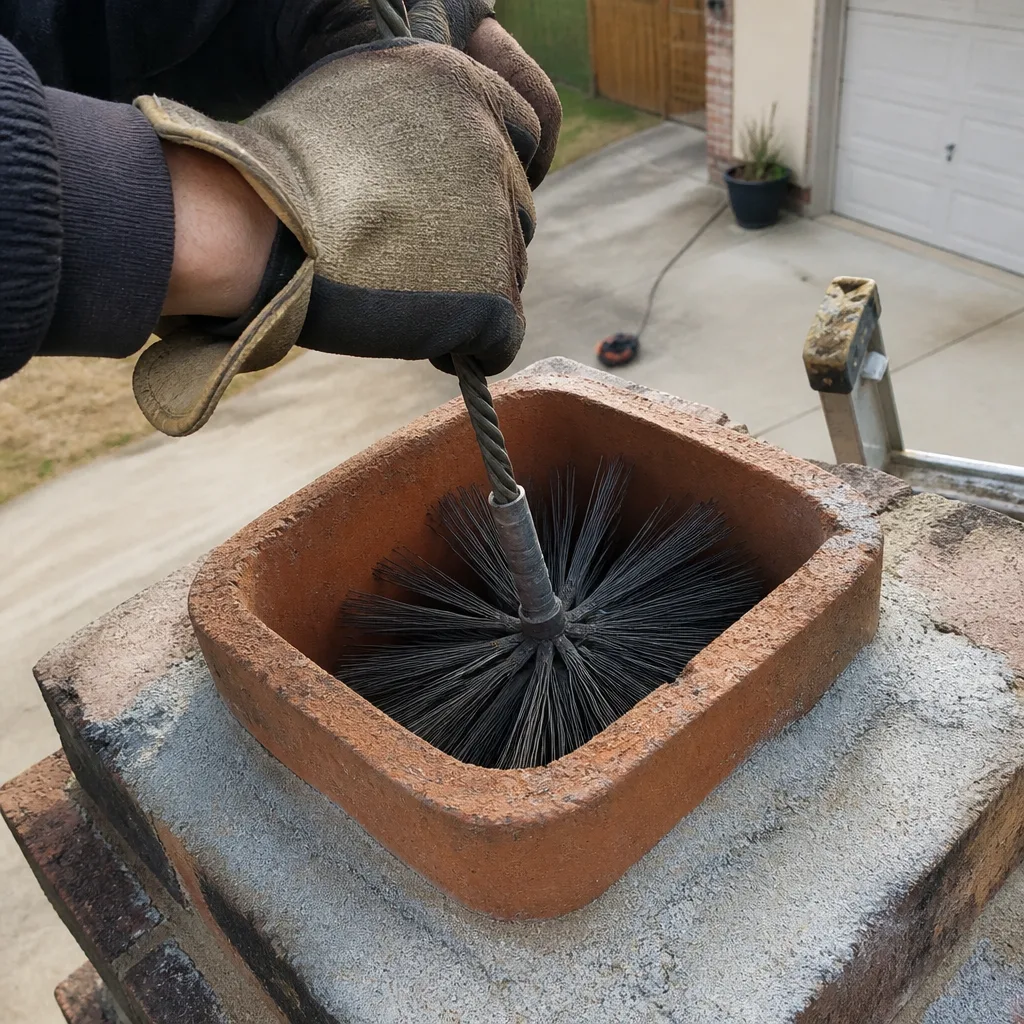
These four questions should end the conversation if the answer is wrong. No exceptions, no negotiation.
1. “Will I get a written price before any work starts?”
The wrong answer: “We’ll assess it when we get there” or “The tech will quote on site.” This means you’re committed to a service visit before you know the cost, and you’re vulnerable to pressure tactics in your own home.
The right answer: A written price, written scope, and written warranty delivered before anyone starts work. At Level Two Chimney Frisco, this is Haven Standard Clause 1, H.A.V.E.N. “Have it in writing.” We’ve delivered written prices on all 38,000+ jobs since 2009. If a contractor won’t put numbers on paper before dispatching a truck, they don’t have a pricing system. They have a sales system.
2. “Do you perform a camera-scan inspection with documented photos?”
The wrong answer: “We do a visual inspection” or “Our tech will look it over.” A visual inspection means a flashlight in the firebox and a mirror on a pole, if you’re lucky. It cannot detect cracked flue liners, deteriorated mortar joints, or Class III glazed creosote, the hardened, tar-like deposit that causes chimney fires.
The right answer: A camera lowered the full length of the flue, with photos or video provided to you. This is NFPA 211 Level 2 inspection, and it’s Haven Standard Clause 4, the documentation practice we’ve run continuously since 2009. The camera reveals what the eye cannot: spalling (flaking) flue tiles, gaps between liner sections, and creosote buildup that changes the service from a sweep to a deglazing.
3. “Are your technicians CSIA or NFI certified?”
The wrong answer: “We’ve been doing this for years” or “Our guys are trained in-house.” Experience without standardized credentialing is just repetition of potentially wrong methods.
The right answer: Current CSIA (Chimney Safety Institute of America) Certified Chimney Sweep or NFI (National Fireplace Institute) certification, verifiable by number. These credentials require continuing education and testing on combustion science, building codes, and safety standards. Ask for the certification number and verify it online. A legitimate sweep provides it without hesitation.
4. “What warranty do you provide, and is it in writing?”
The wrong answer: “We stand behind our work” or “Just call us if there’s a problem.” Verbal promises evaporate when the phone stops being answered.
The right answer: A written warranty with specific terms, duration, and coverage. Our 365-Day Done Right Promise is stamped on every job: if it’s not done right, we make it right. The warranty, like the price, appears in writing before work begins.
How to Read a Chimney Estimate in Frisco
Chimney estimates in Frisco range widely, and the structure of the quote tells you as much as the numbers. For a detailed Chimney Cleaning Cost Breakdown: The Frisco Homeowner’s Reference for 2026, see our dedicated guide. Here’s what to look for.
What Line Items Should Be Itemized
A legitimate estimate breaks costs into discrete, verifiable components:
- Inspection fee: Separately stated, with the inspection type named (Level 1, Level 2, or Level 3 per NFPA 211).
- Sweeping/cleaning: Priced by appliance or flue, not bundled into a vague “service fee.”
- Condition-specific work: Creosote deglazing, crown repair, cap replacement, each with its own line and price.
- Materials: Specified by type and brand, not ” liner” or “cap.” We source from Gelco, Olympia Chimney, and Famco through our buying network, and we name the product on the estimate.
- Tax and total: Clearly stated, no “plus tax” surprises.
What “Full Service” Bundles Hide
Bundled pricing, “chimney packages,” or “complete fireplace service” for a flat rate should trigger scrutiny. These structures obscure what you’re actually paying for each component, making comparison impossible and inflating margins on simple work. We’ve reviewed competitor estimates in Frisco where a $399 “full service” bundle contained $180 in actual sweep and inspection value, with the remainder padded into unspecified “safety checks.”
Ask for unbundled pricing. A contractor with nothing to hide will provide it.
Frisco Price Ranges (2024-2025 Market)
| Service | Typical Range in Frisco | Notes |
|---|---|---|
| Level 1 inspection + sweep (gas fireplace) | $150-$220 | Minimal creosote; straightforward access |
| Level 2 inspection + sweep (wood-burning) | $280-$420 | Includes camera scan, photo documentation |
| Class III creosote deglazing | $180-$350 additional | Chemical treatment + mechanical removal |
| Stainless steel liner (typical install) | $2,800-$4,500 | Varies by flue count, height, diameter |
| Crown repair (minor) | $350-$650 | Crown coat or partial rebuild |
| Chimney cap (supply + install) | $280-$550 | Stainless or copper; mesh specification matters |
Prices below these ranges suggest corners cut: uninsured labor, no camera inspection, or unreported cash work. Prices significantly above warrant a second opinion. We provide free second opinions on any written estimate, no obligation.
Why Proof of Insurance Isn’t Enough
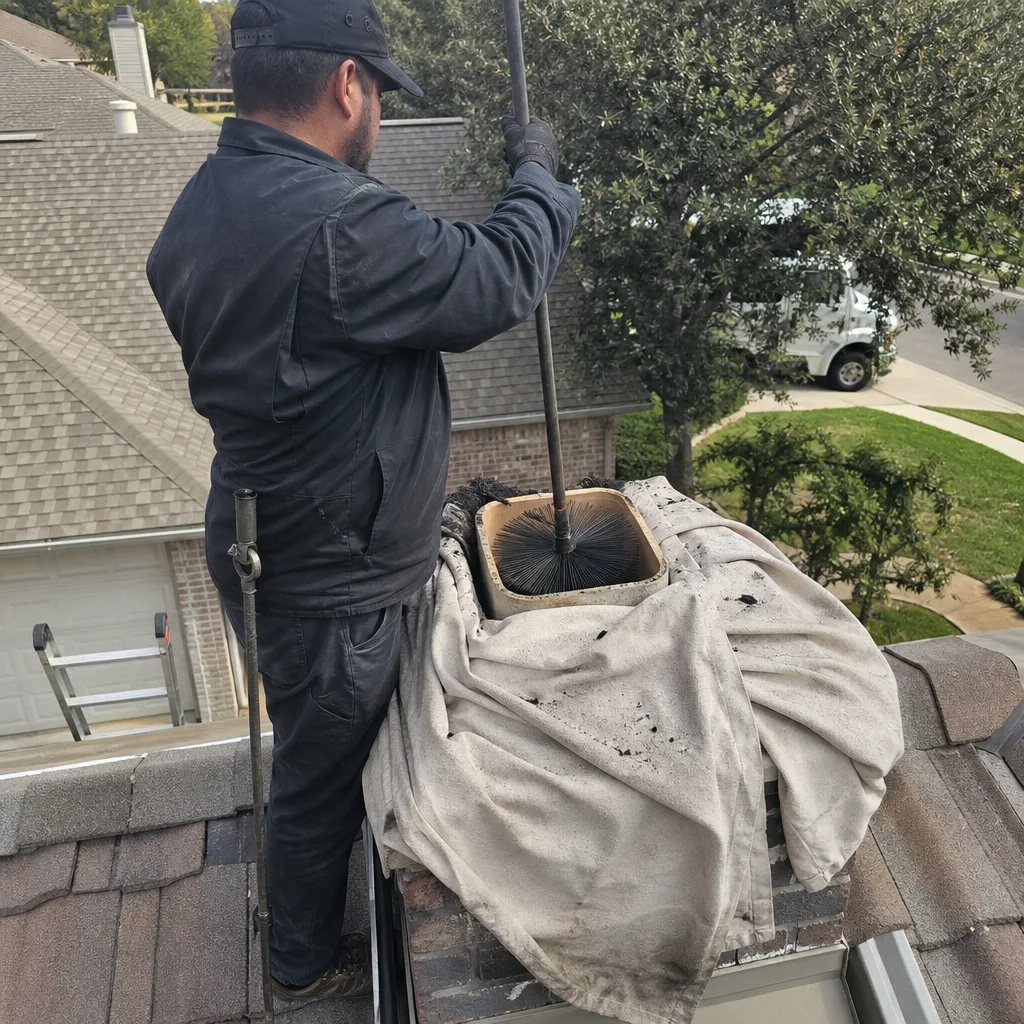
Every contractor will say they’re insured. The certificate they email you is what actually matters, and most homeowners don’t know what to demand.
What the Certificate Must Show
- General liability coverage of at least $1 million per occurrence. This is standard for trade contractors, not generous.
- Your address listed as “additional insured” for the specific date of service. This is the element almost no one requests, and it’s the one that protects you if a technician is injured on your property or damages your home. Without it, their insurer can deny your claim as a third party.
- Workers’ compensation coverage if they have employees. In Texas, workers’ comp is not mandatory, but its absence means you could face liability for an injured worker.
- Policy effective dates that cover your service date. Expired or pending policies are common in undercapitalized operations.
Request the certificate directly from their insurance agent, not from the contractor. A 24-hour turnaround is standard; reluctance or delay is a red flag.
Sales Inspection vs. Diagnostic Inspection
The appointment booking process reveals which type of inspection you’re getting. The difference determines whether you’ll receive an objective assessment or a sales presentation.
Sales Inspection Markers
- The company offers a “free inspection” or “$49 sweep special” to get in the door.
- The scheduler asks minimal questions about fuel type, appliance age, or known issues.
- The technician arrives without a camera or with a camera as an “upgrade” for additional cost.
- Recommendations emerge verbally, with pressure to decide immediately for a “today only” price.
Diagnostic Inspection Markers
- The company charges a flat, stated fee for the inspection and documents what it includes.
- The scheduler asks what you burn, how often, any draft problems, and whether you’ve had previous work.
- The technician arrives with a camera system as standard equipment, not an add-on.
- Findings are presented with visual evidence, and recommendations are delivered in a written report you can review without pressure.
The Chimney Cleaning & Sweep in Frisco page details our inspection protocol. The key distinction: a diagnostic inspection treats the chimney as a system to be understood; a sales inspection treats your home as a lead to be closed.
Red Flags Specific to Frisco
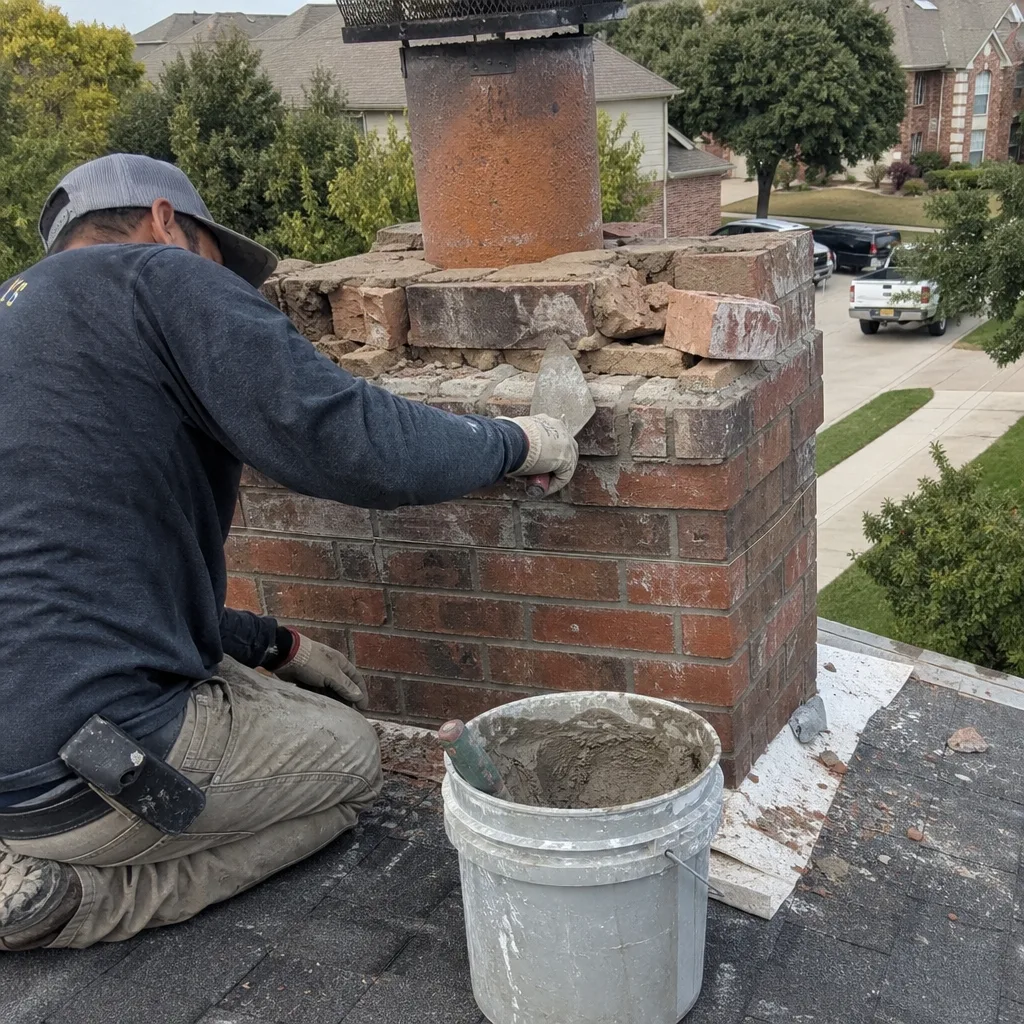
Certain patterns recur in the Frisco market with enough frequency to warrant specific warning.
Storm-Chaser Crews
After significant hail events, which Frisco experiences with regularity, transient crews appear offering “free chimney damage assessments.” They target neighborhoods with recent roof replacement activity, knowing insurance funds are flowing. These operators typically lack local presence, use out-of-state plates, and pressure homeowners to sign assignment-of-benefits forms. Legitimate Frisco contractors have fixed addresses, local license numbers, and no need to follow storms.
Door-to-Door $49 Specials
The $49 chimney sweep advertised on door hangers or neighborhood Facebook groups is a classic loss-leader structure. The operator loses money on the sweep, then must find $300-$800 in “necessary repairs” to make the visit profitable. We’ve inspected Frisco chimneys after these visits where the sweep was superficial and the “required” crown repair addressed damage that didn’t exist. The low price isn’t a deal. It’s a financing mechanism for high-pressure sales.
Fuel-Type-Agnostic Quoting
A contractor who quotes without asking what you burn, or who applies the same price to gas and wood systems, doesn’t understand the work. Gas fireplaces require different inspection protocols, produce different combustion byproducts, and present different risks. Wood systems vary dramatically by species burned, burning practices, and appliance efficiency. The question “What do you burn, and how often?” is basic diagnostic hygiene. Its absence indicates a brush-and-go operation.
Neighborhood-Specific Notes
In Frisco Lakes and other 55+ communities, we’ve seen operators exploit resident trust in community bulletin boards, presenting themselves as “approved vendors” without management confirmation. In The Trails and Grayhawk, the prevalence of builder-grade fireplaces installed during rapid construction creates vulnerability to unnecessary liner replacement quotes. A camera inspection, not a flashlight, determines whether the original liner is serviceable.
Step-by-Step: Vetting a Contractor
Use this sequence before committing to any service visit.
Step 1: Verify Credentialing
Ask for CSIA or NFI certification numbers. Verify them at csia.org or nficertified.org while on the phone. Current certification, not “was certified in 2015,” is the standard.
Step 2: Request Sample Documentation
Ask what you receive after the inspection. A legitimate contractor can describe or show: the inspection report format, sample photos from actual jobs, and the written warranty document. At Level Two Chimney Frisco, every customer receives a documented photo record under Haven Standard Clause 4, plus the written price and warranty before work begins. We can describe this in detail because it’s our standard practice, not an aspiration.
Step 3: Confirm Insurance Specifics
Request a certificate with your address as additional insured. If they don’t know what this means or say “our general liability covers everything,” they’ve never been asked and probably haven’t tested their coverage.
Step 4: Get the Price Structure in Writing
Before scheduling, receive: the inspection fee, the sweep fee if separate, and how additional work is priced. “We’ll see when we get there” is not a price structure. It’s an open-ended commitment.
Step 5: Check for Local Presence
Verify a physical address in or near Frisco, not a PO box or virtual office. Check how long they’ve operated at that address. Search their business name with “complaint” or “review.” Read the three-star reviews specifically; they often contain the most diagnostic information about process failures.
Step 6: Schedule the Diagnostic Inspection
Book the inspection as a standalone service, not bundled with uncertain repair work. This preserves your option to decline additional services without sunk-cost pressure. The Chimney Repair in Frisco page outlines common repair needs, but the inspection should come first, with findings documented before any repair is discussed.
Common Mistakes to Avoid
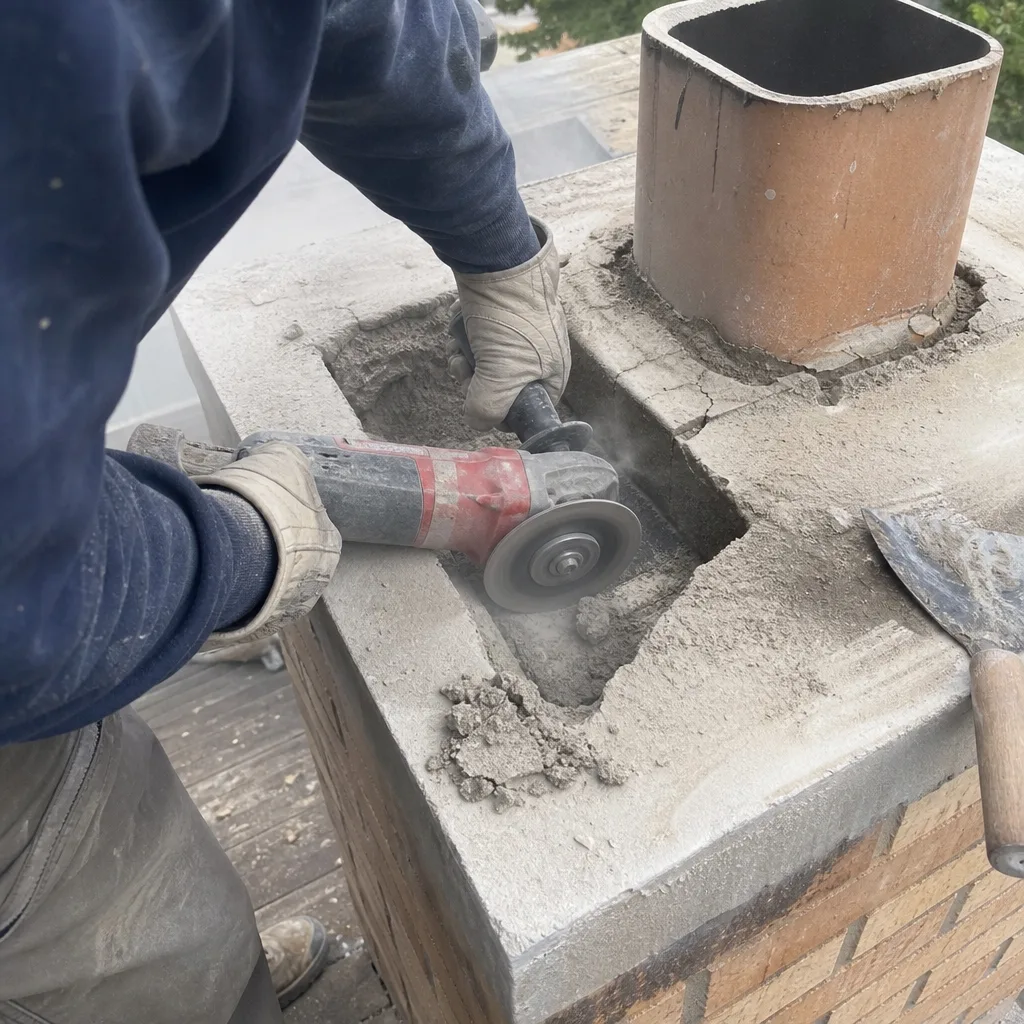
- Hiring based on lowest price alone. In Frisco’s unregulated market, the lowest price often means uninsured labor, no camera inspection, or a sweep that leaves hazardous creosote in place. The cost of fixing subsequent damage exceeds any initial savings.
- Accepting verbal estimates. A price given over the phone or on the doorstep, without written scope and warranty, is not binding and not comparable. Haven Standard Clause 1 exists because verbal pricing is where disputes begin.
- Assuming new construction means no problems. Frisco’s 2015-2025 building boom produced fireplaces that passed rough inspection but have unlined flues, improperly sized chimneys, or clearance violations invisible until camera inspection. Age of home does not predict chimney condition.
- Ignoring fuel-type maintenance. Gas fireplaces require annual inspection despite producing no creosote. Corrosion, debris blockage, and venting failures present carbon monoxide risks that kill silently.
- Skipping inspection after a chimney fire. Even a small chimney fire, often undetected by the homeowner, can crack flue tiles and compromise the liner. A Level 2 inspection is mandatory after any suspected fire event.
- Trusting “certified” without verification. The word appears on vehicles, shirts, and flyers without backing credential. CSIA and NFI maintain public verification databases. Use them.
- Booking bundled “annual service” subscriptions. These lock you into a provider, obscure actual service costs, and often include work you don’t need in a given year. Pay for what you need, when you need it, with documentation each time.
When to Call a Professional
Call a qualified chimney professional when: you smell smoke or burning odors when the fireplace isn’t in use; you notice white staining (efflorescence) or spalling bricks on the exterior chimney; your damper sticks or won’t fully open or close; you’ve never had the chimney inspected since purchasing your home; you’re converting fuel types or installing a new insert; or you suspect any prior work was performed without Chimney Cleaning Permits, Codes & Inspections in TX: What You Need to Know.
In Frisco, where clay soil movement and thermal cycling stress masonry structures, annual inspection is prudent even without symptoms. Level Two Chimney Frisco offers free estimates in Frisco. Call (940) 290-7230 to schedule a Level 2 inspection with documented photo record, written price before work starts, and the 365-Day Done Right Promise.
Frequently Asked Questions
A professional chimney sweep with Level 2 camera inspection in Frisco typically costs $280-$420 for a wood-burning system and $150-$220 for a gas fireplace. Prices below $200 for wood-burning systems usually indicate no camera inspection, no photo documentation, or uninsured labor. Call (940) 290-7230 for an exact quote on your system, estimates are free.
You need a new liner only if the existing one is damaged, improperly sized, or absent, and only if that condition is documented with camera evidence you can see yourself. In Frisco, we’ve found original clay flue tiles cracked by thermal stress in homes less than ten years old, and we’ve also found 40-year-old liners still serviceable. The camera determines the answer, not the technician’s sales target. If a contractor recommends liner replacement without showing you the damage, get a second opinion. Our second opinions are free.
NFPA 211 recommends annual inspection for all chimney systems, with sweeping frequency determined by creosote accumulation. In Frisco’s climate, where mild winters allow inconsistent burning patterns, homeowners often build Class III glazed creosote through partial burns and shutdowns. See our Seasonal Chimney Cleaning Care for Frisco: Year-Round Homeowner’s Guide for climate-specific maintenance timing. Annual inspection catches this before it becomes a fire hazard. Wood-burning systems used regularly typically need sweeping every cord of wood burned, or annually, whichever comes first.
Skipped maintenance leads to creosote accumulation, which causes chimney fires that crack flue liners and can spread to structural framing. Blocked or deteriorated flues can vent carbon monoxide into living spaces. In Frisco’s tightly built newer homes, negative pressure from HVAC systems increases backdraft risk. The consequences range from costly structural repair to preventable injury or death. The inspection cost is trivial against these outcomes. Call (940) 290-7230 to schedule before burning season.
A chimney sweep removes combustible deposits from the flue and firebox. A chimney inspection evaluates the system’s condition, clearances, and safety. They are distinct services, though they often occur together. A sweep without inspection cannot identify cracked liners, improper construction, or venting failures. An inspection without sweeping leaves hazardous material in place. Both are necessary for safe operation.
Mechanical brushing of a flue is physically possible for a homeowner with proper equipment, but we do not recommend it. Without camera inspection, you cannot verify complete creosote removal or detect hidden liner damage. Class III glazed creosote requires chemical treatment and professional-grade equipment. More critically, working on a roof or with ladders presents fall risk, and disturbing damaged liner tiles without proper respiratory protection exposes you to hazardous particulates. The cost of professional service includes documentation, insurance protection, and verified safety. For most Frisco homeowners, the risk-reward calculation favors professional service.
The Bottom Line
Hiring a chimney contractor in Frisco comes down to four verifiable standards: written price before work, camera inspection with photo documentation, CSIA or NFI certification, and written warranty. The absence of state licensing makes your questions the only filter that matters. Ask them directly, verify the answers independently, and reject any contractor who resists transparency. The Fireplace Services in Frisco page covers additional service needs, but the hiring principles remain constant. Documentation beats reassurance, every time.
Written by Corrine Halstead, Owner at Level Two Chimney Frisco, serving Frisco since 2009.