
Last updated September 22, 2026
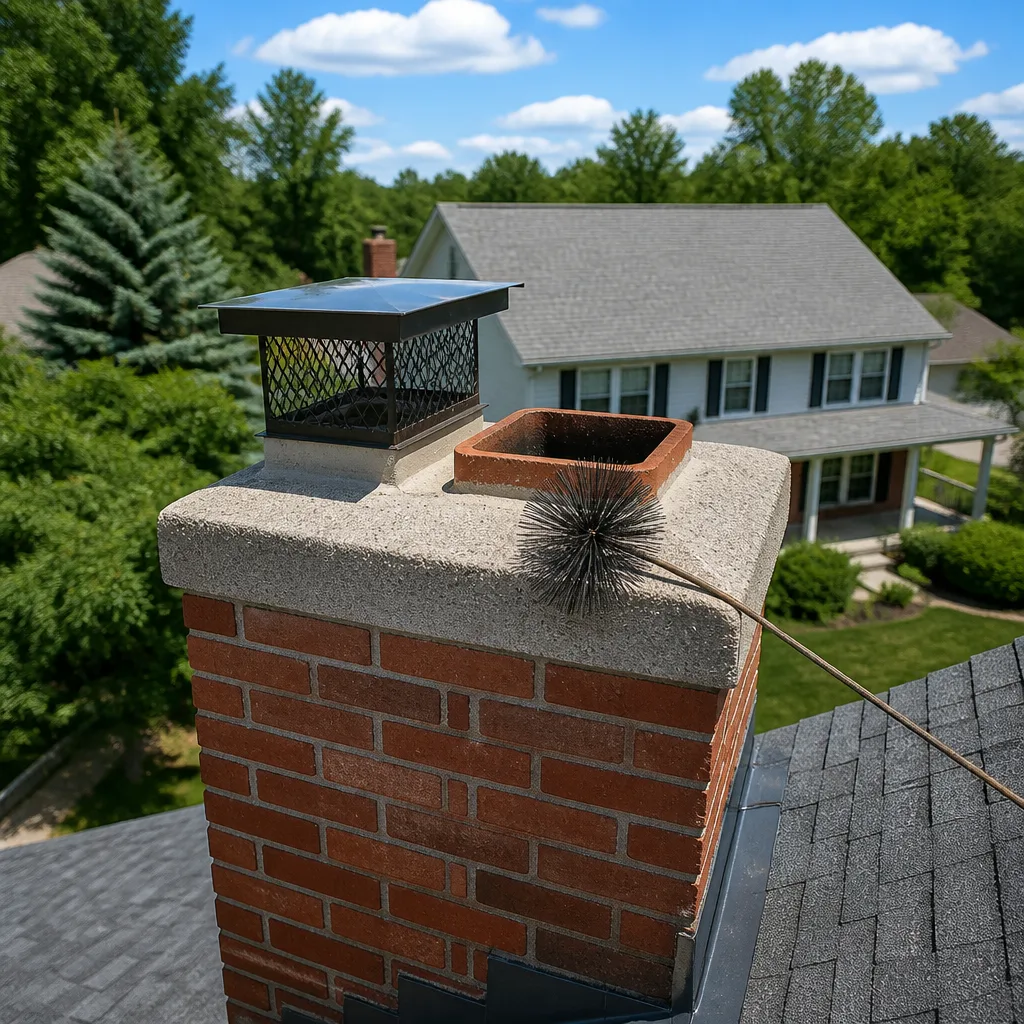
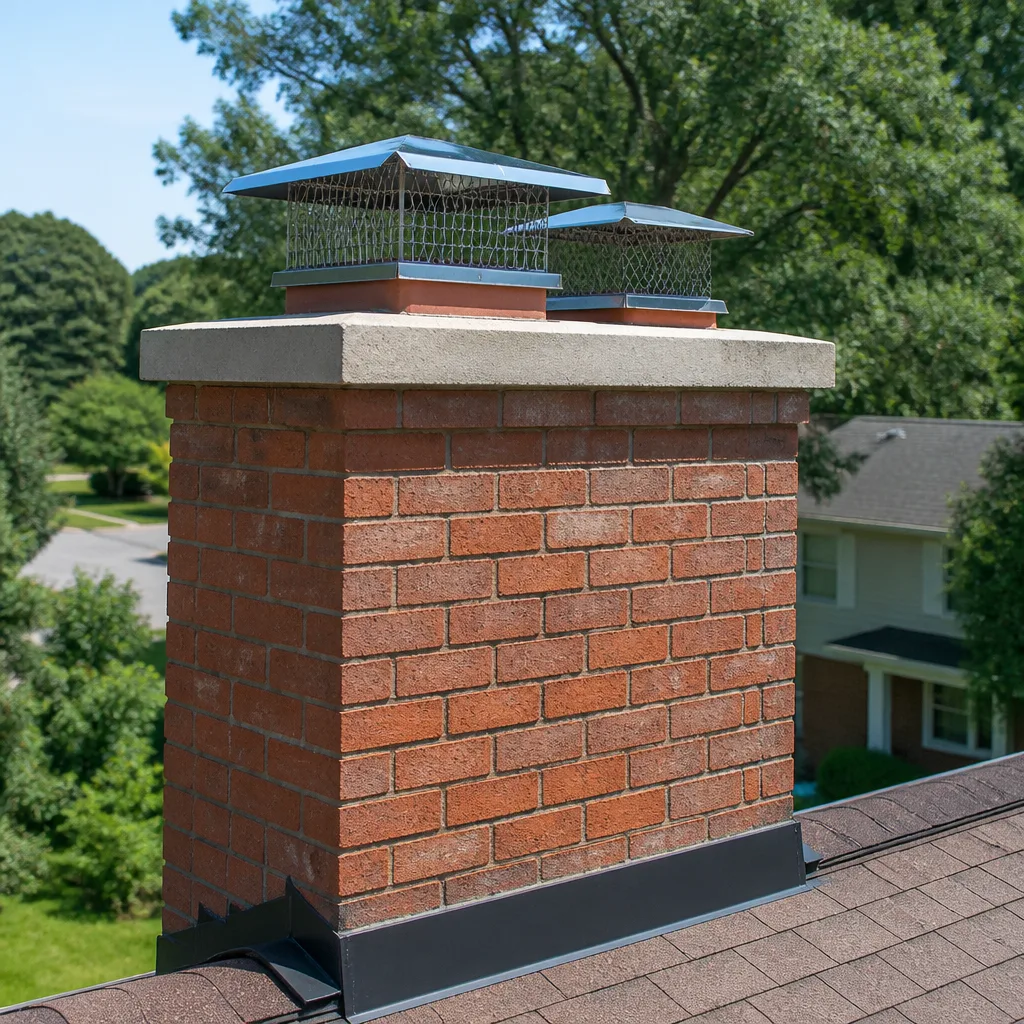
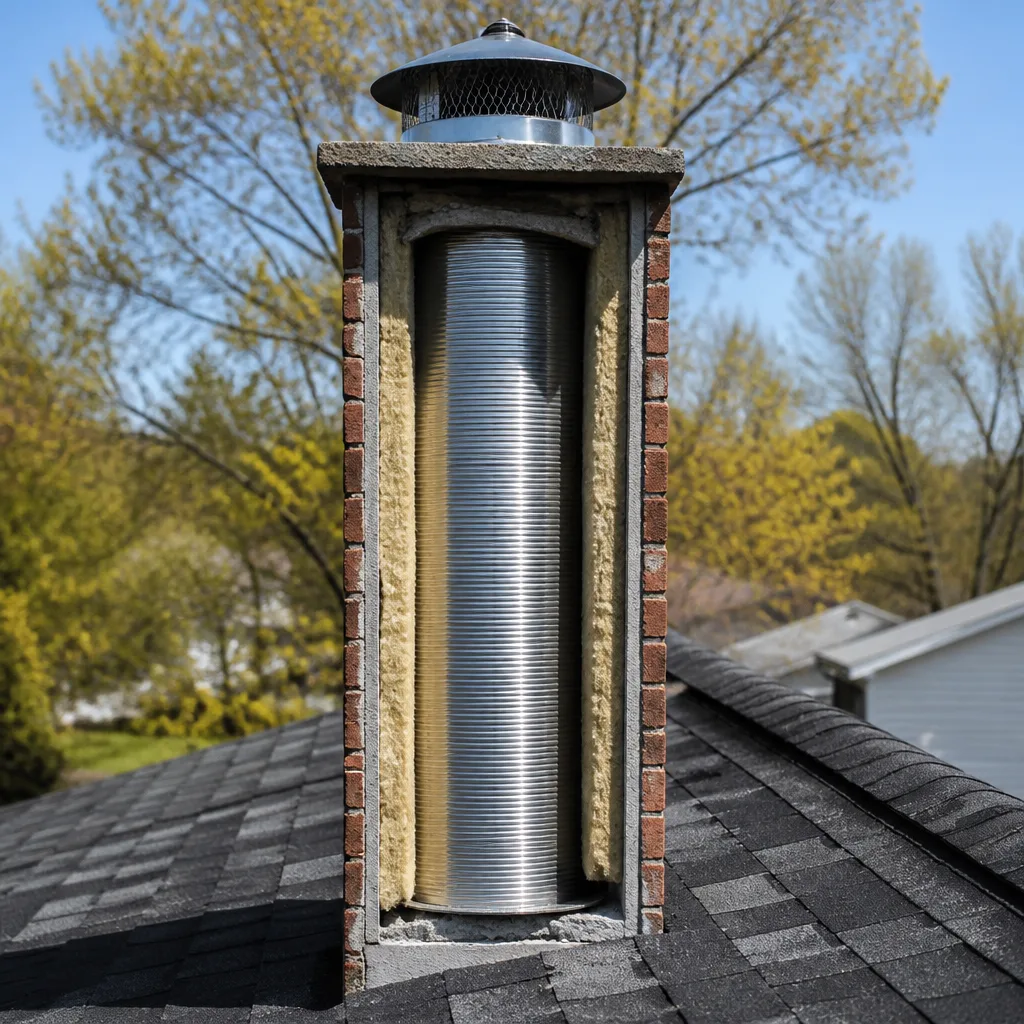
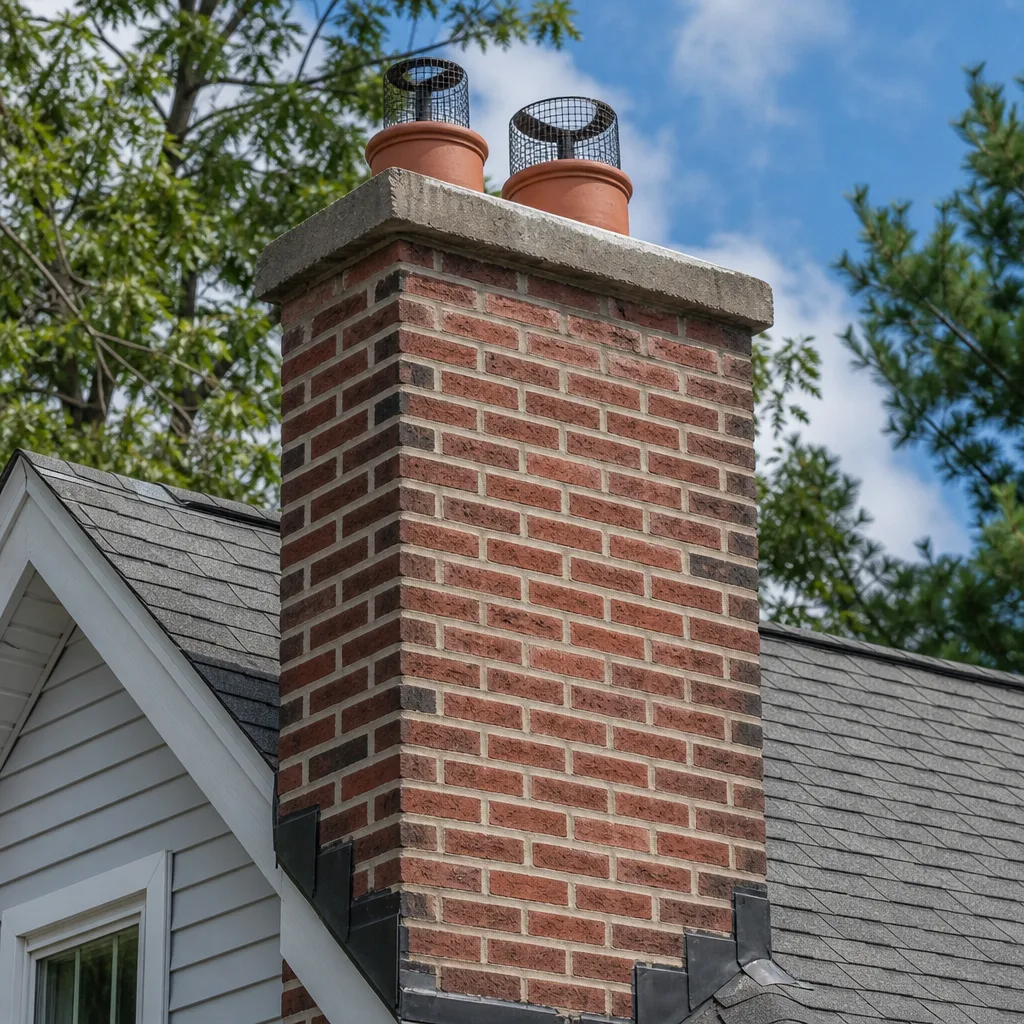
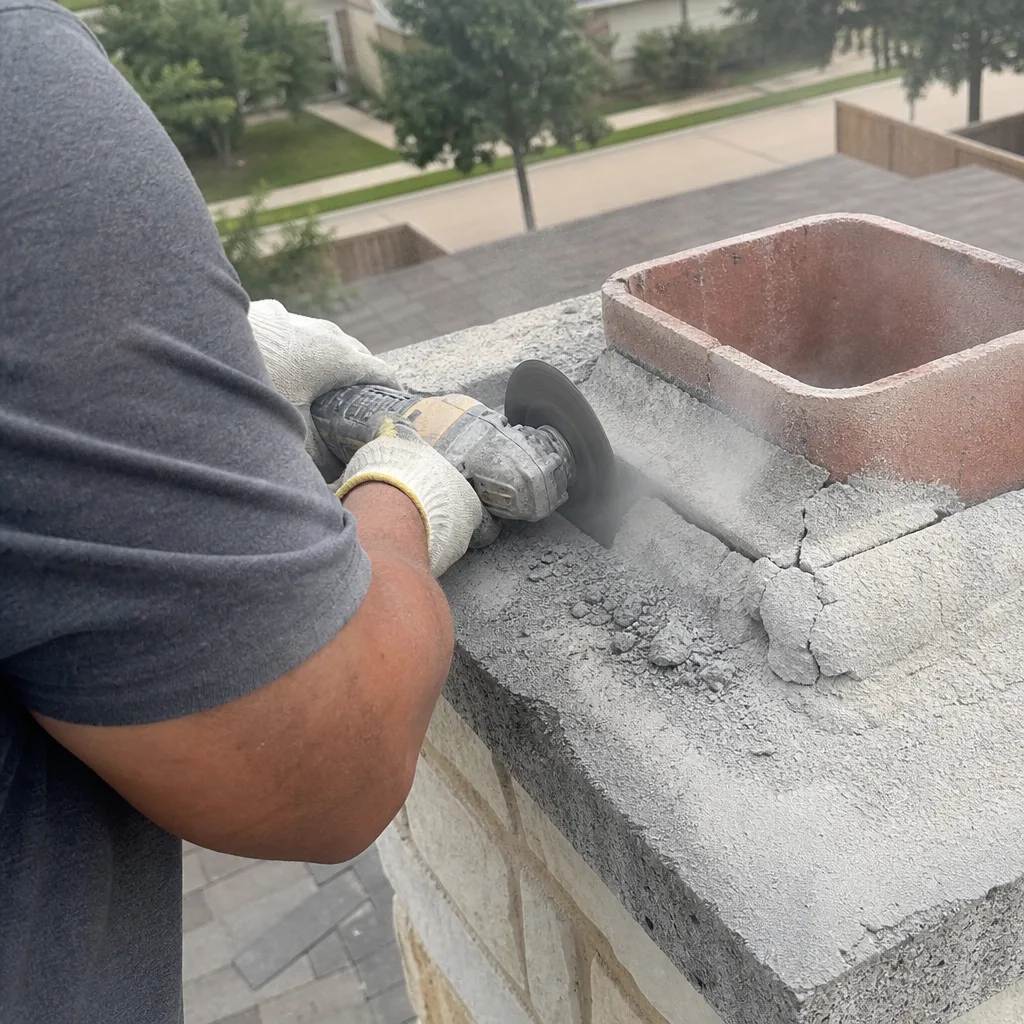
Level 1 sweep and inspection to the NFPA 211 annual standard - flue, crown, cap, and flashing checked and photographed
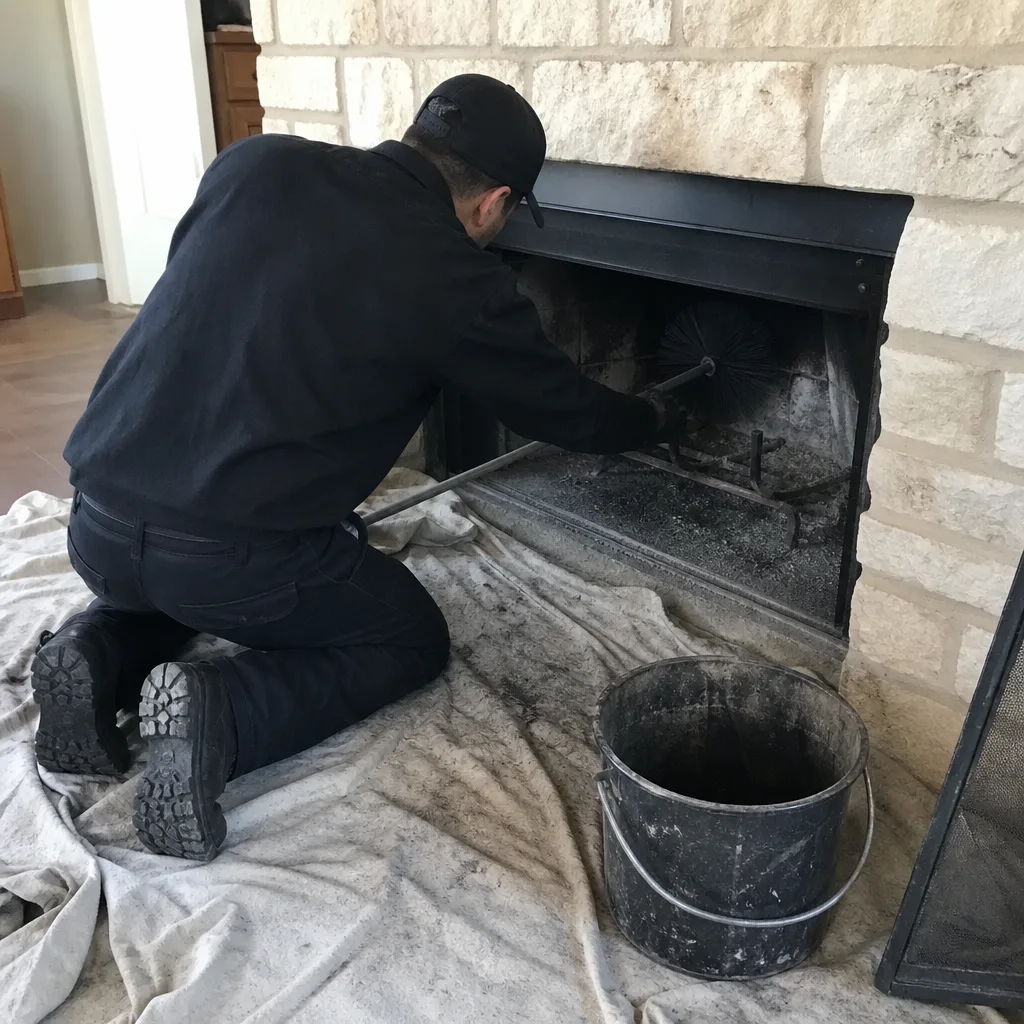
Chimney sweep logs do not sweep chimneys. They loosen some creosote - which then falls where a brush and vacuum still have to collect it.
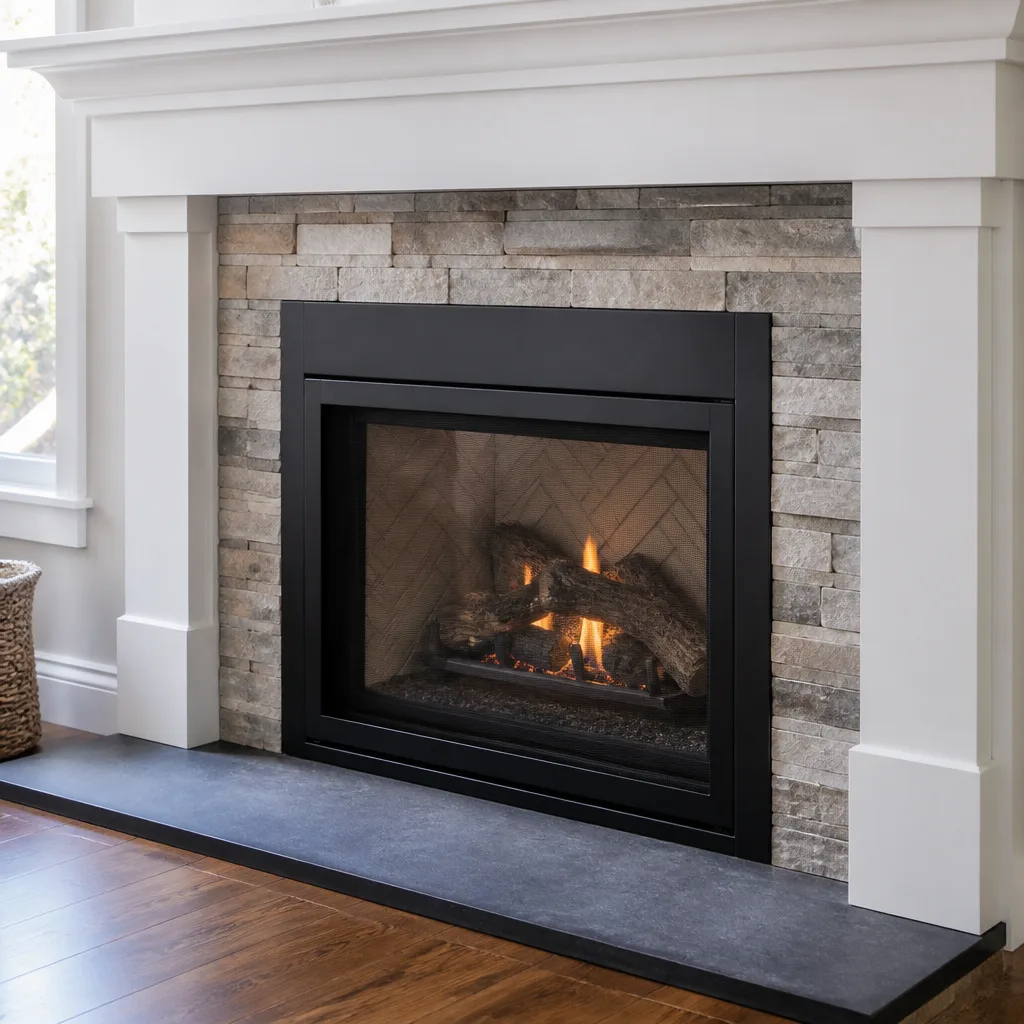
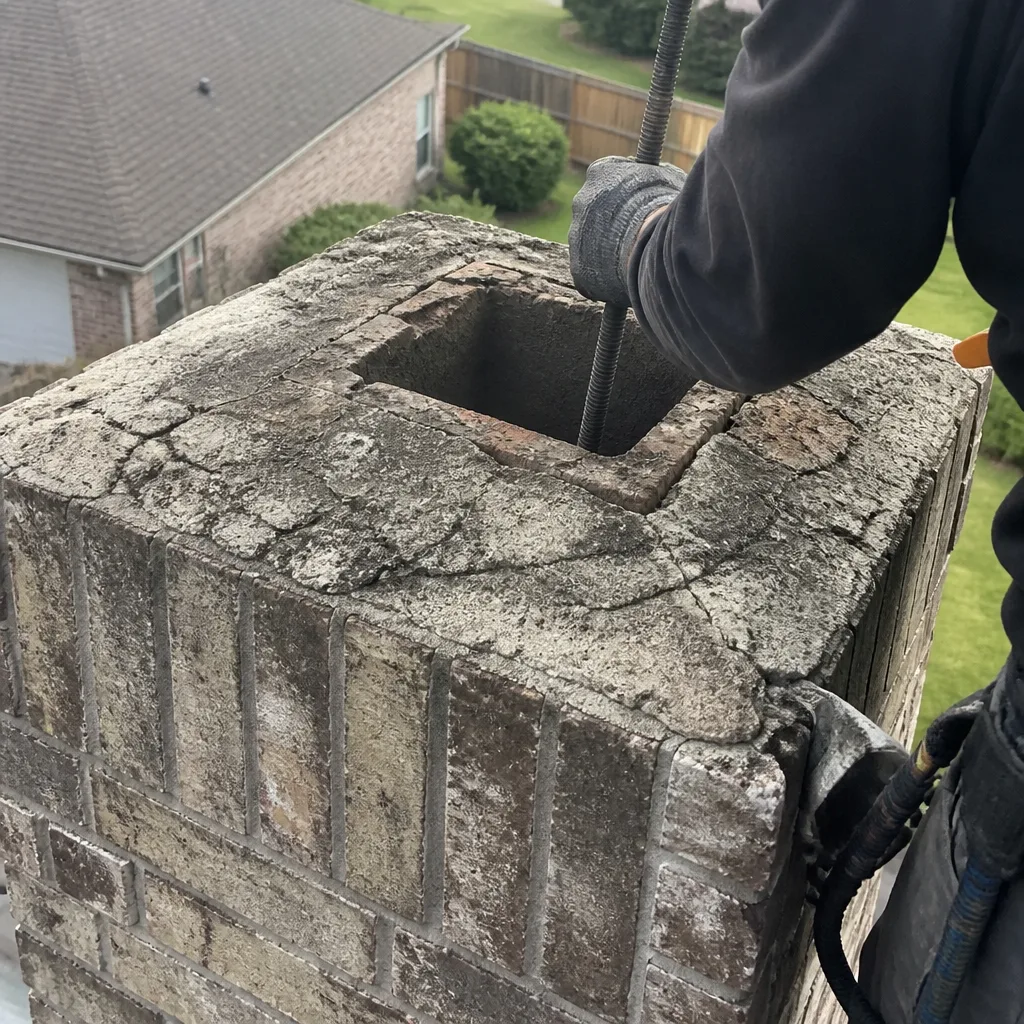 Before
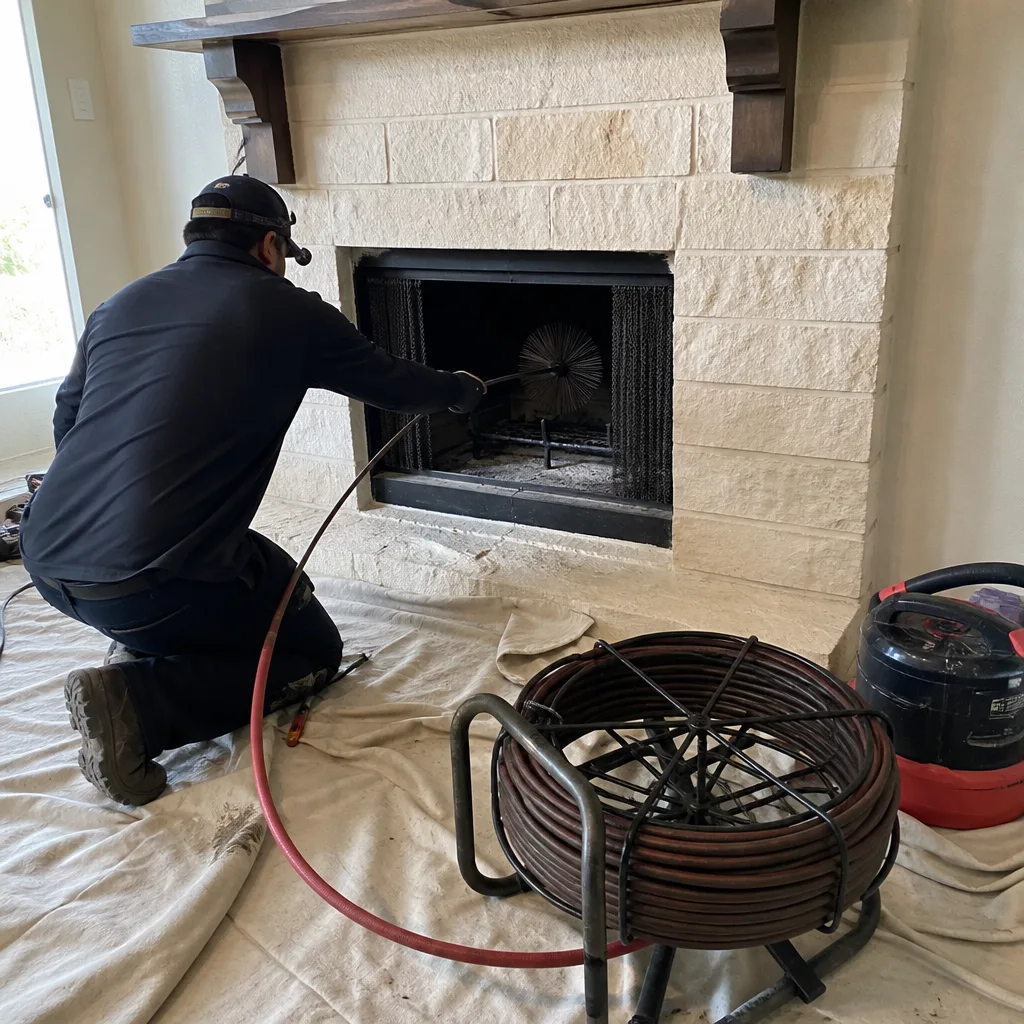 After
After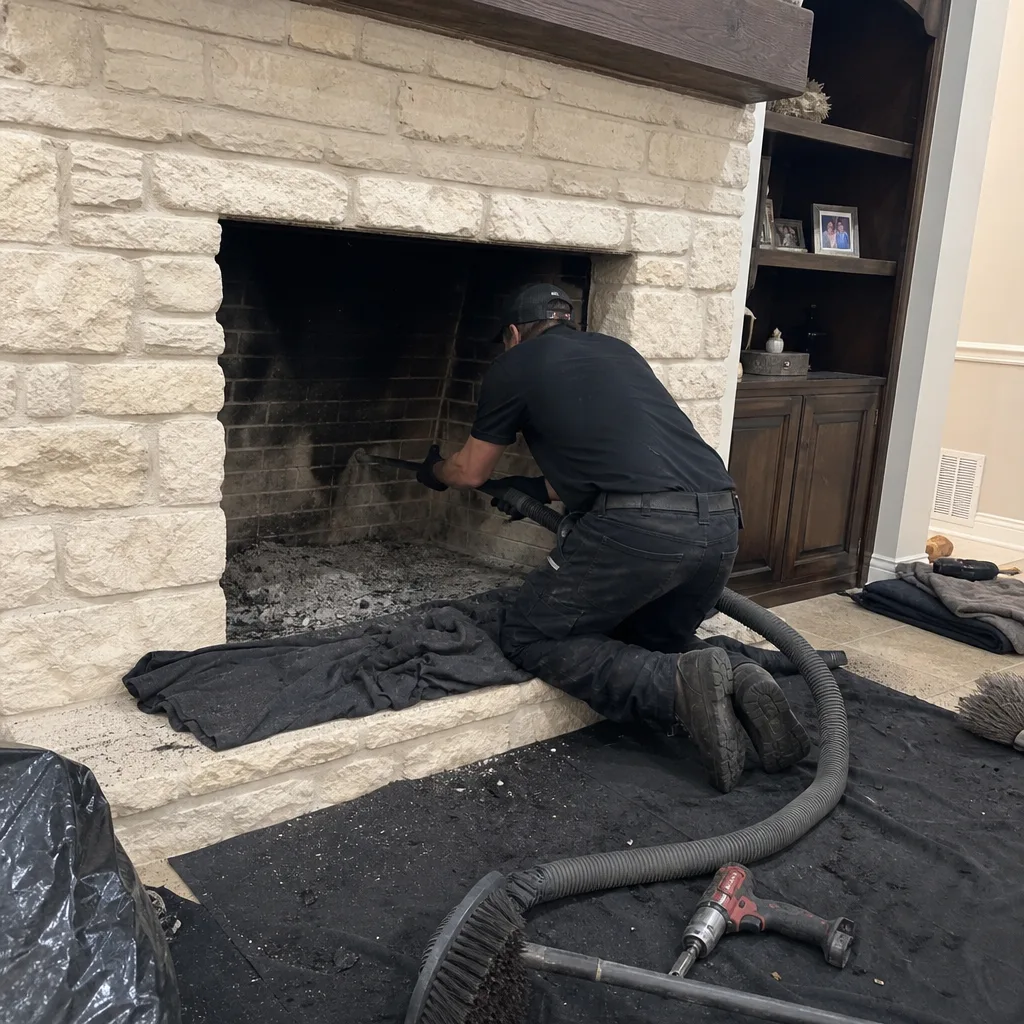 Before
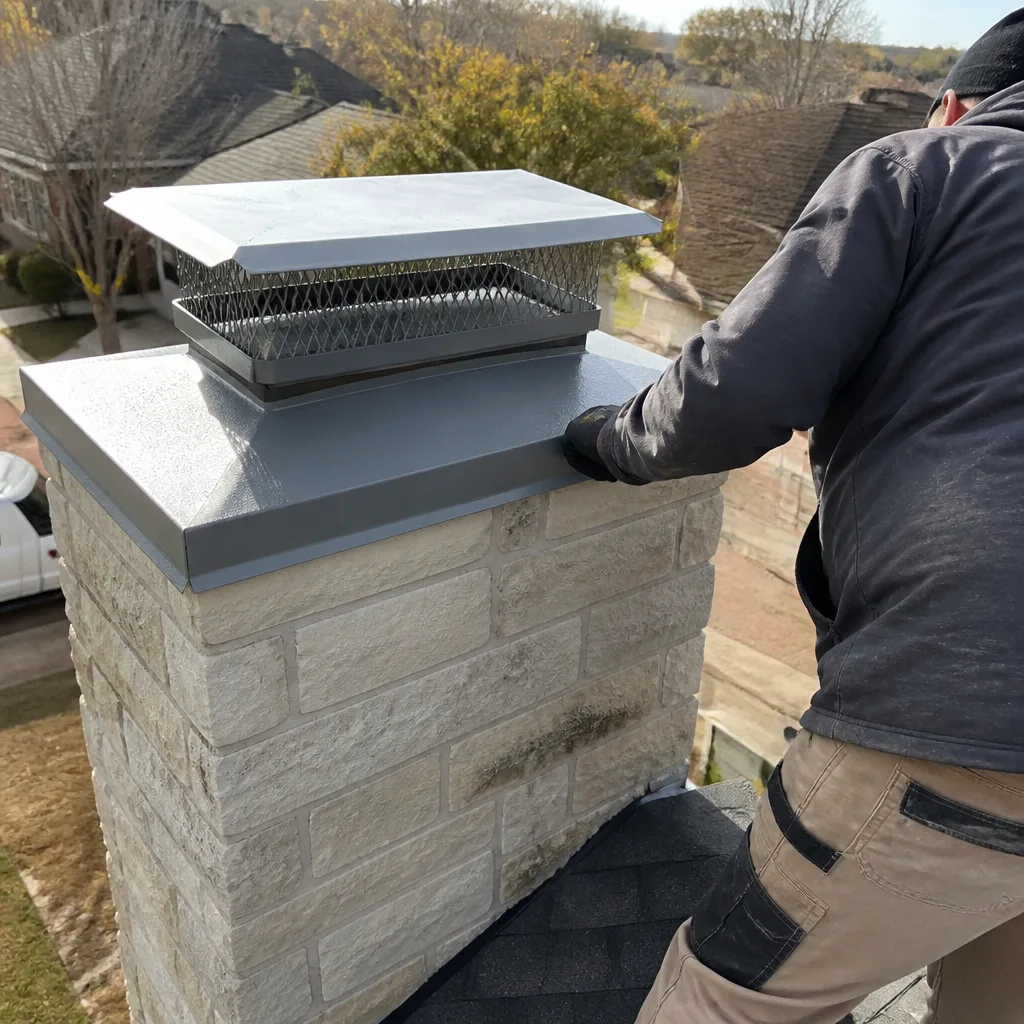 After
After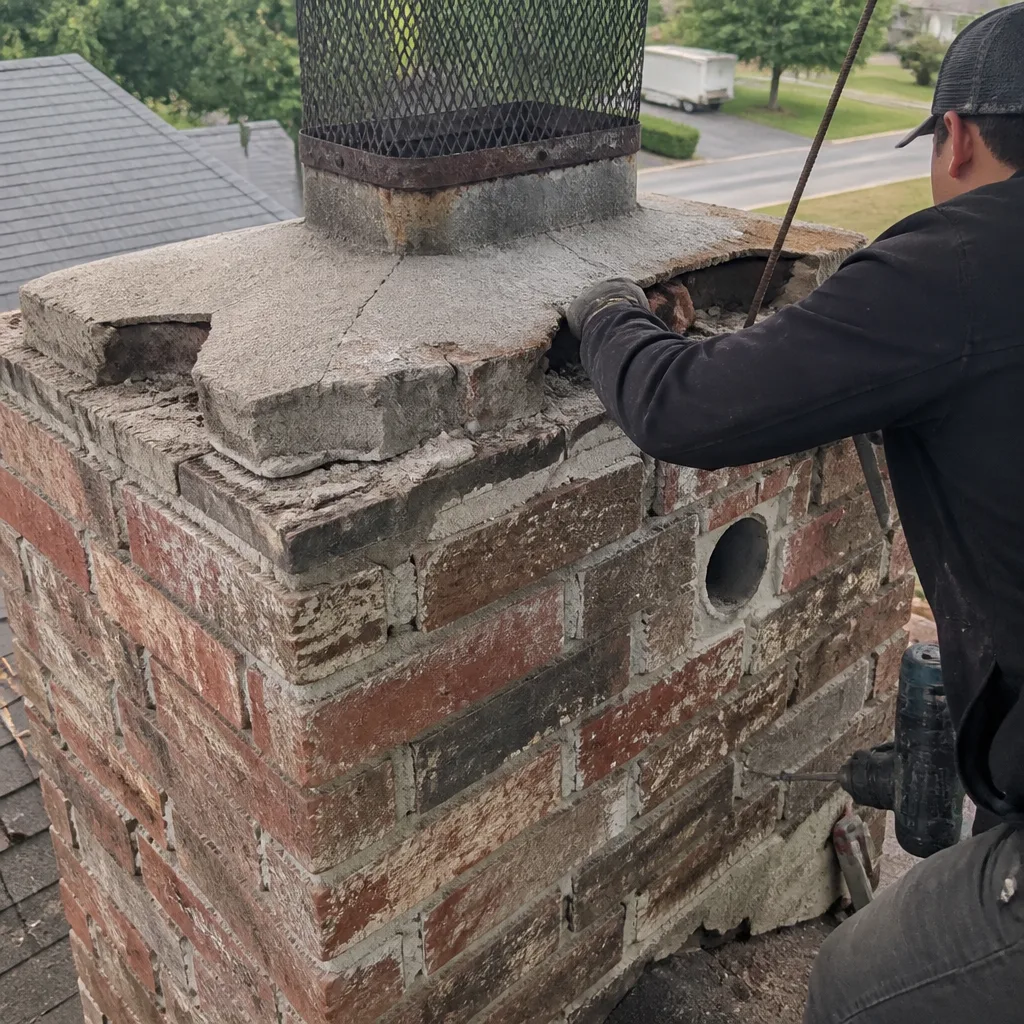 Before
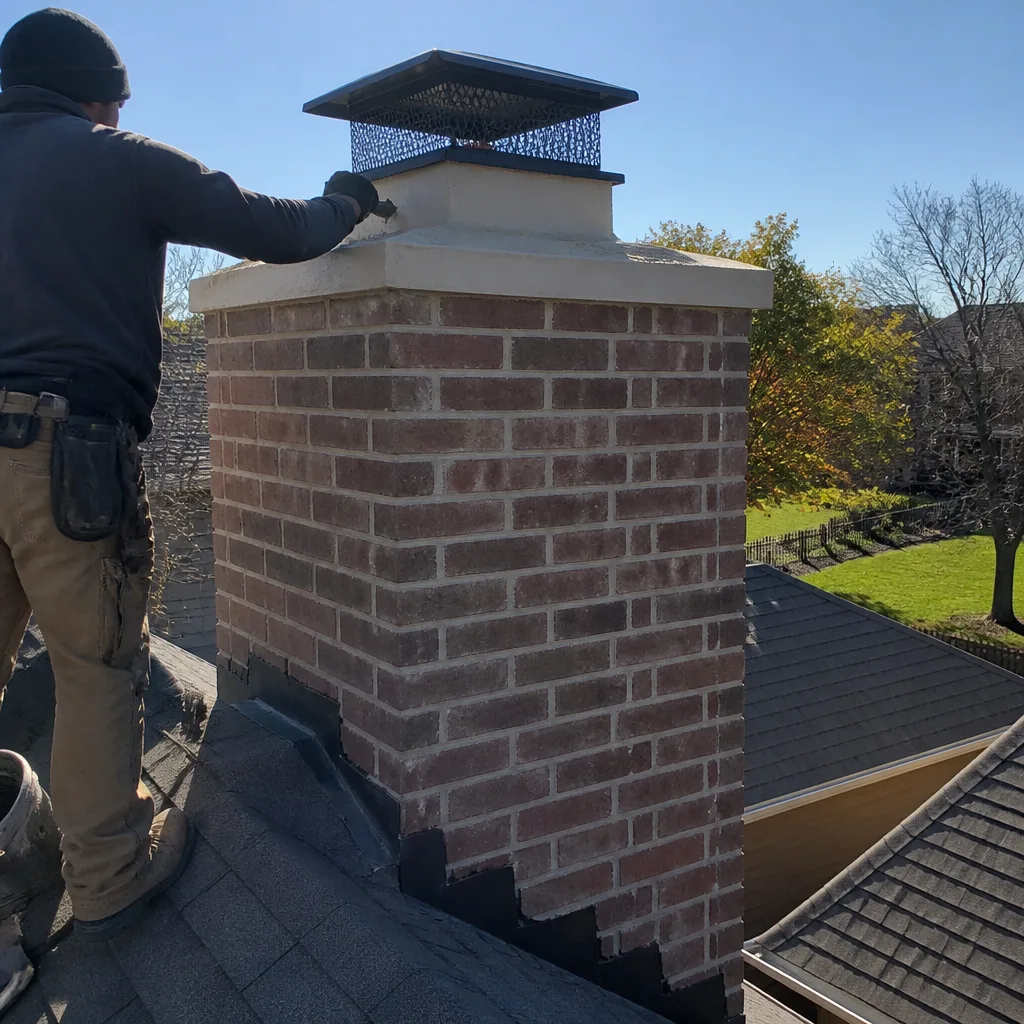 After
AfterSeasonal Chimney Cleaning Care for Frisco: Year-Round Homeowner’s Guide
Frisco homeowners light their fireplaces an average of 12 to 15 days per year, not 90. Those short, high-intensity burns produce Stage 2 creosote faster than the long, slow fires assumed by national maintenance calendars. In our 38,000+ inspections since 2009, we’ve found that the standard “sweep every 50 fires” rule fails in North Texas because the flue never reaches sustained temperatures that keep combustion gases from condensing on liner walls. This guide replaces the generic four-season template with a Chimney Cleaning & Sweep Maintenance Checklist for Frisco Homeowners built for how Frisco homes actually burn.
Quick Answer
Frisco fireplaces need a Level 2 camera inspection every 12 months regardless of use count, with the critical maintenance window split between a post-season sweep in March-April (catches winter damage before summer humidity sets in) and a pre-season cap and crown check in September after hail season ends. Short, hot burns common in North Texas produce glazed creosote that standard brushing often misses, making camera verification essential and raising questions about Chimney Cleaning Permits, Codes & Inspections in TX: What You Need to Know.
Table of Contents
- Why Frisco’s Burn Pattern Breaks the National Calendar
- Spring (March-April): The Post-Season Inspection That Matters Most
- Summer (May-August): Hail, Humidity, and Hidden Damage
- Fall (September-November): Pre-Season Prep After Storm Season
- Winter (December-February): Safe Burning During Short, Intense Cold Snaps
- Firewood Storage and Tool Care in Frisco Garages
- North Texas Humidity and Clay Liner Degradation
- Common Mistakes to Avoid
- When to Call a Professional
- Frequently Asked Questions
- The Bottom Line
BeforeAfterWhy Frisco’s Burn Pattern Breaks the National Calendar
National chimney associations publish sweep schedules based on heating-degree days in climates like Minnesota or Vermont. Frisco doesn’t operate in that world. Our winters average 33 nights below freezing, but sustained sub-40-degree days are rare. The typical Frisco homeowner lights a fire when the temperature drops into the 30s, runs it hot for 3 to 5 hours, then lets the system go cold for a week or two.
This intermittent pattern creates a specific creosote chemistry problem. When a flue heats slowly and stays hot, combustion gases remain vaporized until they exit the chimney. When it heats fast, cools fast, and sits cold, those gases condense on liner walls at temperatures between 250°F and 400°F, the exact range where Stage 2 creosote forms. Stage 2 is granular and tar-like, not the fluffy Stage 1 that falls off easily during sweeping. It requires more aggressive mechanical removal, and it stages to Stage 3 glaze faster than most homeowners expect.
We’ve documented this pattern repeatedly in Frisco neighborhoods from Stonebriar to Newman Village. A homeowner who burns 15 times per year in short bursts often carries more creosote risk than a Wisconsin homeowner who burns 60 times in sustained fires. The national “one sweep per cord of wood” guideline doesn’t account for this.
What Frisco homeowners need instead:
- Annual camera inspection (NFPA 211 Level 2) to verify creosote stage, not just measure quantity
- Post-season sweep in March-April, when Stage 2 deposits are fresh and haven’t hardened through a humid summer
- Pre-season cap and crown audit in September, after hail season and before first use
- Humidity-aware liner monitoring, because North Texas moisture swings accelerate clay joint failure
The Chimney Cleaning & Sweep in Frisco page details our Level 2 inspection process, which includes camera-scan documentation of creosote stage and liner condition on every visit.
Spring (March-April): The Post-Season Inspection That Matters Most
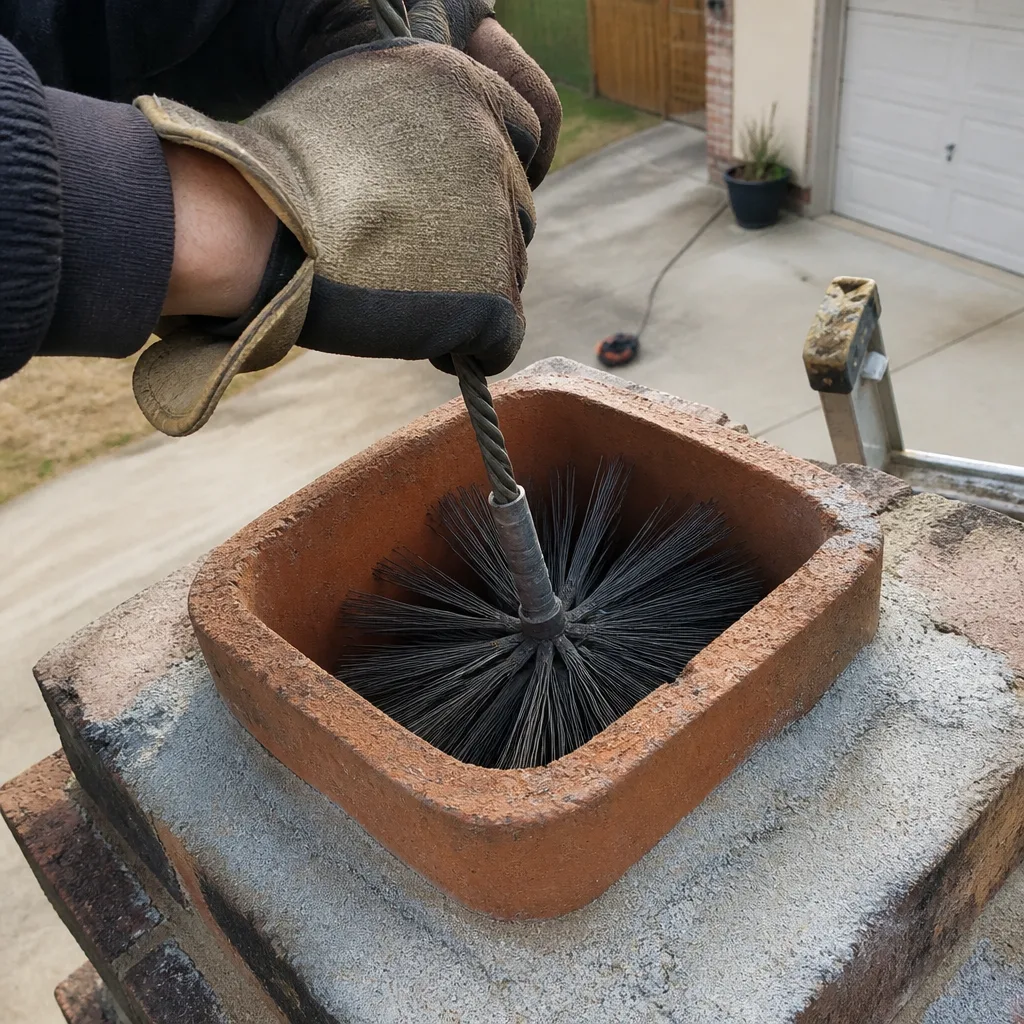
If your budget allows only one professional visit per year, schedule it for March or April. Here’s why this timing outperforms the popular October pre-season slot.
Winter damage is fresh and visible. Thermal cycling from those short, hot fires creates micro-cracks in mortar joints and crown surfaces that haven’t yet been obscured by summer dust or widened by freeze-thaw. In Frisco’s climate, we get enough late-season cold snaps in February and early March that the system completes its stress cycle before you call. By April, the damage pattern is complete but unweathered.
Creosote removal is more effective. Stage 2 deposits haven’t had months to harden into Stage 3 glaze. A mechanical sweep in March removes material that would become unremovable by brush alone by September. We’ve pulled hardened glaze deposits in October that would have brushed clean in April.
Moisture hasn’t set in. North Texas humidity rises sharply in May and stays high through September. Clay liner joints that were sound in April can show spalling initiation by June if water intrusion began during winter. Catching this in spring means addressing it before the summer moisture cycle accelerates degradation.
Here’s what a proper post-season inspection covers:
- Camera scan of the full flue length - documented photo record per Haven Standard Clause 4, looking for creosote stage, liner gaps, and moisture staining
- Smoke chamber and firebox inspection - check for refractory panel cracking or smoke chamber parging loss
- Crown integrity assessment - hairline cracks from thermal stress, not yet widened by summer UV and rain
- Cap and screen condition - winter wind load and any ice formation damage
- Exterior masonry survey - spalling brick faces, mortar joint recession, efflorescence indicating moisture paths
- Damper operation and seal test - verify closure integrity to prevent summer humidity infiltration
In our Frisco work, we regularly find that the March-April inspection catches crown cracks at 1/16-inch width that would be 1/8-inch by October, requiring more extensive repair. Early intervention with HeatShield crown coating or targeted repointing saves the cost of full crown rebuilds.
Summer (May-August): Hail, Humidity, and Hidden Damage
Summer is not downtime for a Frisco chimney. It’s the season when three specific threats accumulate, and all three are addressable by homeowners without professional tools.
Hail season ends in May, but damage reveals itself through summer. Frisco sits in the southern extent of Tornado Alley and receives hail annually. A cap dented in April may not leak immediately, but summer thermal expansion and contraction of the metal can worsen the deformation until the mesh separates from the frame. By September, you’ve got a gap that admits squirrels, raccoons, and nesting birds. We recommend a ground-level visual inspection of the cap after every significant hail event, using binoculars from the driveway if roof access is unsafe. Look for mesh pull-away, frame twisting, or missing fasteners.
Thermal cycling continues in summer, just differently. A masonry chimney in Frisco experiences daily temperature swings of 30°F or more between peak afternoon heat and overnight lows. The crown and upper mortar joints expand and contract through this range 100+ times per summer. Hairline cracks from winter widen incrementally. A homeowner can monitor this from the ground: look for new mortar dust on the roof surface below the chimney, or fresh brick face spalling that exposes the rough interior clay.
Animal intrusion peaks in June and July. Raccoons give birth in Texas in spring; juveniles disperse in early summer and seek shelter. A chimney without a functional cap is a preferred cavity. The signs are audible (chittering at dawn and dusk) or visible (debris dropping into the firebox, or a sudden damper obstruction). Never light a fire to “smoke out” animals. It kills juveniles who cannot climb, creates a biohazard, and risks a chimney fire from nesting material ignition. Call a professional for humane removal, then install a proper cap.
Summer tasks for the homeowner:
- Inspect cap and flashing after each hail event
- Check firebox and damper area monthly for animal debris or unusual odors
- Monitor exterior masonry for new spalling or efflorescence
- Verify damper seals fully closed to block humidity infiltration
- Store firewood (see next section) to prevent pest migration toward the house
Fall (September-November): Pre-Season Prep After Storm Season
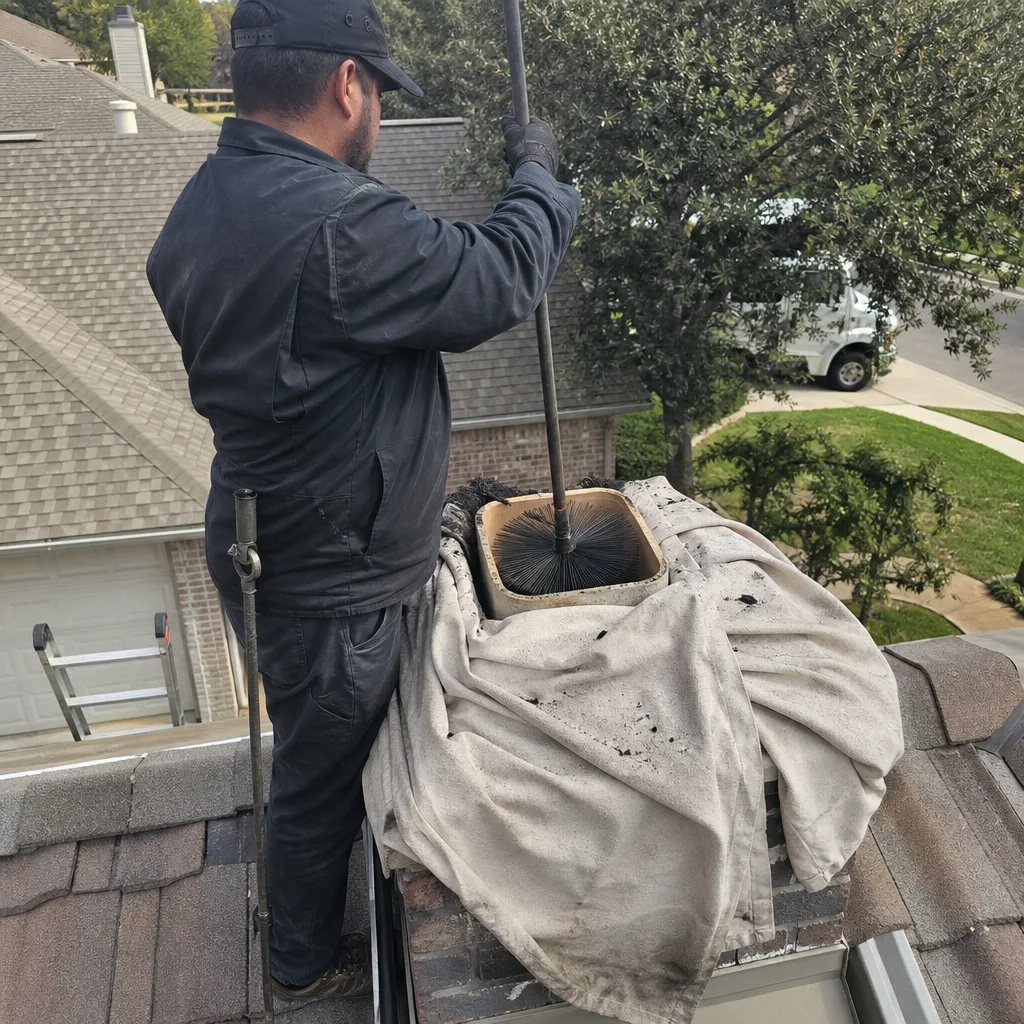
The October inspection is popular for good reason: homeowners want reassurance before first use. But in Frisco, this timing misses critical information that the March-April window captures. If you’re running two visits per year, September-October is your secondary slot. If one visit, prioritize spring.
That said, fall has specific purposes in North Texas. Hail season is definitively over by late September. Any cap or flashing damage from spring storms has had months to manifest. A pre-season inspection in October can catch leaks that developed over summer, before they’re hidden by winter use.
The specific Frisco fall checklist:
- Cap and crown post-hail verification - any damage that survived summer cycling needs repair before first freeze
- Flue obstruction check - summer animal nesting, leaf accumulation from overhanging post oak or cedar elm, or construction debris from roof work
- Liner joint assessment - humidity-driven spalling that began in June may now be visible
- Firewood readiness audit - moisture content verification (see storage section below)
- Gas log or ignition system test - for fireplaces with gas assists, verify pilot and thermocouple function before cold weather service calls peak
Fall is also when Fireplace Services in Frisco demand peaks. Scheduling in September avoids the October-November backlog that delays first fires by two to three weeks. Our live phone support at (940) 290-7230 books into October through December, but September slots remain more flexible.
Winter (December-February): Safe Burning During Short, Intense Cold Snaps
Frisco winters deliver cold in concentrated doses. A typical pattern: a front drops temperatures from 55°F to 22°F overnight, the homeowner lights a fire for the first time in weeks, runs it for 4 to 6 hours, then temperatures recover to 50°F+ and the fireplace sits idle for 10 days. This is the burn pattern that creates the creosote problem described earlier.
Safe winter burning in Frisco requires adjusting habits to the system’s actual operating conditions:
Pre-burn inspection before first fire. Even with a spring sweep and fall check, verify damper operation and firebox condition before lighting. Look for animal debris, moisture staining, or refractory panel displacement that may have occurred since last professional visit. If the damper feels obstructed or you detect organic odor, schedule inspection before burning.
Avoid the “roaring fire” startup. The temptation on a 25-degree night is to load the firebox and open the damper fully. But a cold flue - and in Frisco, the masonry mass may be near ambient temperature even in winter - doesn’t draft effectively until warmed. A cold start with heavy fuel load can push smoke into the living space or cause rapid creosote condensation in the upper flue where temperatures drop fastest. Start with kindling and a small fuel load, allow the flue to warm for 10 to 15 minutes, then add main fuel.
Burn dry, seasoned hardwood only. North Texas has limited local hardwood supply; much “seasoned” wood sold in Frisco is 6-month-cut post oak or elm with 25%+ moisture content. Wet wood smolders, producing maximum creosote at minimum heat. See the storage section for proper seasoning.
Never burn overnight or unattended. The “banked fire” practice appropriate in colder climates is hazardous in Frisco’s intermittent-use pattern. A smoldering fire produces carbon monoxide at higher rates and deposits creosote in the coolest upper flue sections. Extinguish fully before sleeping or leaving the house.
Monitor for performance changes. Smoke spillage at startup, longer kindling times, or visible staining above the firebox opening indicate drafting problems that need professional evaluation. Don’t compensate by opening windows or running exhaust fans - these mask the symptom while worsening the hazard.
Firewood Storage and Tool Care in Frisco Garages
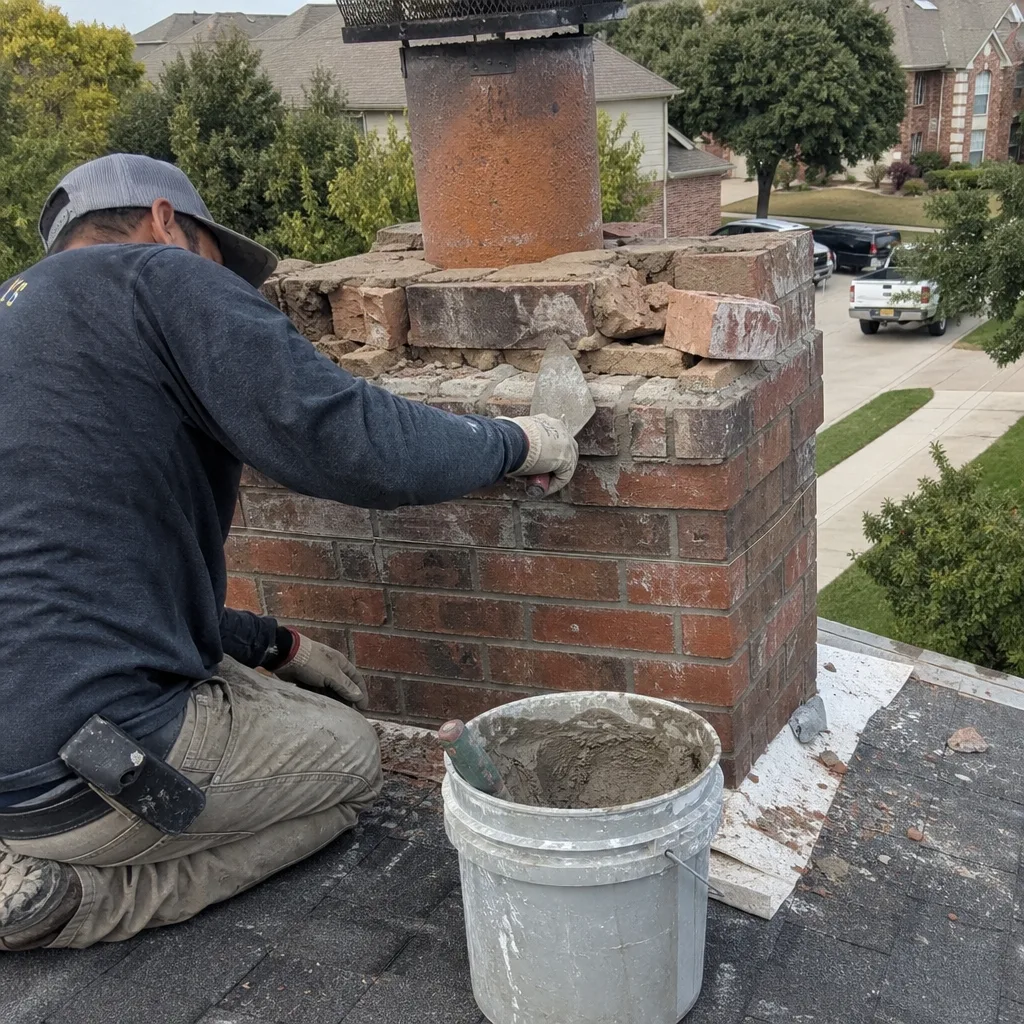
Frisco’s garage environment is uniquely challenging for firewood storage. Attached garages in newer construction (2015-2025 builds common in our market) are often climate-sealed and insulated, but summer temperatures exceed 100°F and humidity fluctuates with door openings. Detached garages in older Frisco neighborhoods like Grayhawk or The Trails experience wider swings. Both conditions affect wood seasoning and pest management.
Moisture control. Target 15-20% moisture content for burning. Fresh-cut Texas hardwood (post oak, live oak, hickory when available) requires 12-18 months to reach this in Frisco’s climate. Store wood off concrete on pallets or rack systems, with airflow on all sides. Cover the top only - full tarping traps ground moisture and prevents drying. We recommend Copperfield firewood racks with elevated base design for garage use.
Pest prevention. Termites and carpenter ants are active in North Texas year-round in protected environments. Firewood stored against garage walls or house siding creates a bridge. Maintain 18-inch clearance from all structures. Inspect wood before bringing indoors - look for exit holes, frass, or live insects. Never treat firewood with pesticides; burning treated wood releases toxic compounds.
Seasoning verification. A moisture meter ($20-$40) is essential. Split a piece and test the fresh face, not the weathered exterior. Above 25% moisture, wood belongs back in storage, not the firebox. Sellers in Frisco market “seasoned” wood aggressively; verify independently.
Tool storage. Fireplace tools stored in the garage develop rust in Frisco’s humidity. Stainless or brass tools resist better than iron. Store upright in a stand, not leaning against walls where moisture accumulates. Bellows stored flat develop mildew; hang vertically. Screen andirons seasonally with light oil if iron.
Ash disposal. Wood ash from Frisco’s short-burn pattern is often incompletely combusted and contains live embers for 72+ hours. Store in a metal container with tight lid, outside the garage, on concrete or bare ground, for minimum one week before disposal. Never in paper bags, plastic bins, or near combustibles.
North Texas Humidity and Clay Liner Degradation
This section addresses the specific failure mode we see more often in Frisco than in drier climates to our west or colder climates to our north.
Clay flue liners, standard in homes built before 1990 and common through 2005, are ceramic. They expand and contract with temperature, but they’re also porous. When moisture penetrates the masonry surrounding the liner - through crown cracks, deteriorated mortar joints, or failed flashing - it reaches the liner exterior. In Frisco’s climate, summer humidity keeps this moisture present for months, while daily thermal cycling creates micro-movement at liner joints.
The result is spalling: the liner face flakes and crumbles, opening gaps at joints that allow combustion gases to enter chimney walls. This is the pathway to structural damage and carbon monoxide risk. In our Frisco inspections, we identify moisture-driven spalling in clay liners at roughly twice the rate seen in Amarillo or Lubbock, and the progression from first visible damage to liner replacement need averages 3 to 5 years rather than 8 to 10.
Homeowner identification signs:
- White efflorescence on exterior chimney brick - mineral salts carried by moisture, indicating water path through masonry
- Spalled brick faces on the chimney exterior - freeze-thaw or moisture expansion damage
- Loose or crumbling debris in the firebox that appears ceramic, not soot - liner fragments
- Damp or musty odor from the fireplace in summer, even with damper closed - humidity infiltration through liner gaps
- Staining pattern on smoke chamber walls that follows joint lines, not random soot deposition
Camera inspection confirms the diagnosis. We document liner condition with photo records per Haven Standard Clause 4, showing joint gaps, spalling depth, and moisture staining patterns. When liner replacement is needed, we specify stainless steel systems from DuraFlex or Olympia Chimney, sized to the appliance and installed with proper insulation for Frisco’s temperature range.
The Chimney Repair in Frisco page details our liner replacement process, including material specifications and warranty terms.
Common Mistakes to Avoid
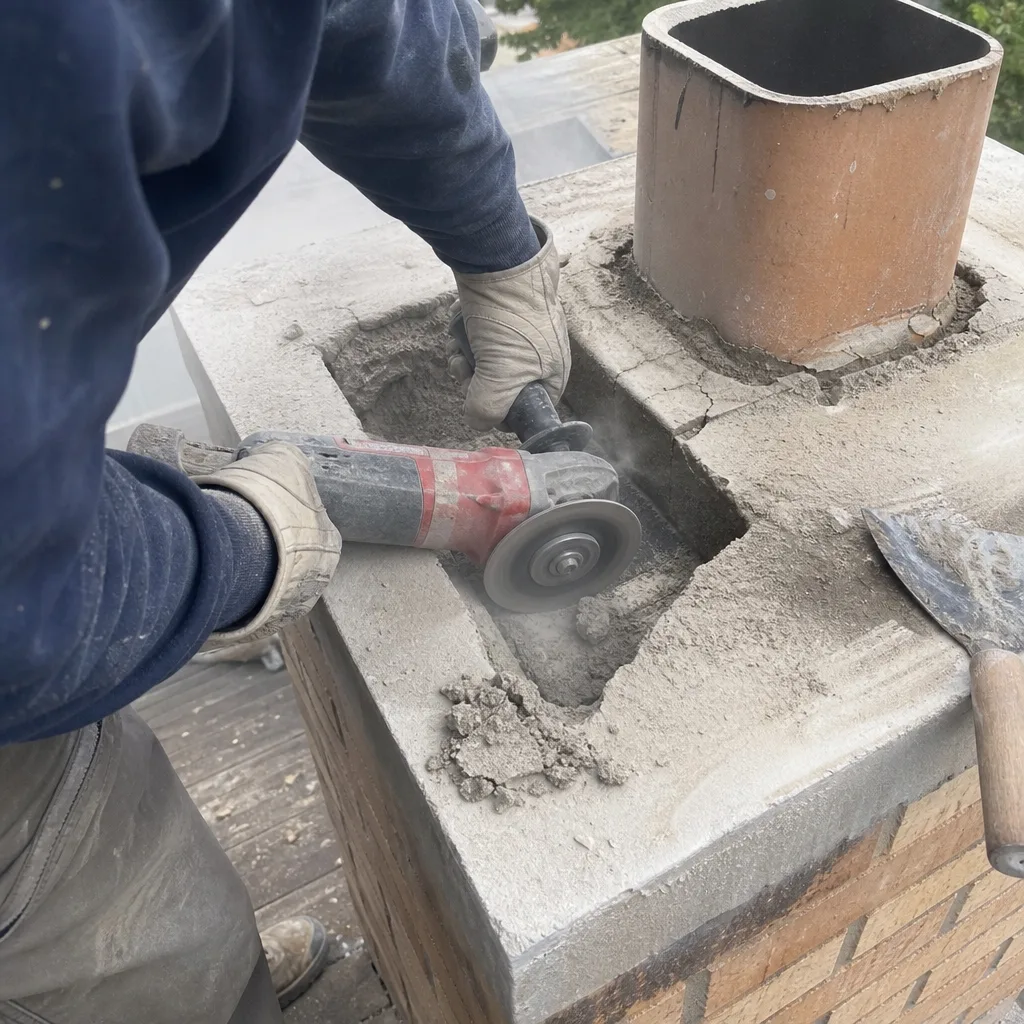
- Waiting for “enough fires” to schedule a sweep. In Frisco, 12 short, hot fires produce more Stage 2 creosote than 40 sustained burns. The national “per cord” or “per 50 fires” guideline doesn’t apply.
- Skipping the post-season inspection. Pre-season checks catch obvious problems, but March-April inspections identify creosote before it hardens and thermal damage before summer humidity accelerates it.
- Storing firewood against the house or garage wall. This creates termite and carpenter ant bridges in a region where both are active year-round in protected spaces.
- Assuming a gas fireplace needs no chimney attention. Gas appliances produce water vapor and corrosive condensates. The flue still requires inspection for liner integrity and obstruction, especially in Frisco’s humidity.
- Ignoring summer animal activity. A raccoon family in June becomes a chimney fire risk by October when nesting material ignites. Address intrusion immediately, never with fire.
- Using “chimney cleaning logs” as sweep replacement. These products may reduce light Stage 1 creosote but do not remove Stage 2 or 3 deposits and provide no inspection of liner condition, crown integrity, or structural issues.
- Failing to verify “seasoned” wood claims. Frisco firewood sellers often move inventory too quickly. A moisture meter is essential equipment, not optional.
When to Call a Professional
Schedule professional inspection immediately if you observe smoke spillage at startup, detect organic odors from the firebox, find debris or animal signs, or notice exterior masonry changes. Annual Level 2 camera inspection is the baseline for Frisco homes, with the spring post-season window prioritized if budget allows one visit.
Level Two Chimney Frisco offers free estimates throughout Frisco and surrounding communities. Every estimate includes a written price, written scope, and written warranty before any work begins - Haven Standard Clause 1, no exceptions. Our background-checked, uniformed technicians arrive with license verification and a documented photo record on every visit. Call (940) 290-7230 to schedule, or reach our live phone support 24 hours a day.
Frequently Asked Questions
A Level 2 chimney inspection and sweep in Frisco typically ranges from $250 to $450, depending on flue accessibility, creosote stage, and whether the system is fireplace, insert, or stove-connected - see our Chimney Cleaning Cost Breakdown: The Frisco Homeowner’s Reference for 2026. We deliver a written price before any work starts, with no post-inspection add-ons. Call (940) 290-7230 for an exact quote - estimates are free.
Every 12 months, regardless of use count. Frisco’s short, high-intensity burn pattern produces Stage 2 creosote faster than sustained-burn climates. The NFPA 211 annual inspection standard applies nationally, but the creosote chemistry in North Texas makes compliance more critical, not less.
Only if camera inspection documents damage you can see yourself. We recommend liner replacement when inspection shows joint gaps exceeding 1/8 inch, spalling exposing the liner clay body, or moisture staining indicating gas leakage into chimney walls. Every recommendation includes the photo record that supports it - Haven Standard Clause 4. If work can safely wait, we say so plainly.
Stage 2 creosote progresses to Stage 3 glaze, which cannot be removed by standard brushing and becomes a concentrated fuel source. Moisture intrusion through uncaught crown cracks accelerates liner degradation. In Frisco’s humidity, 2 to 3 years of deferred maintenance often converts a $300 sweep into a $2,500+ liner replacement. Carbon monoxide risk increases as liner joints fail.
Homeowners can monitor cap condition, exterior masonry, and firebox debris. Flue interior inspection requires specialized camera equipment and training to interpret. The NFPA 211 Level 2 standard specifies camera scan of the full flue length - not a flashlight look from the top or bottom. We include this documentation on every visit.
Spring (March-April) catches damage before summer humidity accelerates it and removes creosote before it hardens. Fall verifies post-hail cap condition and clears summer obstructions. If budget allows one visit, choose spring. For two visits, schedule spring sweep and fall cap/crown check.
The Bottom Line
Frisco’s chimney care calendar must match its actual burn pattern: 12 to 15 days of short, intense use per year, producing Stage 2 creosote in a humidity-cycling climate that accelerates liner degradation. The national four-season template fails here. Prioritize the March-April post-season inspection for creosote removal and damage documentation. Maintain summer vigilance for hail and intrusion. Verify firewood moisture independently. And demand camera-verified documentation on every professional visit - not as an upgrade, but as standard practice. Level Two Chimney Frisco has operated under this principle since 2009, with 38,000+ documented inspections and a written price before every job.
Ready to schedule your inspection? Call Level Two Chimney Frisco at (940) 290-7230 for a free estimate. Our live phone support is available 24 hours a day, 7 days a week. Every estimate includes a written price, written scope, and written warranty before any work begins - no exceptions, no surprises.
Written by Corrine Halstead, Owner at Level Two Chimney Frisco, serving Frisco since 2009.