
Level 1 sweep and inspection to the NFPA 211 annual standard - flue, crown, cap, and flashing checked and photographed
Chimney sweep logs do not sweep chimneys. They loosen some creosote - which then falls where a brush and vacuum still have to collect it.
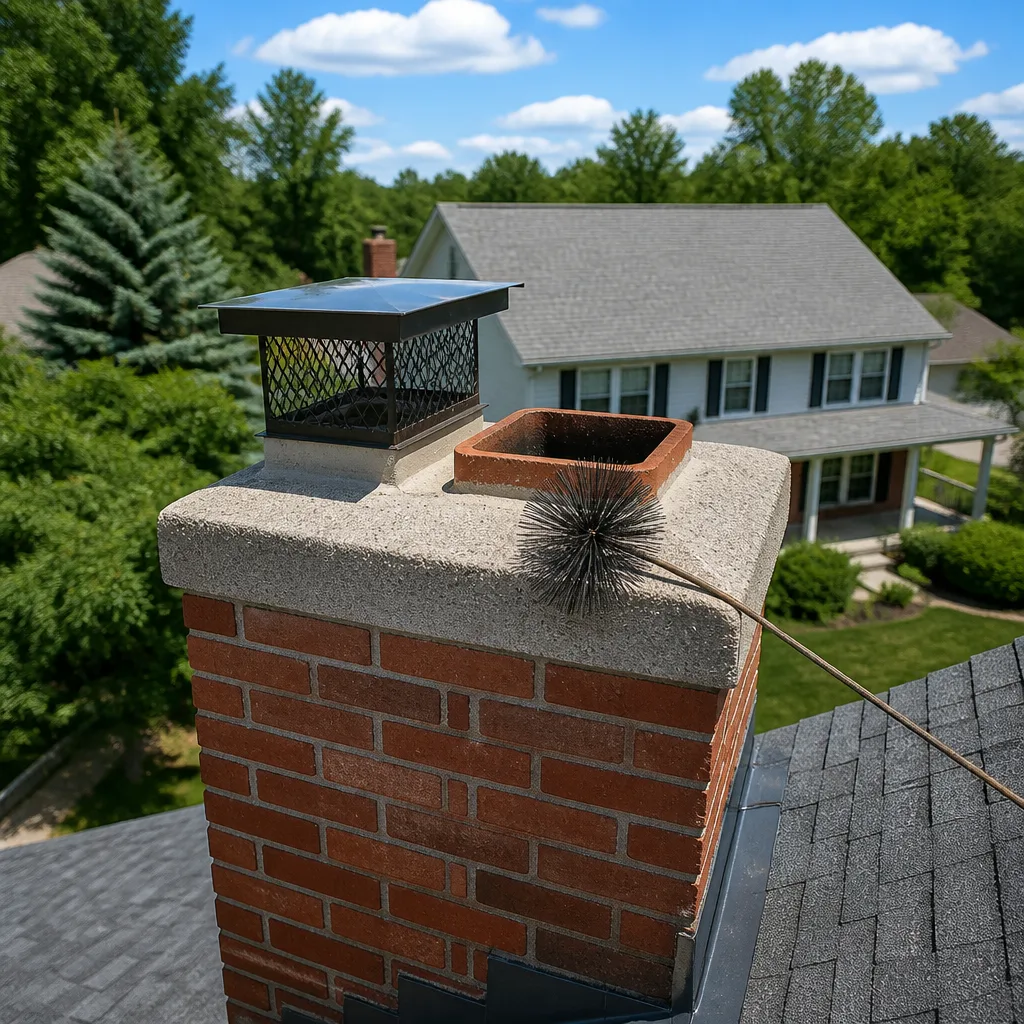
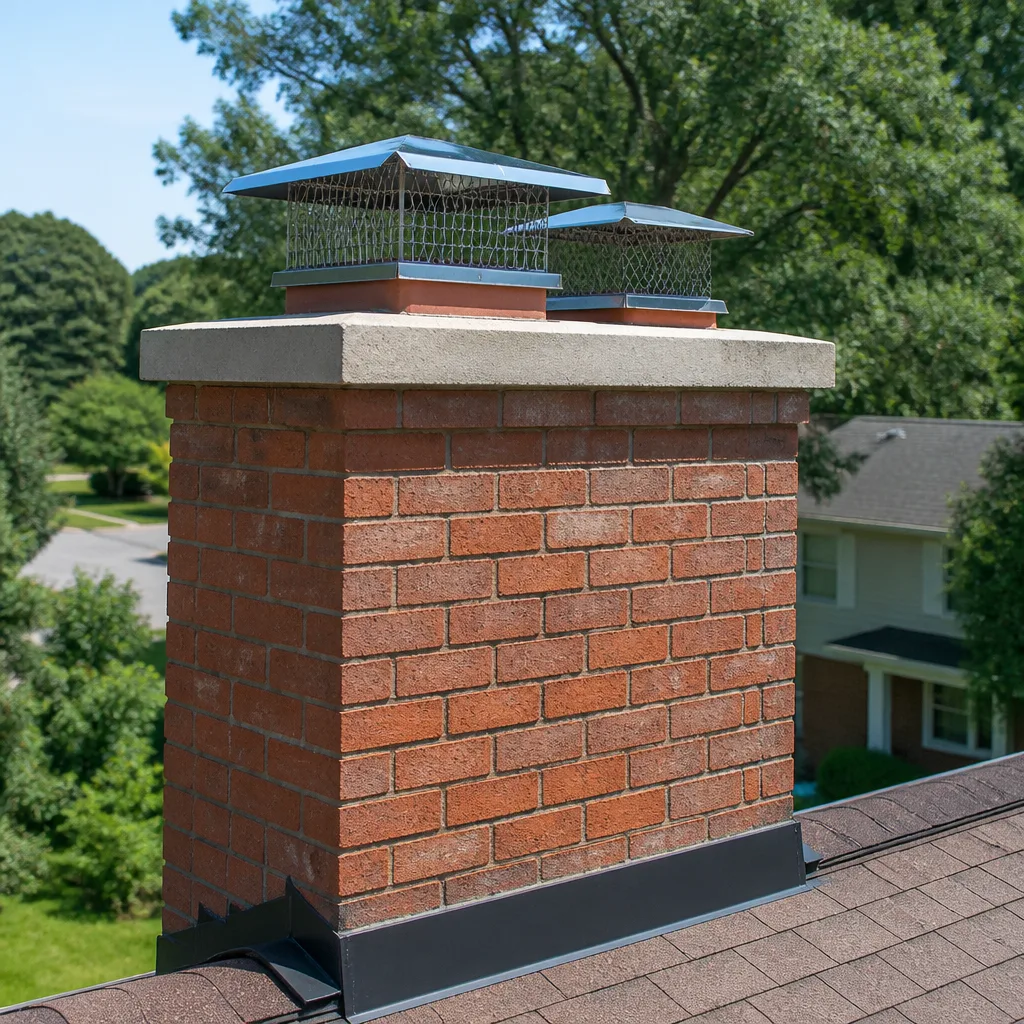
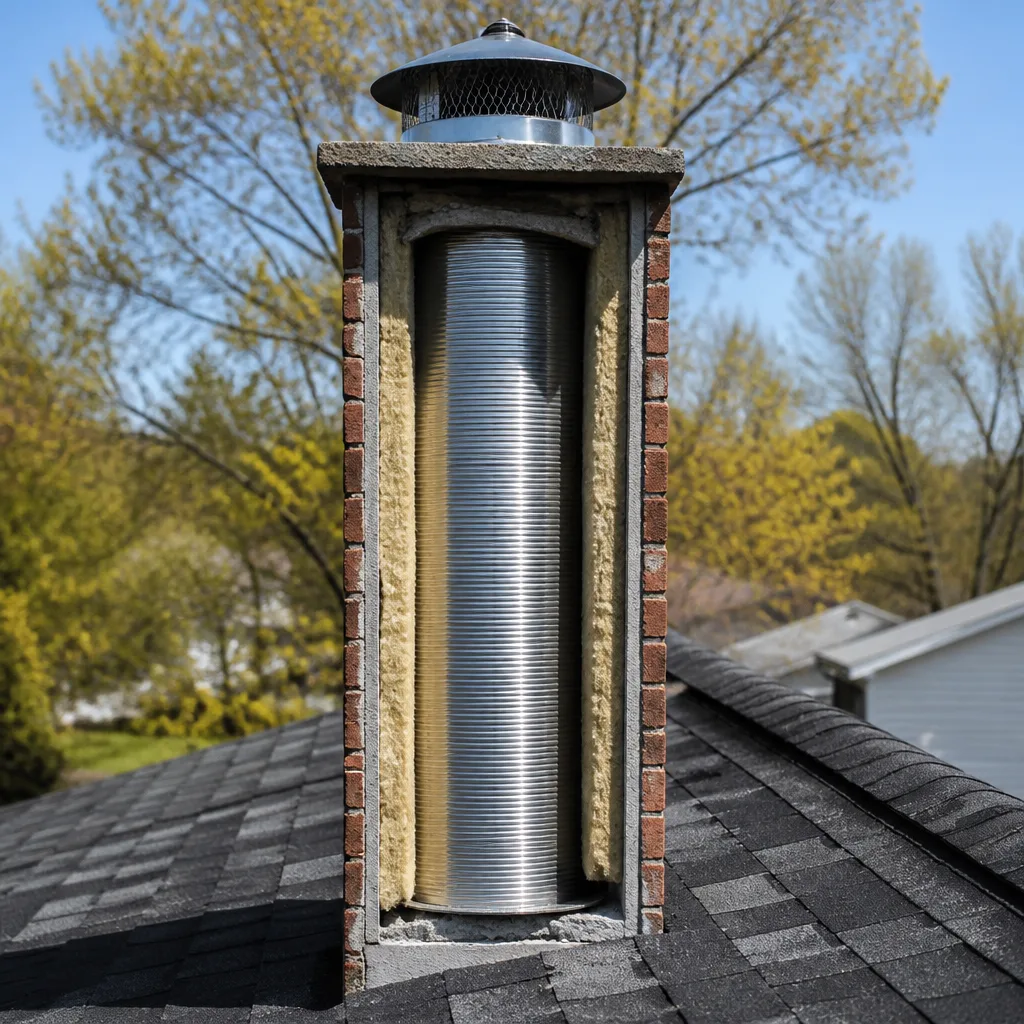
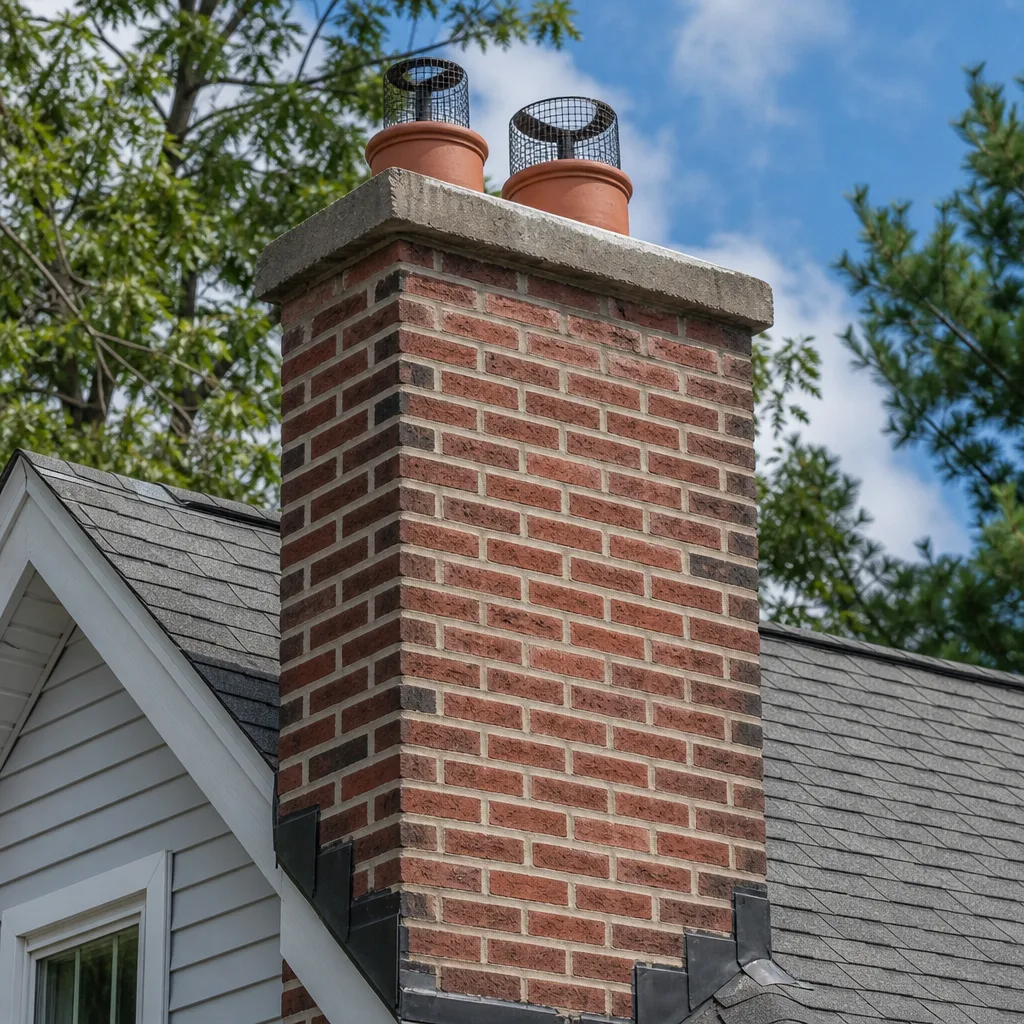
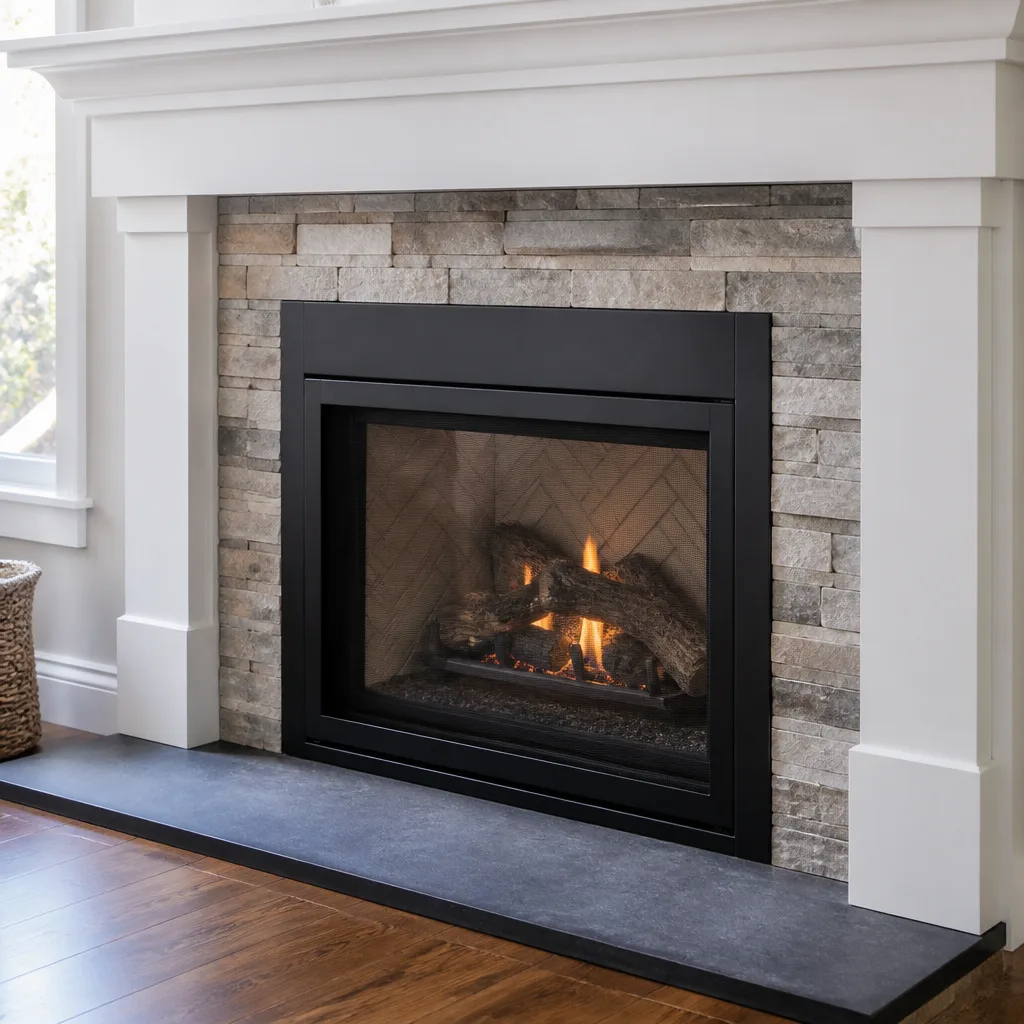
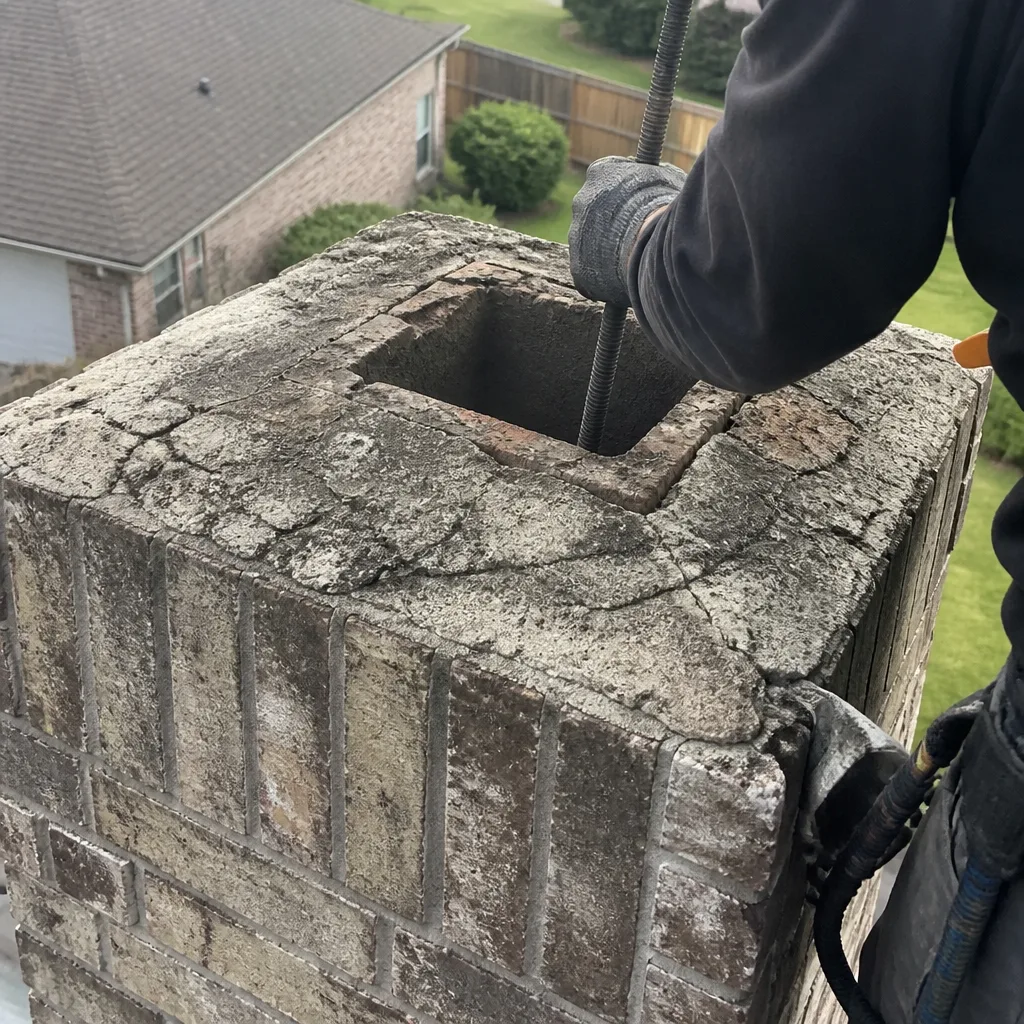 Before
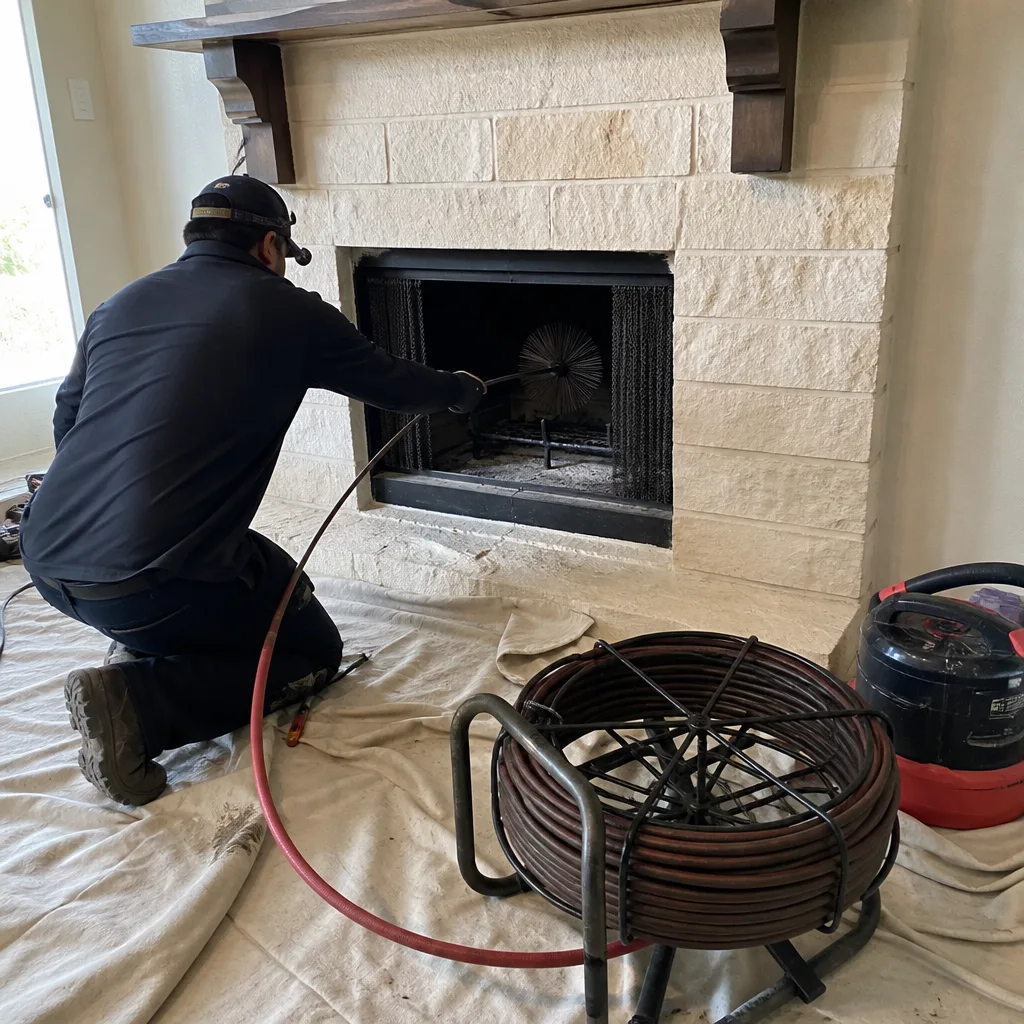 After
After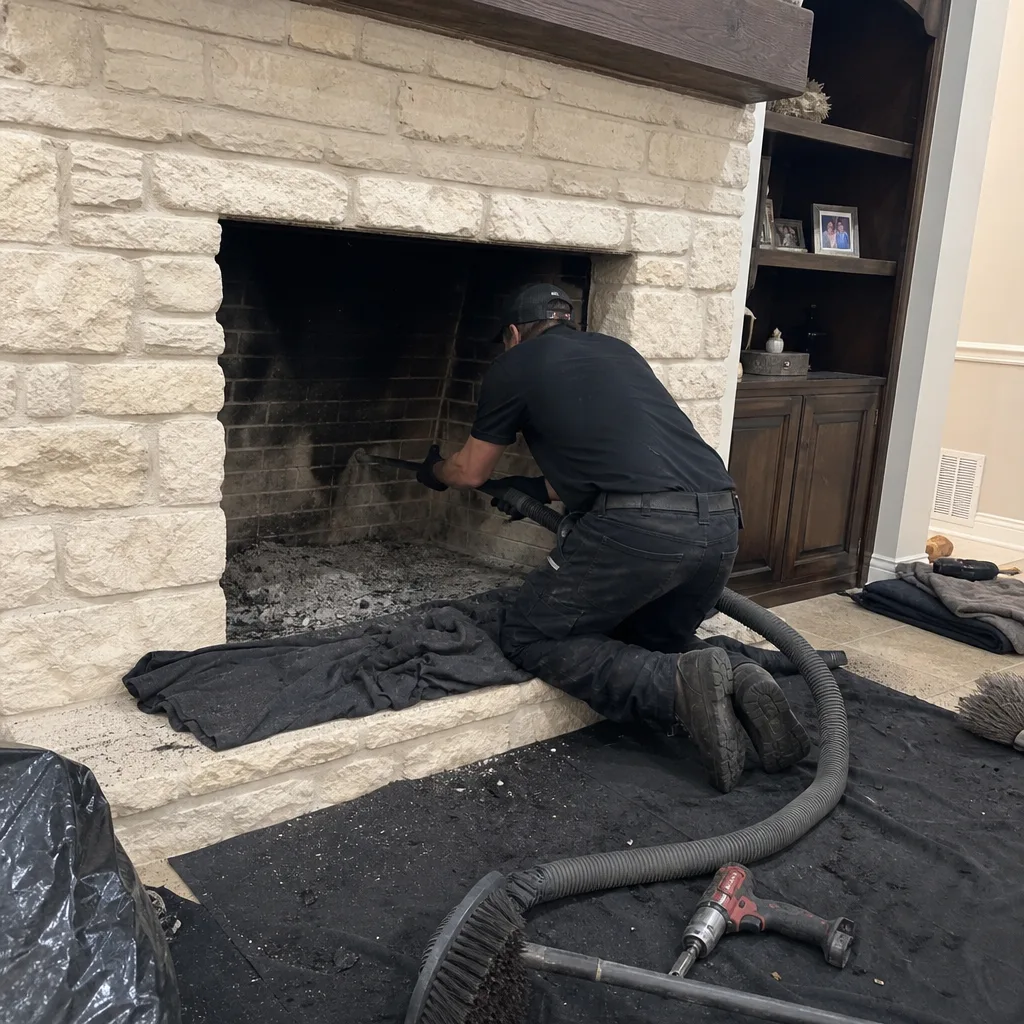 Before
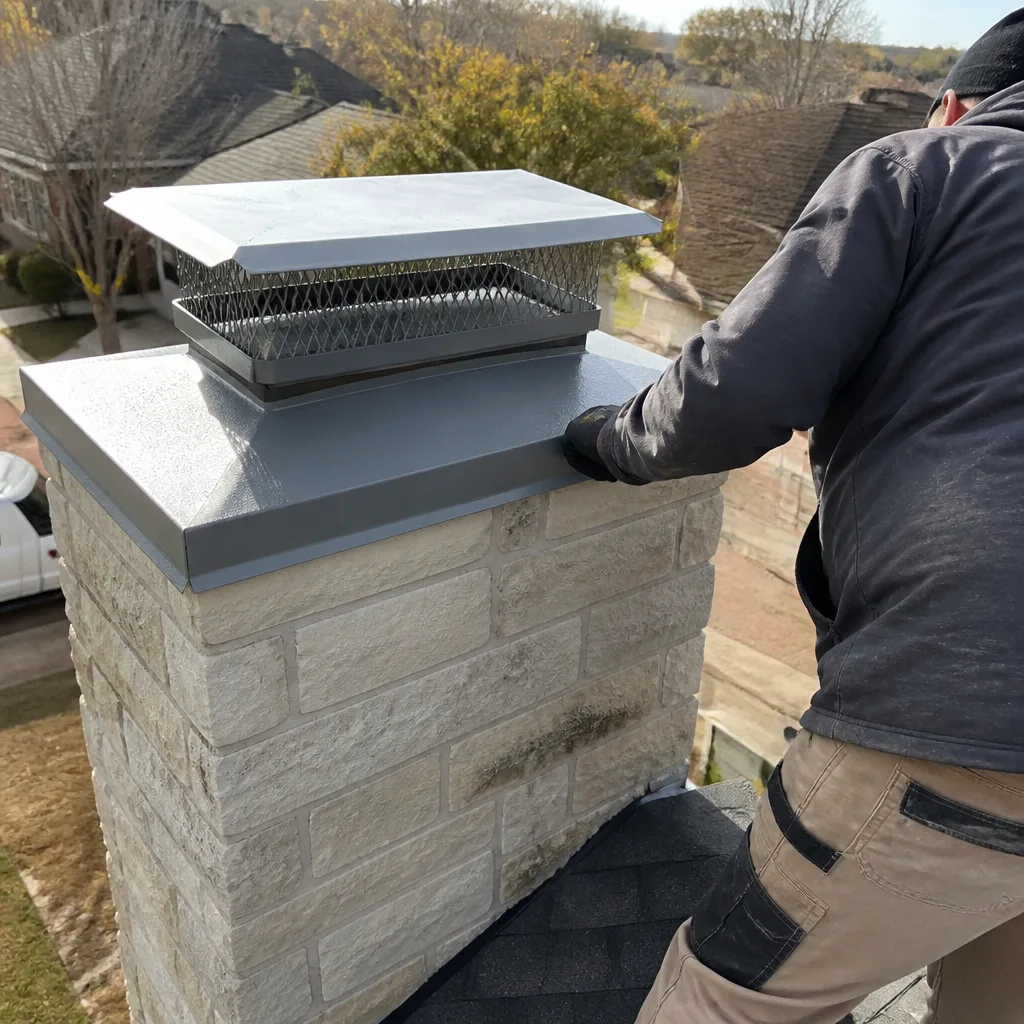 After
After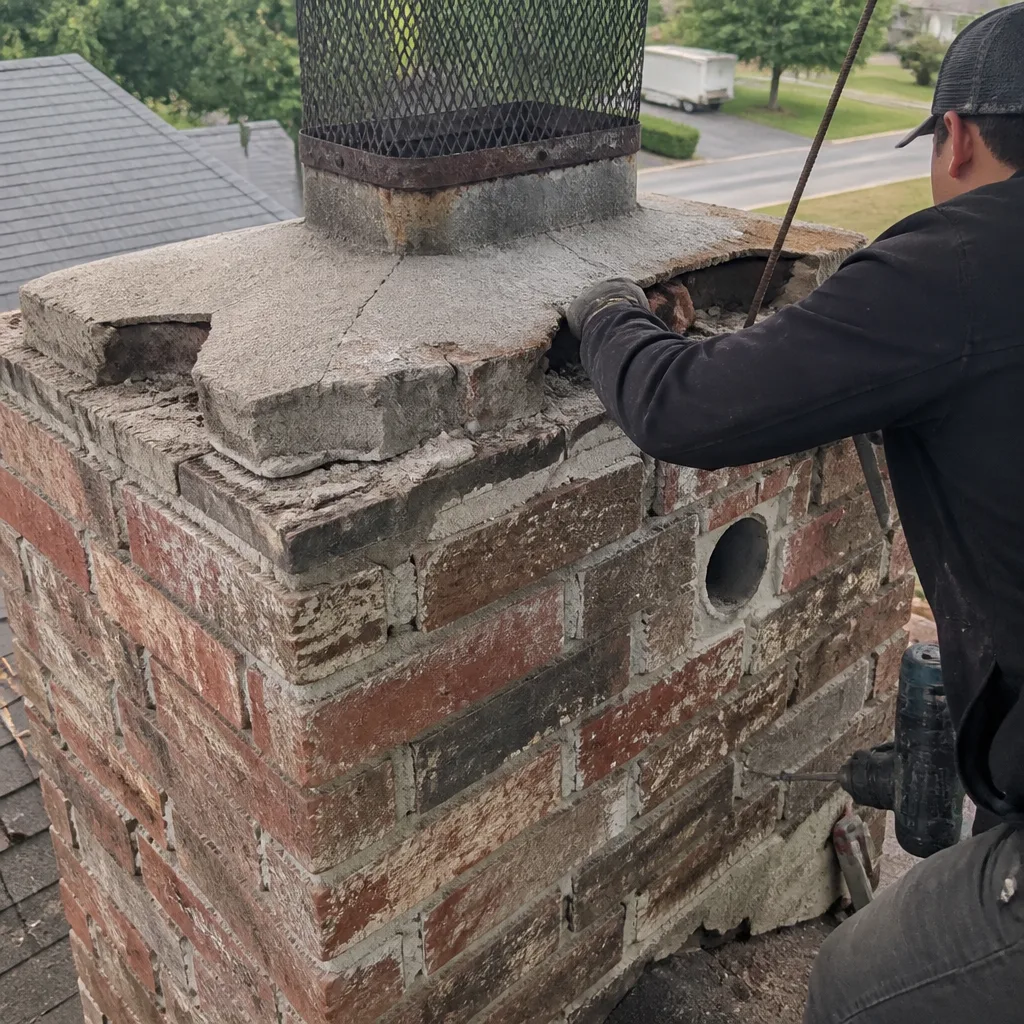 Before
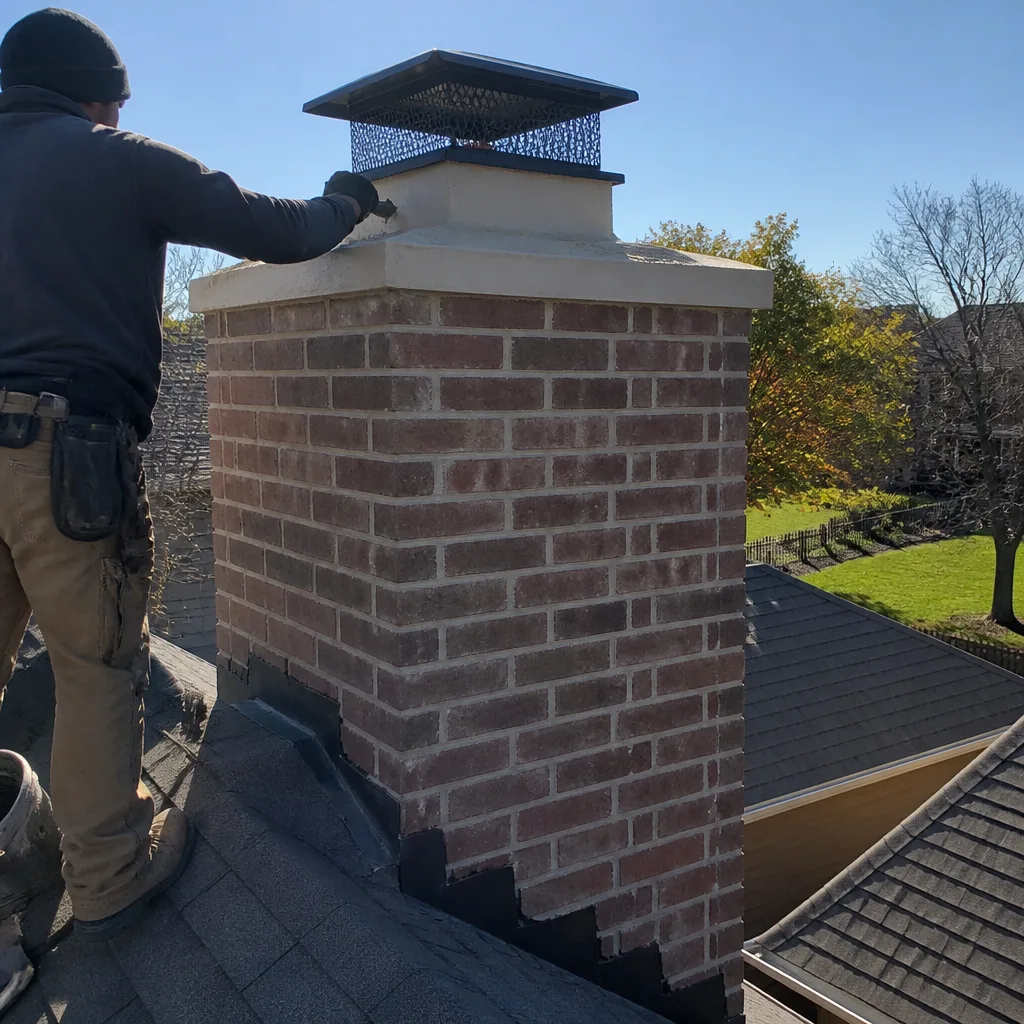 After
AfterCreosote Removal in Frisco, TX
Creosote removal in Frisco typically runs $150 to $600, depending on how much buildup is present and how far it has progressed. Most single-flue homes we service fall in the $200 to $350 range for a standard cleaning, with heavier Class II or Class III deposits requiring specialized chemical treatments or rotary cleaning that push the cost higher. Every job starts with a written price before any work begins – that’s not a policy we debate, it’s the foundation of how Chimney Cleaning & Sweep services at Level Two Chimney Frisco operate.
If you’re burning wood in Frisco and haven’t had your flue cleaned in the past two to three seasons, there’s a good chance you have meaningful creosote accumulation. Our Chimney Cleaning & Sweep in Frisco service covers the full system, but creosote removal is the part that directly determines fire risk. We use a camera-scan inspection (NFPA 211 Level 2) on every visit, so we know exactly what class of deposit we’re dealing with before we touch a brush. Call (940) 290-7230 – a live person picks up, any time of day.
Level Two Chimney Frisco has been operating under the Haven Standard since 2009 and has completed more than 38,000 chimney inspections and cleanings, each one documented with a written price and a photo record on completion. Corrine Halstead leads the team and has built the company around one principle: show the customer what you found before you ask them to pay for anything.
When You Need Creosote Removal
Creosote is a byproduct of combustion – wood fires release hydrocarbons that condense on cooler flue surfaces as smoke rises. The rate of buildup depends on the wood species, moisture content, burn temperature, and how often you use the fireplace for Fireplace Cleaning. In Frisco’s climate, where winters are mild enough that many homeowners burn wood only 15 to 30 days a year, fires tend to burn lower and cooler than they would in colder regions. Cooler, slower fires produce more creosote per cord than hot, roaring ones do. That pattern shows up clearly in the flues we inspect across the Frisco area.
- You notice a dark, tarry smell even when the fireplace isn’t in use. That odor – especially noticeable in summer when heat and humidity pull it out of the liner – is a reliable sign that Class II or Class III creosote has built up inside the flue. Frisco’s July and August humidity makes this symptom particularly pronounced.
- Smoke backs up into the room or drafts poorly. A flue partially blocked by creosote deposits can’t move combustion gases efficiently. If you’re adjusting the damper and still getting smoke in the living room, the flue surface itself may be the problem.
- Your last cleaning was more than 12 months ago and you’ve burned more than a cord of wood since. The Chimney Safety Institute of America recommends annual cleaning for active fireplaces. One cord of wood is a reasonable threshold for scheduling service between annual inspections.
- Your camera inspection shows visible glazing or buildup thicker than 1/8 inch. This is the NFPA 211 threshold at which professional removal is required. We find this condition regularly in homes in Frisco’s Starwood, Lexington Country, and Richwoods neighborhoods, where gas log conversions were added after original wood-burning fireplace installations and owners occasionally switch back to wood.
- You had a chimney fire – even a small one you weren’t sure was a fire. A rapid, hot burn inside the flue can pop and crack a liner, and it almost always leaves behind pockets of hardened, glazed creosote that a standard brush won’t remove. After any suspected chimney fire, a Level 2 camera inspection comes before any other service.
- You’re buying a home with a wood-burning fireplace. In Frisco’s resale market, sellers rarely document fireplace maintenance. We frequently see two to four seasons of accumulated creosote in homes that were listed as having a “recently cleaned” chimney. A documented inspection protects you before closing.
Our Creosote Removal Process
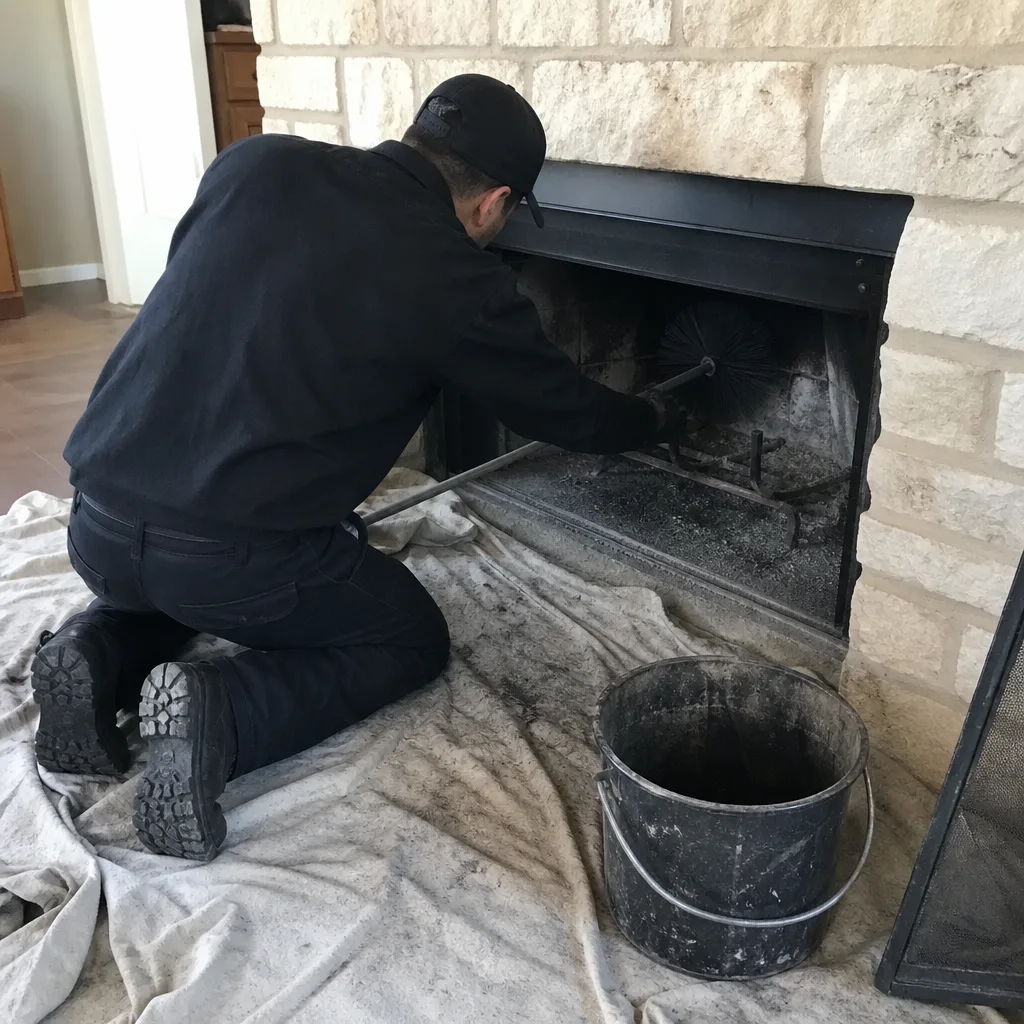
We don’t show up, run a brush through the flue, and hand you a receipt. The process below is what every creosote removal job looks like at Level Two Chimney Frisco – same steps whether you’re in a townhome near Main Street or a larger property in The Hills of Kingswood.
- Written scope and price delivered before we start. Haven Standard Clause 1 – H.A.V.E.N. “Have it in writing” – means the tech hands you a written price, written scope, and written warranty before opening a tool bag. If anything changes during the job, we stop and get a revised written approval. No surprises on the invoice.
- NFPA 211 Level 2 camera inspection. A camera goes down the flue before brushes go up. We document liner condition, deposit class, joint integrity, and any cracks or obstructions. The footage and photos become part of your job record under Haven Standard Clause 4. You’ll see exactly what we saw – the camera doesn’t lie, and it removes any argument about what was there before we started.
- Class determination and method selection. Creosote presents in three classes. Class I is a fine, dusty deposit that clears with rotary brushing. Class II is a harder, flakier or tar-like buildup that often requires a chemical treatment (we use products sourced through Haven’s supply network, including options from Copperfield) applied before mechanical cleaning. Class III is the glazed, tar-like or solid deposit that is genuinely dangerous – it requires a specialized chemical rotary system and, in some cases, follow-up treatment over multiple visits. We tell you which class you have before we pick a method.
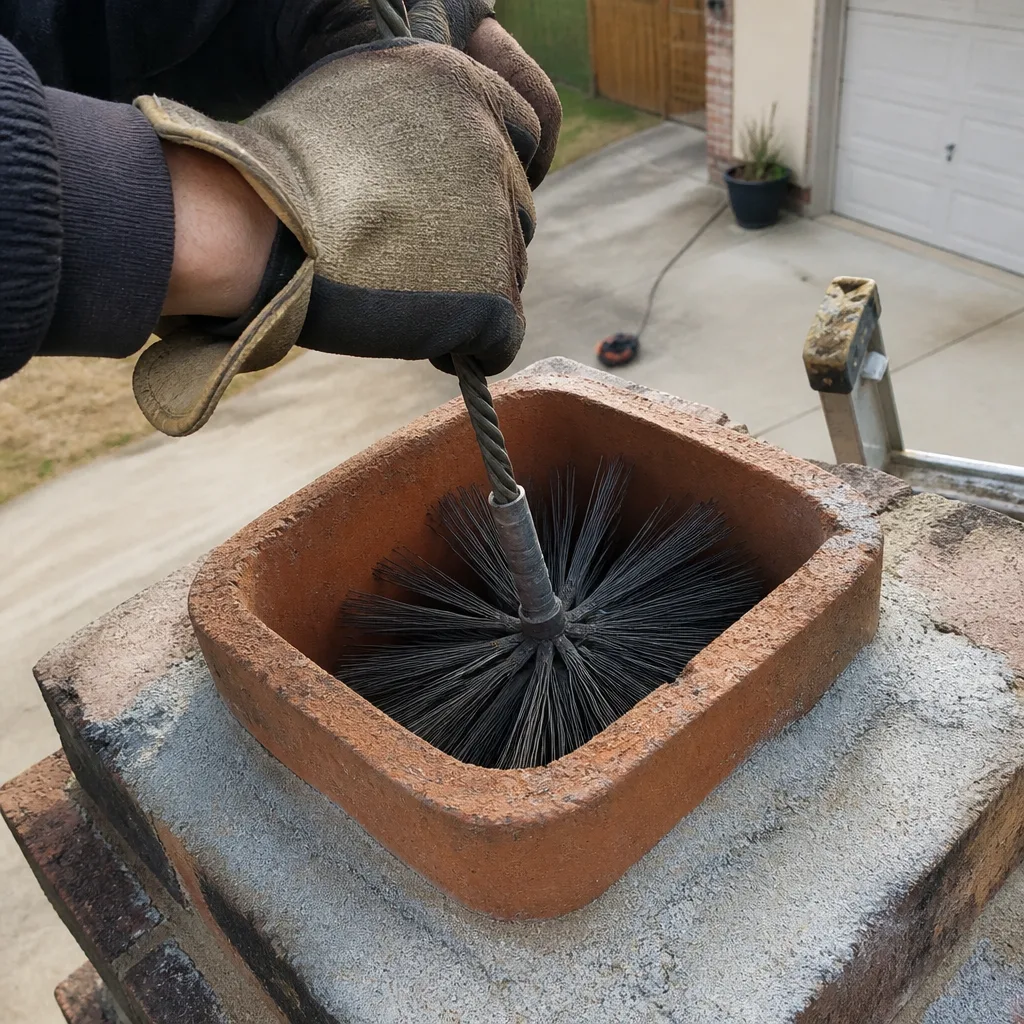
- Mechanical cleaning with rotary or standard brush system. For Class I and most Class II deposits, we use a professional rotary system that agitates the entire flue wall surface. We work from the top down, protecting the firebox opening with a dust seal at the fireplace face. The debris falls into a contained collection area and is bagged and removed.
- Chemical treatment for Class II/III deposits (when required). Glazed or hardened creosote doesn’t yield to brushes alone. We apply a chemical treatment – products sourced through Haven’s network, which includes Copperfield and Olympia Chimney supply lines – that changes the chemical structure of the deposit to make it friable. A follow-up visit or a second pass completes the removal. We’ll tell you upfront if more than one visit is likely, and that’s written into the scope before we start.
- Post-removal camera verification and documented photo record. After cleaning, the camera goes back down. We confirm the deposit is gone, the liner is intact, and nothing was dislodged that shouldn’t have been. You receive a written record with before-and-after photos. That documentation matters for homeowner’s insurance, for future real estate disclosures, and simply for knowing the job was done right. The 365-Day Done Right Promise is stamped on every job: if it’s not right, we come back and make it right.
BeforeAfterCreosote Removal Pricing in Frisco
Creosote removal in Frisco costs more or less depending on three factors: the class of deposit, the height and configuration of the flue, and whether chemical treatment is required. The table below gives you honest ranges based on the work we do in this market. These are real numbers from real jobs in Frisco – not national averages pulled from a trade publication.
| Service | Typical Price Range | Notes |
|---|---|---|
| Standard creosote removal (Class I – light, dusty deposit) | $150 – $250 | Single flue, one story. Included in annual sweep. |
| Moderate creosote removal (Class II – flaky or tar-like) | $250 – $400 | May require a pre-treatment application before brushing. |
| Heavy/glazed creosote removal (Class III – hardened glaze) | $400 – $800+ | Chemical rotary system, possible multi-visit treatment. Price written before work starts. |
| Chemical treatment product (applied at job site) | $75 – $150 | Sometimes billed separately for Class II/III jobs; always disclosed upfront. |
| NFPA 211 Level 2 camera inspection (included on every visit) | Included | Not an add-on. Required by the Haven Standard on every job. |
| Second opinion on a competitor’s written estimate | Free | Bring us any written quote. We’ll review it at no charge. |
What drives cost up: a two-story flue on a steep roof, multiple-flue systems, a fireplace insert that reduces access to the smoke chamber, or Class III glazing that has built up over several uncleaned seasons. What keeps cost down: consistent annual cleaning, dry hardwood burned at adequate temperatures, and a damper that seals properly between fires.
If you’ve received a written estimate from another company and want a second opinion, bring it to us. We’ll review it at no charge – that offer has no conditions attached. And if your job turns out to cost more than the written price we gave you at the start, that difference is our problem, not yours, unless you approved a scope change in writing first.
Call (940) 290-7230 to get a written price. Live phone, any hour.
FAQs – Creosote Removal
How much does creosote removal cost in Frisco?
Creosote removal in Frisco runs $150 to $800 or more, depending on the deposit class. Class I (light, dusty) typically falls in the $150-$250 range and is often included in a standard annual sweep. Class II deposits run $250-$400. Class III glazed creosote – the kind that represents a real chimney fire risk – starts around $400 and can exceed $800 for multi-visit chemical treatment. Every price is written before work begins; there’s no scenario where we hand you a bill for an amount you didn’t agree to first. Call (940) 290-7230 for a written estimate – it’s free and it doesn’t commit you to anything.
Is Class III creosote actually dangerous, or is that just a sales tactic?
Class III creosote is genuinely dangerous – it is not a category invented to justify higher service fees. Glazed creosote is highly concentrated, adheres tightly to the flue liner, and ignites at temperatures that a normal wood fire can reach. A chimney fire fed by Class III deposits can burn at over 2,000 degrees Fahrenheit, which is hot enough to crack clay tile liners and ignite structural framing. We document the deposit class with camera footage and photos on every job, so you can see exactly what we found rather than take our word for it. If another company has told you that you have Class III deposits without showing you camera evidence, that’s worth questioning – bring us their written estimate and we’ll review it for free.
Can you remove creosote from a fireplace insert or wood stove in Frisco?
Yes, though the process is different from an open masonry fireplace. Inserts and stoves connect to the flue through a liner – often a flexible stainless steel liner – and access to the smoke chamber is more restricted. We scope the liner with a camera before quoting the job, because the deposit class inside a liner used with an insert often differs from what an open fireplace produces. Pricing for insert flue cleaning typically falls in the $200-$450 range depending on liner length and deposit type. The written price comes before anyone pulls the insert for access.
How often does a Frisco homeowner need creosote removal?
For an average Frisco household burning 1 to 1.5 cords of wood per season, an annual cleaning is the right interval. Frisco’s shorter burning season means some homeowners push to every two years, but we don’t recommend that if you’re burning more than half a cord. The bigger variable is wood moisture – green or wet wood produces significantly more creosote per fire than seasoned hardwood. If you’re buying firewood from a local supplier and not certain it’s been properly seasoned (12 to 18 months is the standard), annual cleaning is the safer interval. We’ll show you what we find on camera and tell you plainly where your flue stands.
Why Frisco Homeowners Choose Level Two Chimney for Creosote Removal
The name is the standard. Level Two refers to the NFPA 211 Level 2 Inspection protocol – the one that requires a camera scan of the flue interior, not a flashlight look from the firebox. We made camera documentation the default in 2009, years before it was common practice in this market, and it became Clause 4 of the Haven Standard that governs every job we do.
Frisco has grown fast. A large portion of the homes we work in were built between 2000 and 2015, many with gas-start wood fireplaces that owners use inconsistently – a few fires in December, nothing for two or three years, then a cold stretch in February where they burn every night for a week. That pattern is harder on a flue than consistent use. The stop-and-start burning produces variable amounts of moisture in the flue and tends to leave behind uneven deposits that a quick visual check misses. The camera catches it.
Corrine Halstead built Level Two Chimney Frisco on a straightforward idea: tell the customer what you found, tell them what it costs to fix it, and put both in writing before anyone picks up a tool. We’ve held that standard across more than 38,000 jobs. The 365-Day Done Right Promise means that if a job we did isn’t right – for any reason – we come back and make it right. That promise doesn’t require a phone tree or a supervisor’s approval. It’s stamped on the job record.
We work throughout Frisco, including neighborhoods like Starwood, Plantation Resort, The Hills of Kingswood, Lexington Country, Richwoods, Edgewood, and the newer developments near Eldorado Parkway and Lebanon Road. Same process, same written price commitment, same camera documentation regardless of zip code or neighborhood.
If you want to know what’s in your flue and what it will cost to address it, call (940) 290-7230. A live person answers. No voicemail. No web form that goes to a queue. We’ll get you a written price and a scheduled time. For the full scope of chimney maintenance this season, see what our home page covers across all service categories.
- Written price before any work starts – no exceptions, no surprises
- NFPA 211 Level 2 camera inspection included on every visit
- Before-and-after photo record delivered on completion
- 365-Day Done Right Promise on every job
- Free second opinion on any written competitor estimate
- Live phone answered 24 hours a day, 7 days a week
- Background-checked, uniformed technicians with a named tech assigned before arrival
- Materials sourced through Haven’s supply network, including Copperfield and Olympia Chimney lines
Written by Corrine Halstead, Owner at Level Two Chimney Frisco, serving Frisco.