

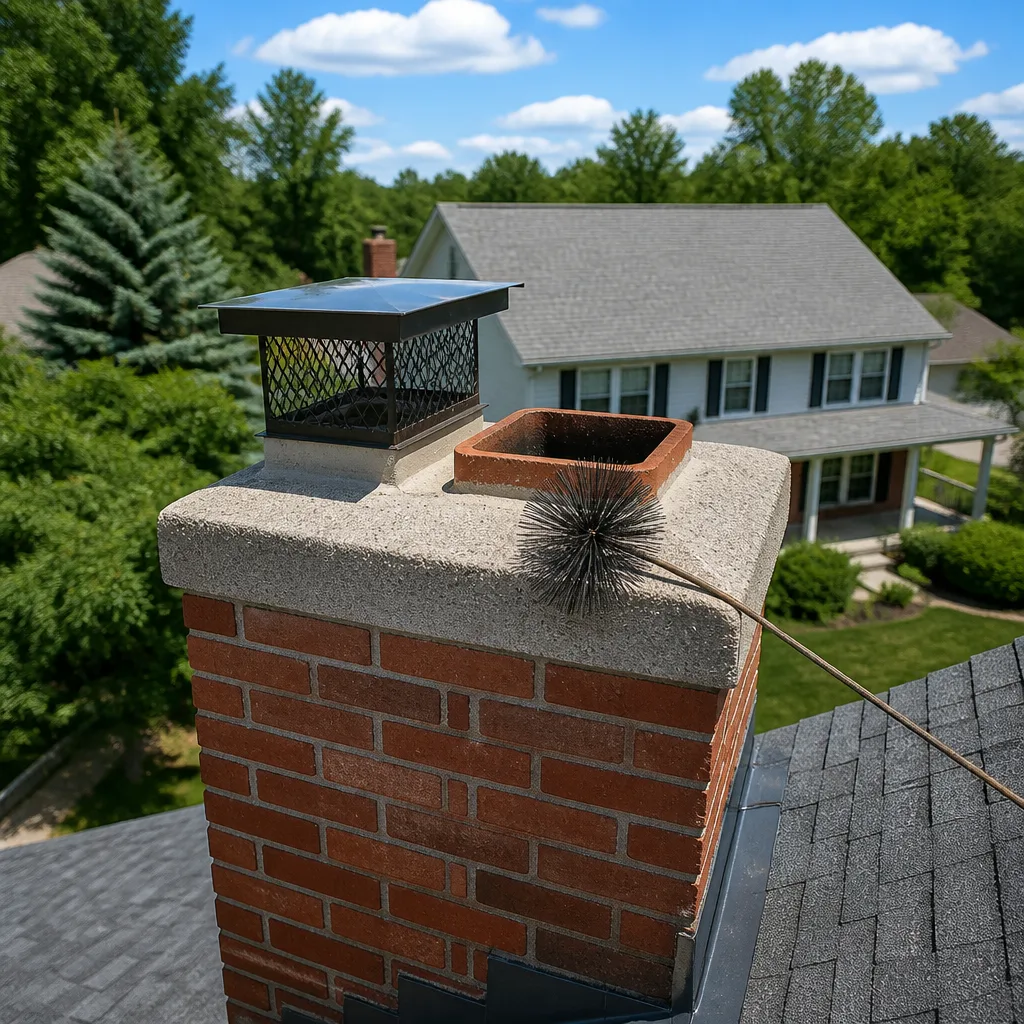
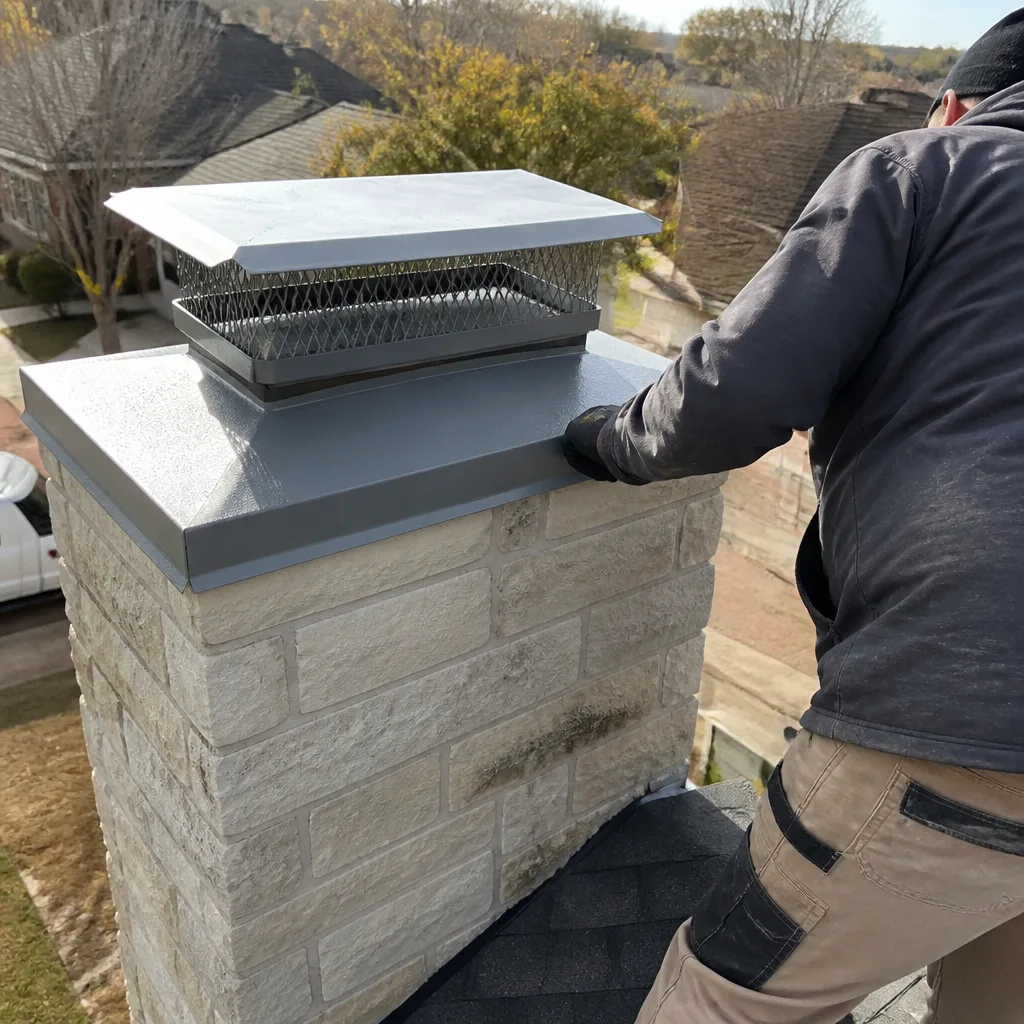
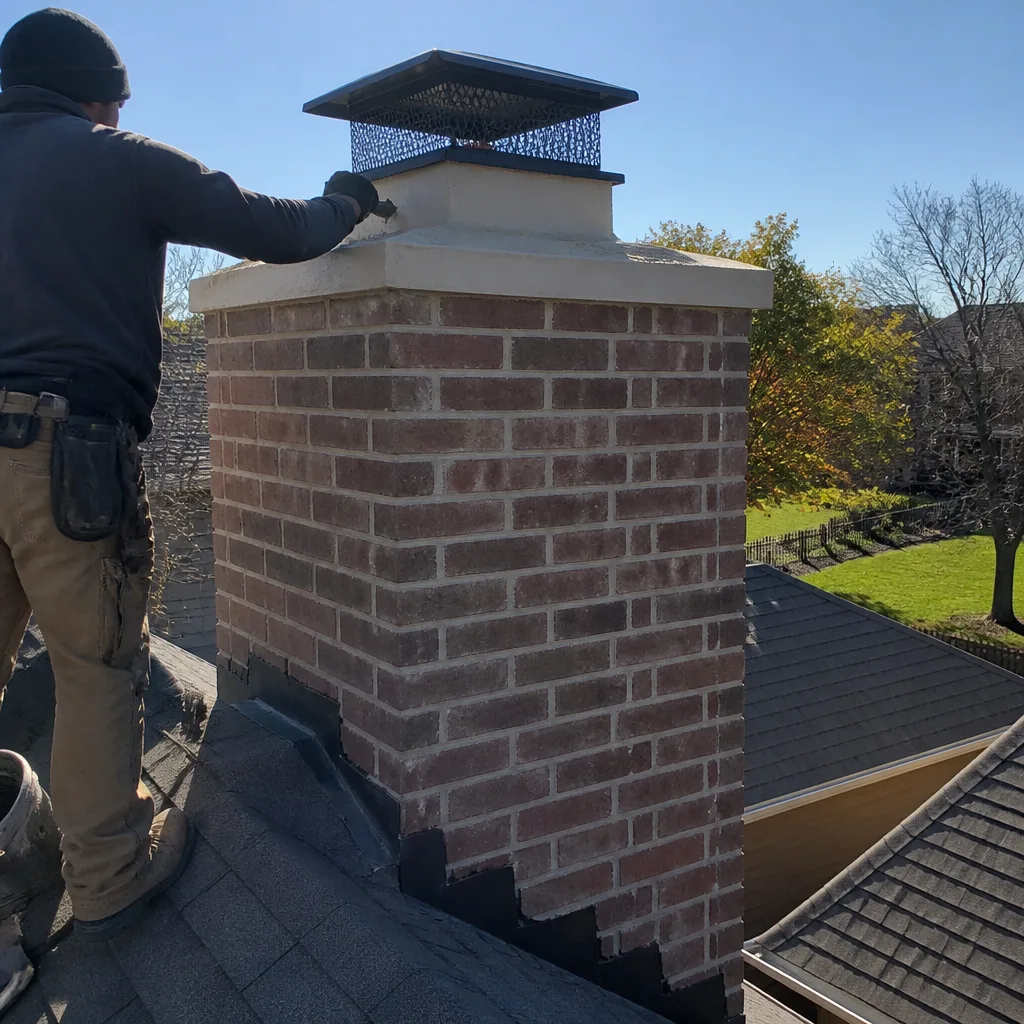
Level 1 sweep and inspection to the NFPA 211 annual standard - flue, crown, cap, and flashing checked and photographed
Chimney sweep logs do not sweep chimneys. They loosen some creosote - which then falls where a brush and vacuum still have to collect it.
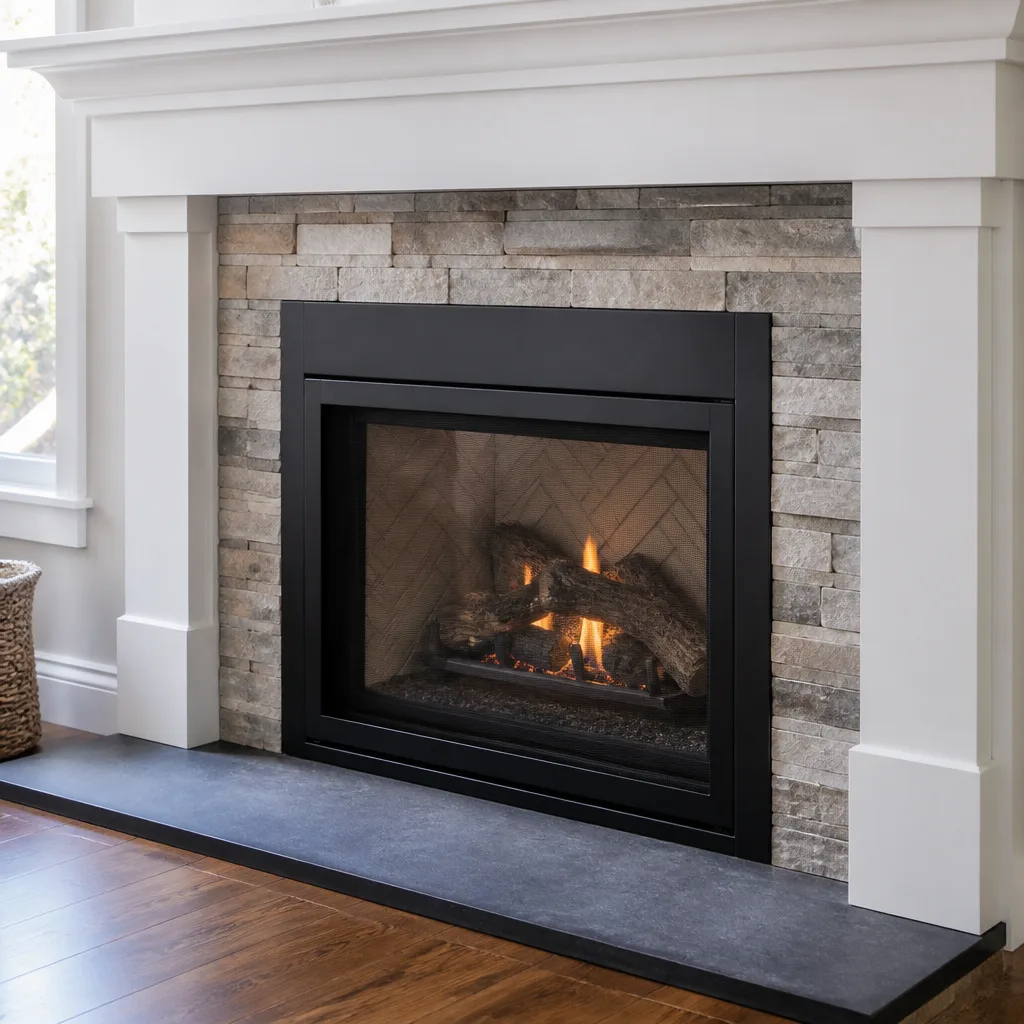
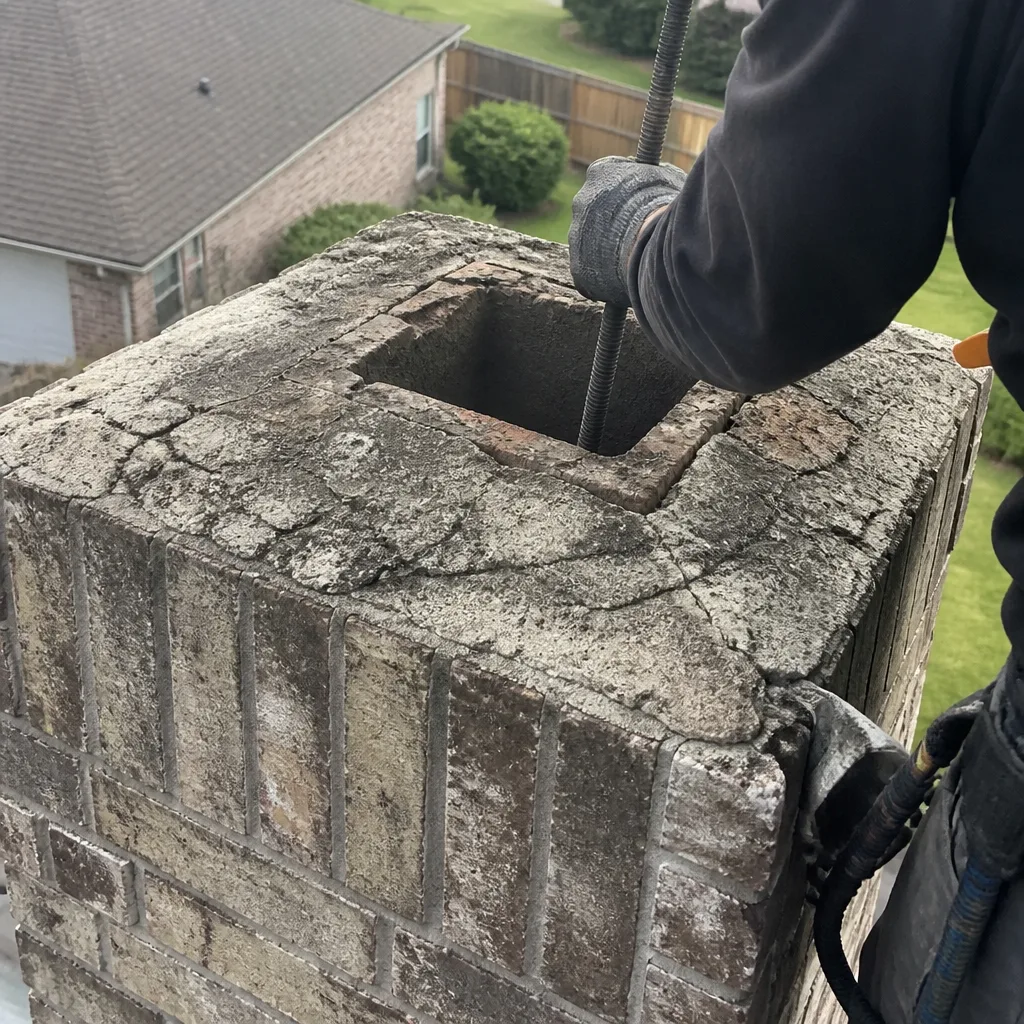 Before
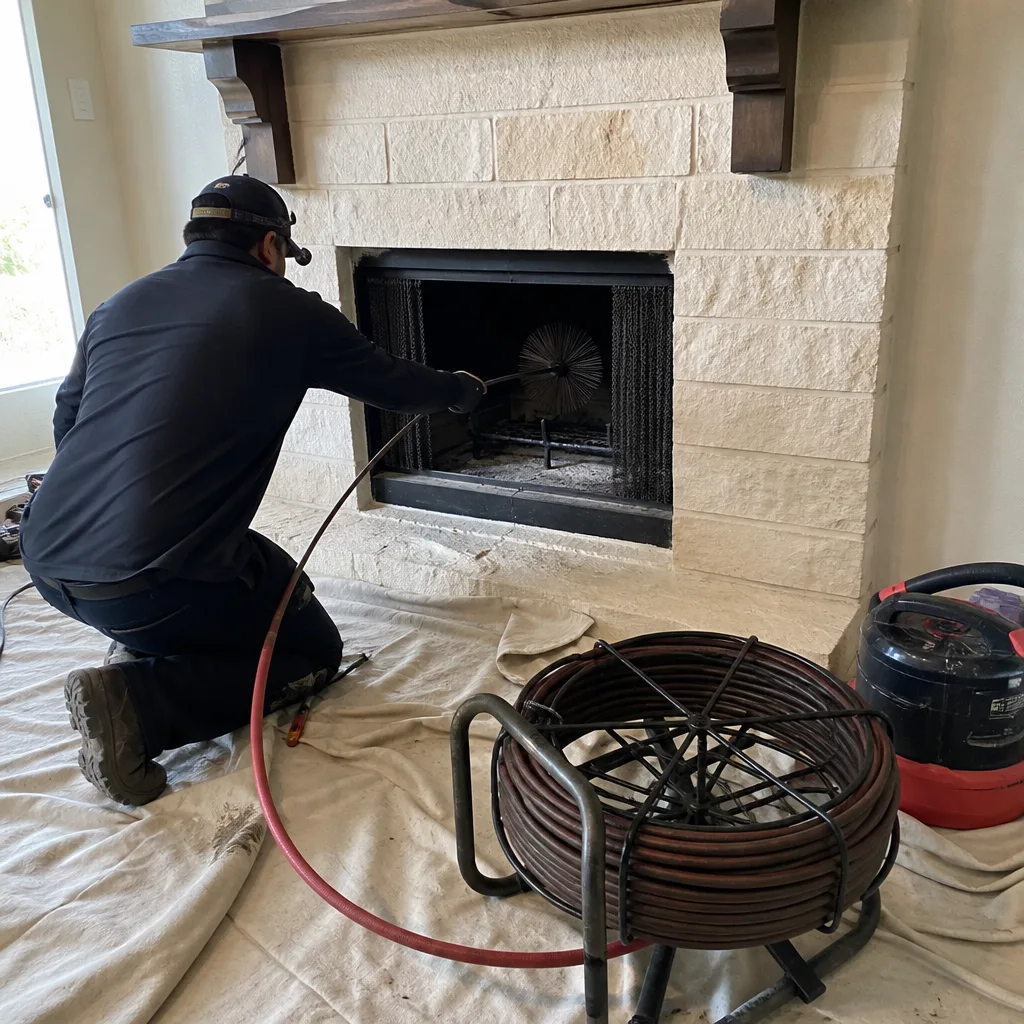 After
After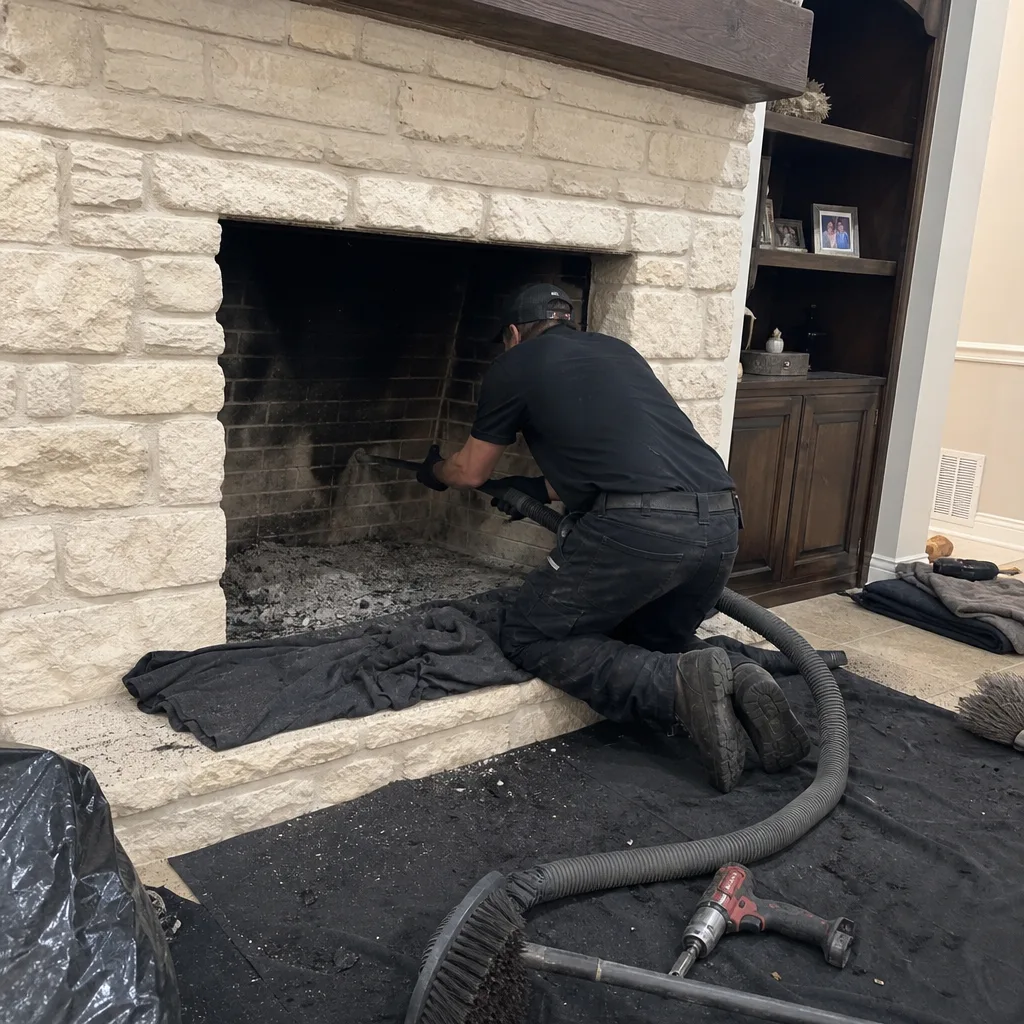 Before
 After
After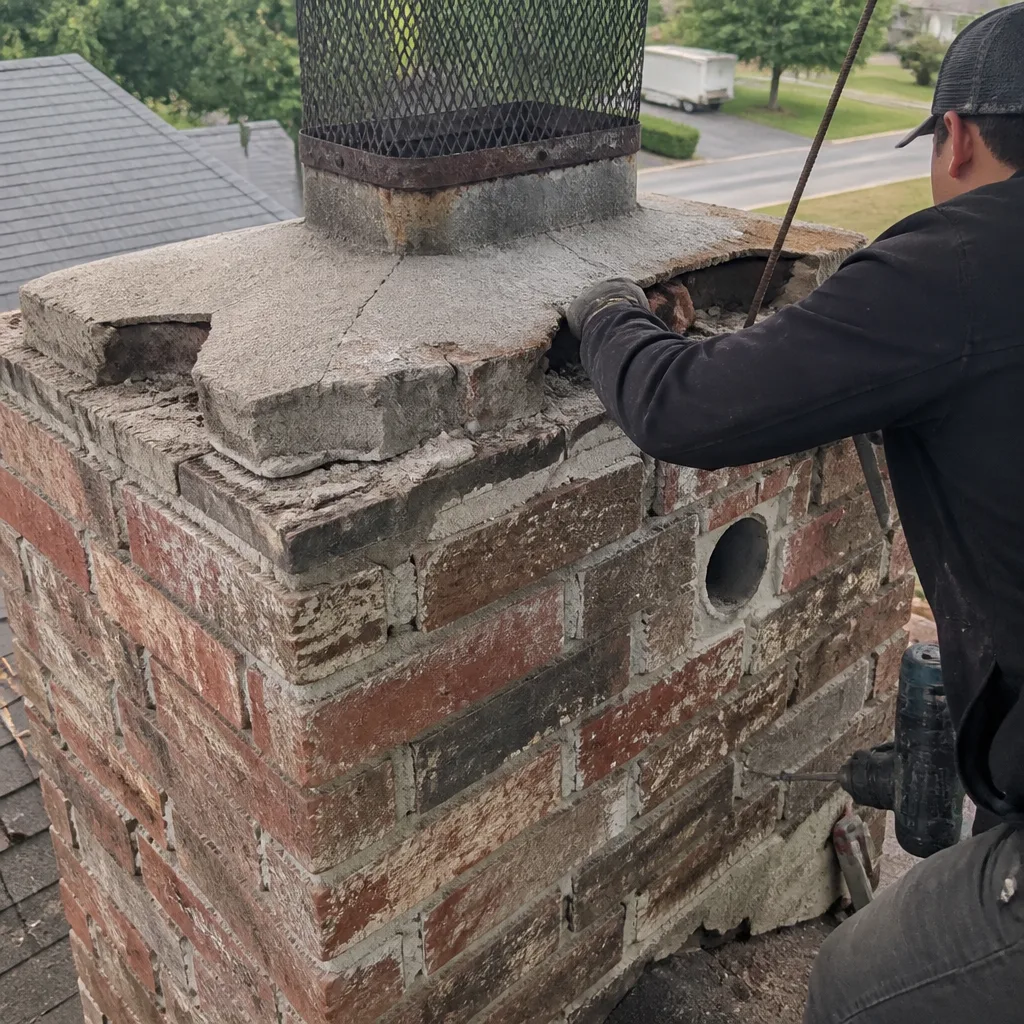 Before
 After
AfterFast, Reliable Chimney Cleaning & Sweep Across Garland
A professional chimney cleaning and sweep in Garland, TX typically costs $189-$349 for a standard Level 1 sweep with inspection, or $279-$449 for a Level 2 inspection with camera scan. Most Garland appointments are scheduled within 3-5 business days, with dispatch coordinated from our Dallas-Fort Worth office. Call (940) 290-7230 for a written estimate before any work starts.
We serve Garland homeowners from the established blocks near Saturn Road and Forest Lane to the lakeside neighborhoods east of Lake Ray Hubbard. Our crews know the narrow driveways, shared chimney stacks, and original clay-tile flue systems that define this city’s 1955-1980 housing stock. If you live in Garland, your chimney was likely built differently than what’s standard in newer suburbs, and that matters for how we clean it and what we look for.
Why Level Two Chimney Frisco Is Garland’s Preferred Chimney Cleaning & Sweep Company
We’ve completed more than 38,000 chimney inspections and cleanings since 2009, and a significant share of those have been in Garland’s dense corridors of post-WWII tract homes. Our customers here leave reviews mentioning the same thing: the technician showed the camera footage, named the problem, and handed over a written price before anyone picked up a tool. That’s Haven Standard Clause 1 - have it in writing - and it’s how we operate on every Garland job.
Response time to Garland runs 3-5 business days for standard scheduling, with same-week availability during pre-season windows in September and October. Our Dallas-Fort Worth dispatch office routes crews by ZIP, so a Garland appointment doesn’t sit behind Frisco or Plano calls.
What Garland homeowners specifically tell us they value: we don’t treat a 1968 shared-stack chimney like a 2015 standalone unit. We know the local failure modes - partition cracks between adjacent flues, clay-soil movement, lakeside moisture infiltration - because we’ve documented them on hundreds of Chimney Cleaning & Sweep in Garland visits.
Every technician is background-checked, uniformed, and assigned by name. You’ll get a text when they’re en route, and their license information is displayed on every page of our site and on the written scope they hand you at the door.
Our Chimney Cleaning & Sweep Services in Garland
Level 1 Inspection
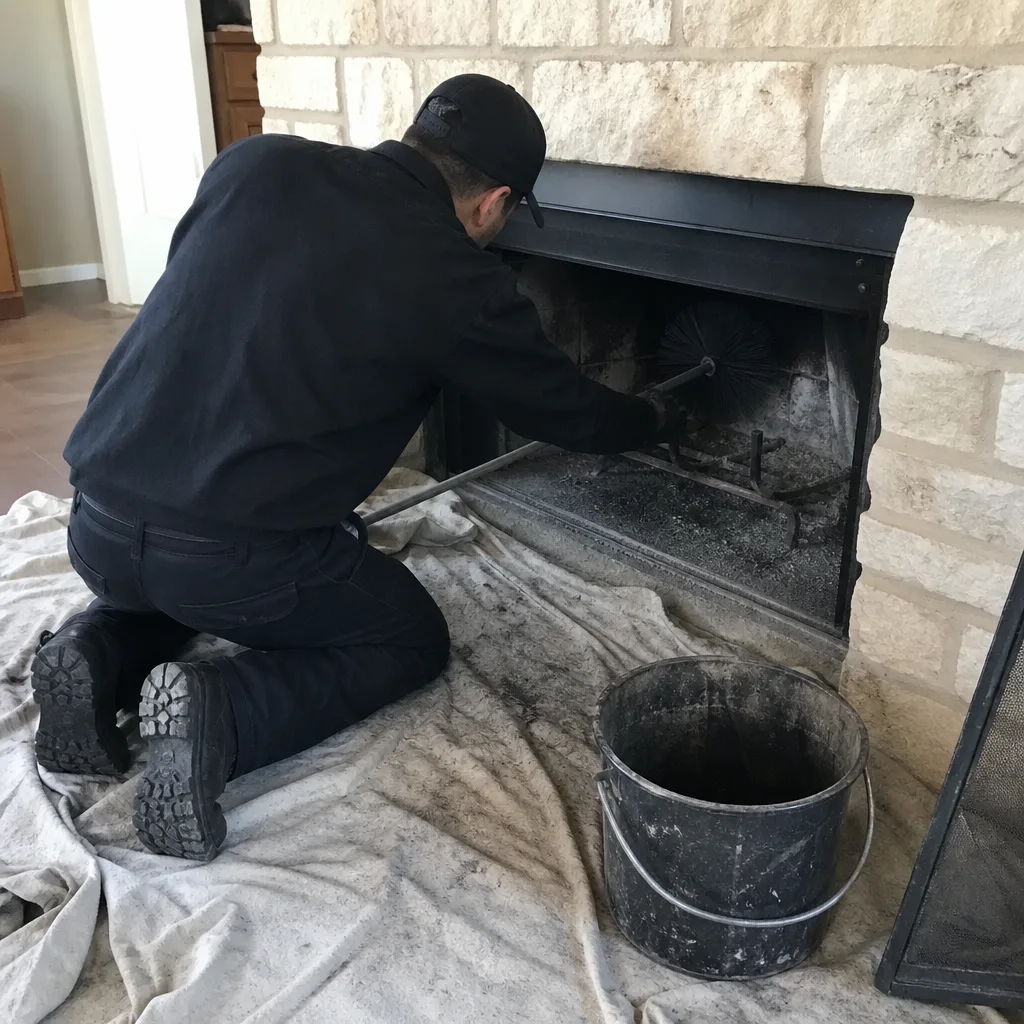
A Level 1 inspection is the baseline visual examination required annually by NFPA 211, even when no changes have been made to your system. In Garland, we perform Level 1 inspections on newer or well-maintained chimneys where the heating appliance and flue liner are known quantities. The technician examines accessible portions of the chimney exterior, interior, and connecting appliance - looking for obstructions, combustible deposits, and basic structural soundness. On Garland’s 1960s and 1970s tract homes, however, we often recommend upgrading to Level 2 on the first visit because original clay-tile flue liners in this age bracket frequently conceal damage a Level 1 cannot reach.
Level 2 Inspection
Level 2 is our default and most requested service in Garland, and for specific reason. NFPA 211 Level 2 requires a camera scan of the entire flue interior, plus accessible portions of the attic, basement, and exterior - exactly what’s needed to catch the partition cracks, spalled liner tiles, and smoke chamber damage common to this city’s shared-stack housing. We snake a high-resolution camera the full length of your flue, record the footage, and deliver it with your written report. Clause 4 of the Haven Standard requires this documented photo record on every job - we’ve done it since 2009, before insurers or regulators asked for it. In Garland, where adjacent flues can communicate through cracked partitions, the camera doesn’t just document condition; it reveals hazards a brush sweep alone cannot.
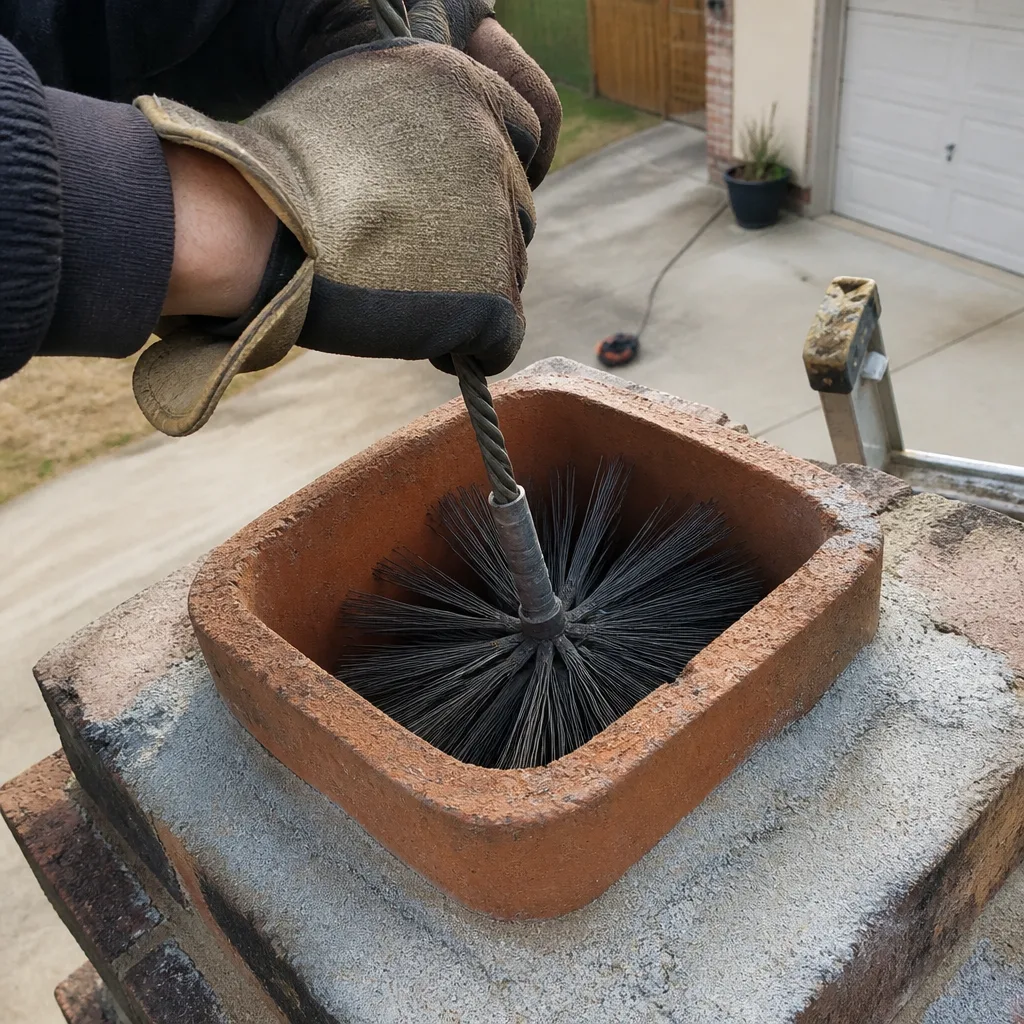
Creosote Removal
Garland’s mild winters and sporadic burning patterns produce a specific creosote profile. Homeowners here often burn wet or improperly seasoned cedar and post oak in low-temperature fires - the exact conditions that deposit heavy first-degree and second-degree creosote. Third-degree creosote, a hardened, tar-like glaze, forms when these deposits are reheated repeatedly without removal. We classify what we find and match the removal method: rotary sweeping for stage-one and stage-two deposits, mechanical removal or chemical treatment for stage-three glaze. A standard brush sweep alone will not remove third-degree creosote, and we won’t pretend otherwise. Your written scope names what we found and how we’ll address it before work begins.
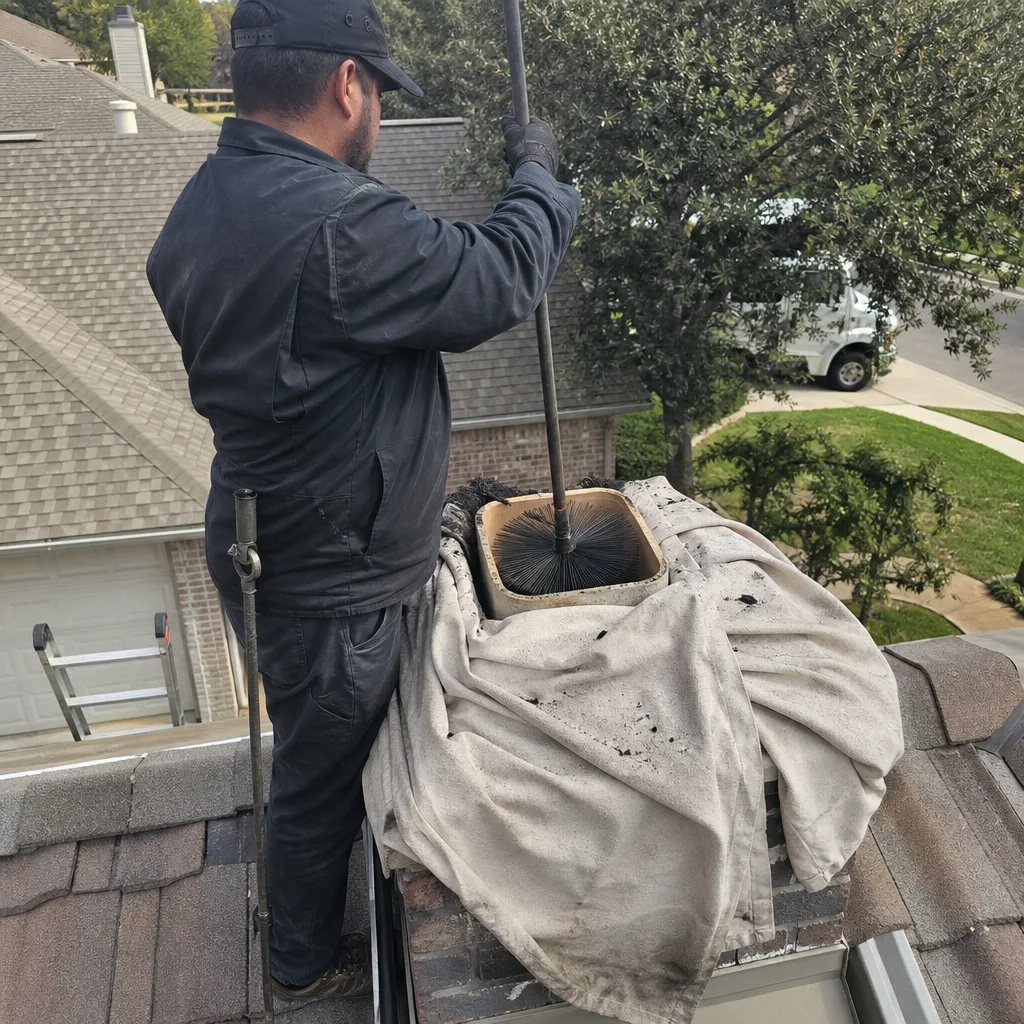
Soot Removal
Soot accumulation in Garland chimneys varies by fuel type, burning frequency, and chimney draft performance. Gas appliances produce fine, powdery soot that can restrict flue passages over time; wood fires produce thicker, oily residues. We remove soot using HEPA-contained vacuum systems and appropriate brushes for your flue diameter and liner material. On shared-stack properties near Lake Ray Hubbard, we also check for moisture-driven soot compaction - where lakeside humidity hardens deposits that would otherwise brush free - and note it in your documented record.
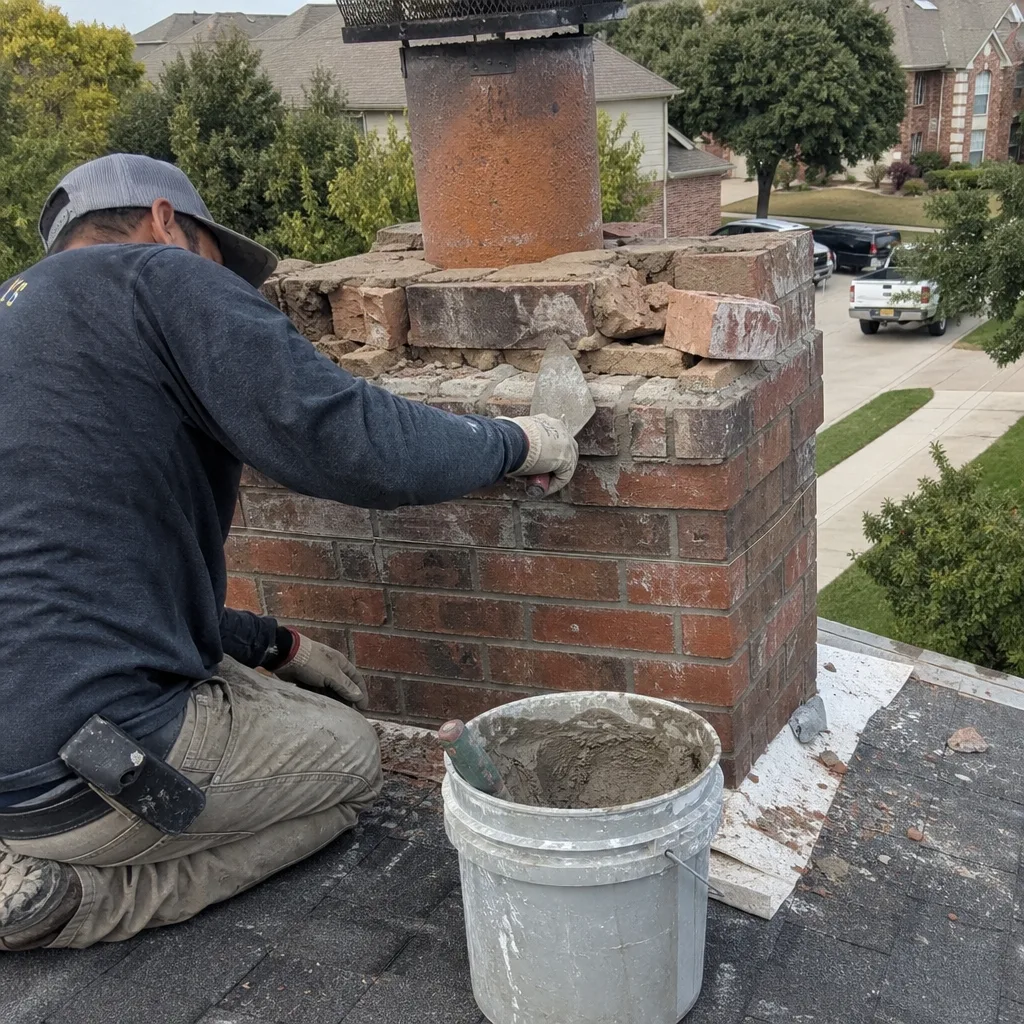
Annual Sweep
The annual sweep is the preventive backbone of chimney safety, and in Garland it’s arguably more important than in colder climates. Infrequent, low-temperature fires deposit more creosote per burn than regular hot fires do. We recommend annual sweeping for all wood-burning systems and biennial inspection for gas, with frequency adjusted based on what the camera shows. Every annual sweep includes a Level 1 inspection minimum; most Garland properties merit the Level 2 upgrade.
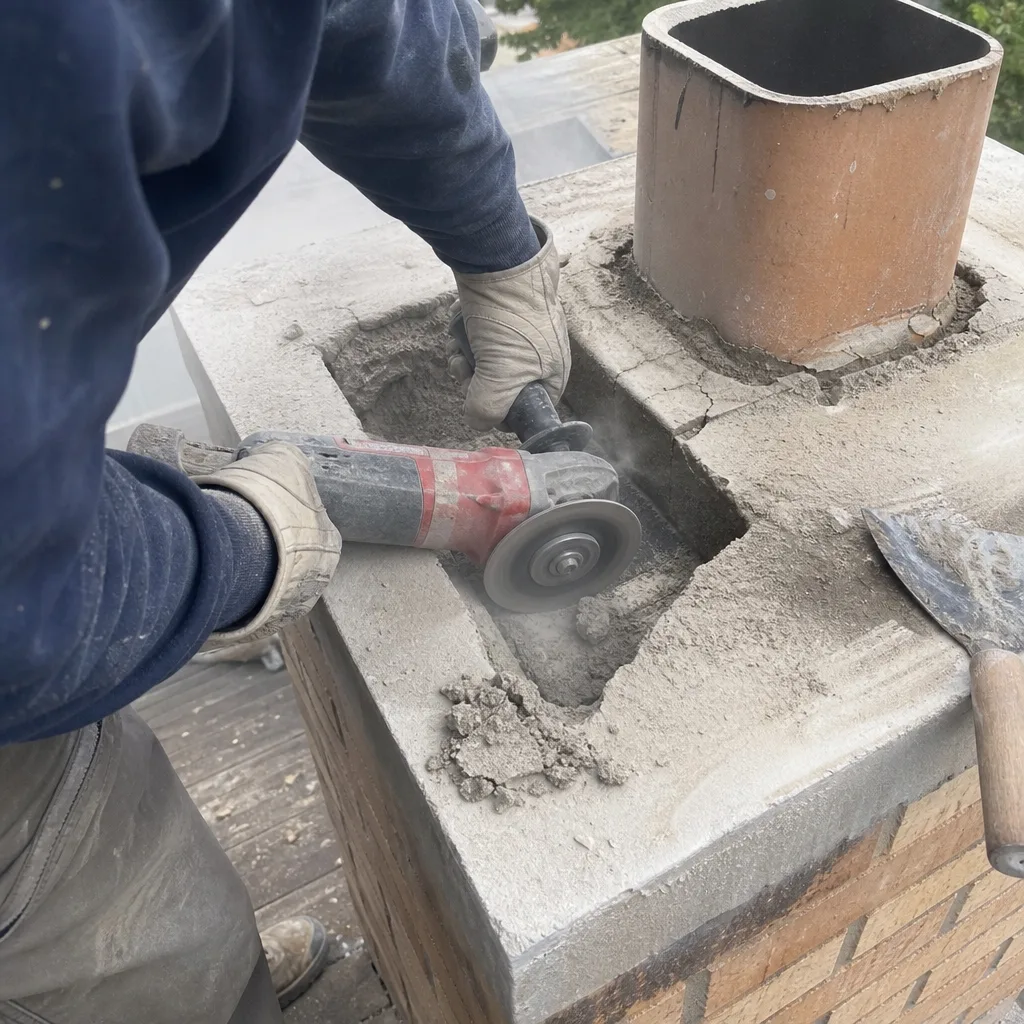
Fireplace Cleaning
Fireplace cleaning addresses the firebox, smoke chamber, damper, and hearth - the areas you see and the ones you don’t. In Garland’s aging tract homes, smoke chamber parging (the mortar coating that smooths smoke flow) is often eroded or was never applied to modern standards. We clean and inspect these surfaces, document their condition with photos, and note any needed repairs in your written scope.
What happens when you call
- 1
A real person answersNo phone trees - you reach a local pro.
- 2
You get an upfront price rangeHonest numbers before anyone is dispatched.
- 3
A background-checked tech heads outLicensed & insured, dispatched right away.
- 4
You approve before work beginsNothing starts until you say go.
BeforeAfterTrusted Brands We Service in Garland
We source materials through Haven’s buying network to keep customer prices honest, stocking parts from HeatShield, Gelco, Olympia Chimney, and Famco for common Garland repairs. HeatShield cerfractory foam is our go-to for smoke chamber restoration and flue liner resurfacing in the shared-stack chimneys we see so often here. Gelco and Olympia Chimney caps and crowns are spec’d for the wind and moisture exposure near Lake Ray Hubbard. Because we maintain inventory for the Dallas-Fort Worth metro, replacement parts for most Garland jobs don’t require special orders that stretch your timeline.
Common Chimney Cleaning & Sweep Problems We See in Garland Homes
- Cross-contamination through shared flue partitions. In the 1960s tract blocks around Saturn Road and Forest Lane, we regularly find hairline cracks at the smoke chamber partition between adjacent flues. When your neighbor burns, smoke and carbon monoxide can migrate through the crack and into your living space even with your damper closed. A standard brush sweep won’t detect this; only a Level 2 camera inspection will.
- Clay-soil movement cracking chimney crowns and opening flashing. Garland’s black clay soils heave and shrink seasonally. Chimneys plumb in 1965 can lean 2-3 degrees now, cracking the crown and rolling back flashing edges. Water runs down the inside of the flue liner, and homeowners call a roofer for what is actually a chimney structural issue.
- Spalled clay-tile flue liners past rated service life. Original single-wythe clay-tile liners in Garland’s 50-60 year old housing are at or beyond their design lifespan. Tiles flake, mortar joints deteriorate, and the resulting gaps expose combustible framing to flue gases. We document this with camera footage and name the repair in your written scope.
- Moisture-accelerated mortar washout on lakeside properties. Chimneys east of Lake Ray Hubbard face elevated humidity that accelerates efflorescence and mortar deterioration in stacks already stressed by soil movement. Cap and crown sealing becomes a near-universal recommendation on jobs in this corridor, not an upsell.
Pricing for Chimney Cleaning & Sweep in Garland, TX
| Service | Typical Range in Garland |
|---|---|
| Level 1 Chimney Sweep with Inspection | $189 - $249 |
| Level 2 Inspection with Camera Scan | $279 - $349 |
| Level 2 with Sweep (Combined Service) | $329 - $449 |
| Creosote Removal, Stage 1-2 (included in sweep) | Included |
| Third-Degree Creosote Removal (mechanical/chemical) | $150 - $350 additional |
| Smoke Chamber Parging Repair | $800 - $1,400 |
| Chimney Crown Seal/Repair | $450 - $950 |
What moves you within these ranges: flue height and accessibility, liner condition, creosote stage, and whether the chimney is standalone or shared. A two-story shared stack on a narrow Garland lot takes longer to ladder and inspect than a single-story unit with open yard access. We assess this on site, show you the camera footage, and deliver a written price before any work begins. No exceptions. Estimates are free. Call (940) 290-7230 to schedule.
We Also Serve Cities Near Garland
Our Chimney Cleaning & Sweep crews work throughout the Dallas-Fort Worth metro, including Wylie to the northeast, Richardson to the west, Plano to the northwest, and Allen to the north. Each city gets the same Haven Standard - written price first, camera documentation, documented record on completion - with local knowledge adapted to that area’s housing stock and soil conditions.
Serving Garland, TX - Our Local Coverage Area
We’re based in the Garland area and know this community well. Use the map below to see our service coverage - if you’re nearby, we can almost certainly help.
FAQs - Chimney Cleaning & Sweep in Garland
Yes. A shared-stack chimney in Garland’s 1960s tract housing requires a Level 2 inspection with camera scan, not just a brush sweep. The partition wall between your flue and your neighbor’s can crack from decades of clay-soil movement, creating a path for smoke and carbon monoxide to cross between units. A standard sweep cleans your flue but cannot detect this crack. We camera-scan the full flue length, document the partition condition, and note any cross-flue communication in your written report. Call (940) 290-7230 for a written estimate - estimates are free.
Garland’s expansive black clay soils heave in wet seasons and shrink in dry ones, stressing masonry chimney stacks at their foundation connection. This seasonal movement cracks chimney crowns, opens flashing, and shifts shared stacks at different rates - opening mortar joints between adjacent flues that don’t occur in newer suburbs with individually flued chimneys. During your cleaning appointment, we inspect the exterior stack for plumb, check crown and flashing integrity, and camera-scan for internal cracking that soil movement can cause. What we find determines whether your appointment is a routine sweep or also requires structural repair recommendations.
Yes, and possibly more than if you burned regularly. Sporadic, low-temperature fires on wet or unseasoned wood - common in Garland’s mild winters - deposit more first-degree and second-degree creosote per burn than hot, efficient fires do. The infrequency doesn’t reduce buildup; it changes its character toward heavier, more problematic deposits. Annual inspection lets us catch this before it advances to third-degree glaze requiring mechanical removal. Schedule before burning season; call (940) 290-7230 for a written estimate.
Smoke odor migration between adjacent units in a shared Garland stack almost always indicates a cracked smoke chamber partition or failed mortar joint between flues. The pressure differential when your neighbor’s fire draws air can pull smoke backward through the crack and into your flue, even with your damper closed. This is a documented hazard we find regularly in the Saturn Road and Forest Lane corridors. A Level 2 camera inspection locates the breach; sealing the partition joint and repairing the chimney crown typically resolves it. We provide a written scope and price before starting any repair work.
Third-degree creosote appears as a shiny, black, tar-like glaze coating the flue liner - hard, brittle, and strongly adhered. It is not removable with standard wire or poly brushes. In Garland, we see it most often in chimneys with sporadic low-temperature burning patterns, where first-degree and second-degree deposits are repeatedly reheated without removal. Mechanical rotary removal or chemical treatment is required, followed by a modified sweep. We classify what we find during camera inspection, explain the removal method in your written scope, and price it before work begins. Call (940) 290-7230 to schedule - estimates are free.
Written by Corrine Halstead, Owner at Level Two Chimney Co., serving Garland and the Dallas-Fort Worth metro since 2009.